

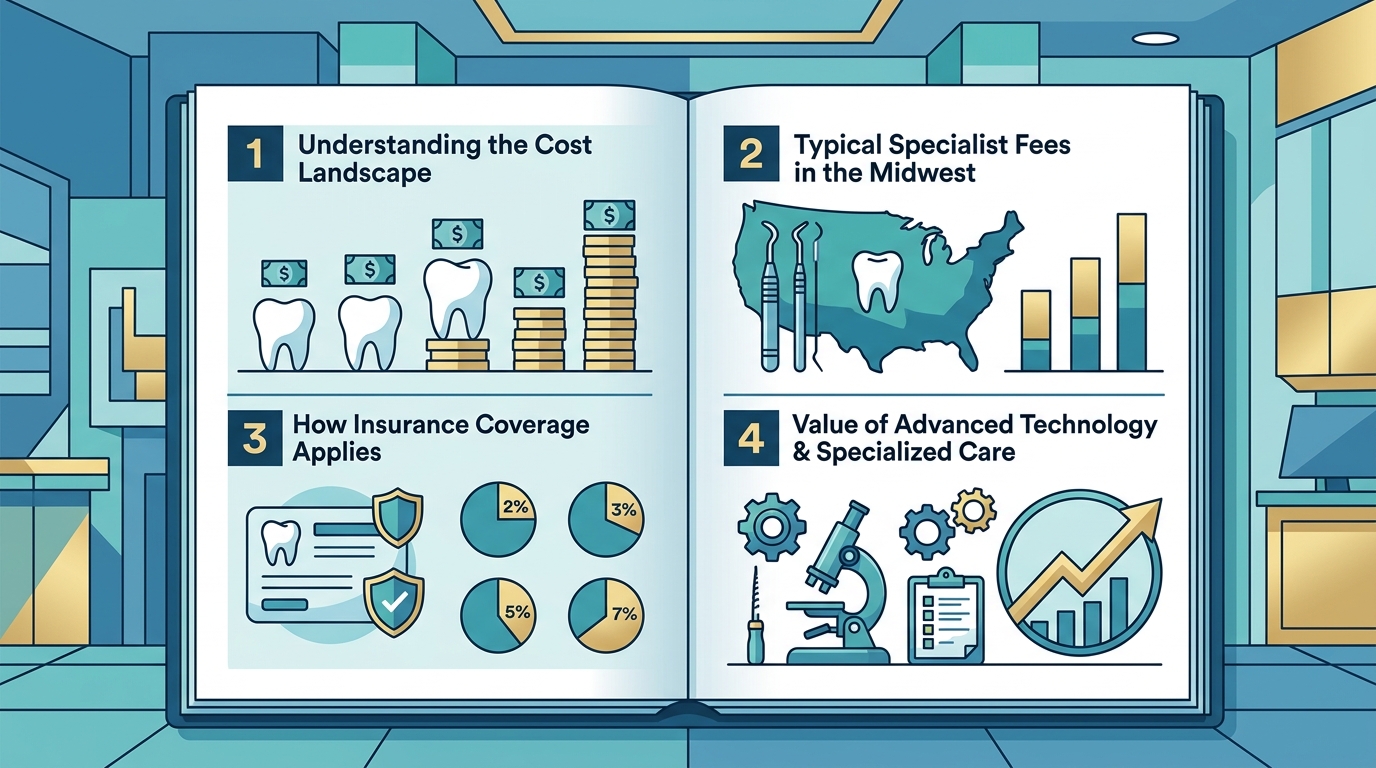
Understanding the financial landscape of endodontic care is critical for patients in the Dayton area facing complex dental issues. Recent industry data indicates that the average cost for a specialist root canal procedure in the Midwest ranges significantly based on tooth location and complexity, often falling between $1,000 and $2,500 before insurance adjustments. This guide provides a transparent breakdown of those costs, explains how insurance coverage typically applies, and highlights why advanced technology at practices like Richmond Endodontics can impact both treatment outcomes and long-term value.
Understanding the Cost Breakdown
When patients search for "root canal cost Dayton" or "endodontist pricing," they are often looking for a single number. However, the final bill is a composite of several distinct factors. The primary driver is the type of tooth being treated. Molars, which have three or more canals, require more time and intricate instrumentation than front teeth, which typically have only one canal.
Secondary costs include the complexity of the infection, the need for retreatment, or the necessity of surgical intervention. At Richmond Endodontics, the practice model focuses on seeing fewer patients per day to ensure thorough treatment. This approach may influence pricing compared to high-volume clinics, but it directly correlates with higher success rates and patient comfort.
Additionally, the use of advanced diagnostic tools plays a role in the initial consultation and treatment planning phase. While these technologies increase the overhead of the practice, they reduce the risk of missed canals and subsequent failures, ultimately saving patients money by avoiding repeat procedures.
Navigating Insurance Coverage
Insurance coverage for endodontic services varies widely depending on the specific plan, the provider network, and the annual maximums. Most dental insurance plans classify root canals under "major" or "specialist" services, which often results in a lower coverage percentage (typically 50%) compared to basic preventive care.
Understanding Your Annual Maximum
Many patients are surprised to find that their insurance has already reached its annual maximum before they even visit the specialist. In 2026, the average annual maximum for individual dental plans remains around $1,500 to $2,000. If you have already undergone crowns or bridges earlier in the year, your coverage for a root canal may be minimal or non-existent until the plan resets.
Pre-authorization and Referrals
Before undergoing complex treatment, it is vital to secure a pre-authorization. This process involves the endodontist submitting clinical records to the insurance company to verify medical necessity. Without this step, claims are frequently denied. Furthermore, some plans require a referral from a general dentist to cover specialist fees. Richmond Endodontics works closely with general dentists throughout the region to ensure seamless coordination and accurate billing.
How Technology Impacts Cost and Care
The cost of a root canal is not just about the procedure itself; it is also about the tools used to ensure its success. Outdated techniques can lead to higher failure rates, which in turn lead to more expensive treatments like apicoectomies or extractions. Richmond Endodontics utilizes several proprietary technologies that justify the investment in precision.
GentleWave® and EdgePro® Laser Disinfection
One of the few practices in the country offering GentleWave® and EdgePro® laser disinfection, this technology allows for the cleaning of complex canal systems that traditional files cannot reach. By eliminating bacteria in inaccessible areas, the risk of reinfection drops significantly. This is particularly crucial for complex cases where anatomy is irregular.
Zeiss ProErgo Surgical Microscope
The Zeiss ProErgo surgical microscope provides superior magnification and lighting. This enables the endodontist to detect fine fractures and additional canals that are invisible to the naked eye. Early detection of these issues during the initial procedure prevents the need for future surgical interventions, effectively lowering the long-term cost of care.
PreXion CBCT Imaging
Traditional 2D X-rays can obscure critical details. The PreXion CBCT imaging system provides highly detailed 3D views of the tooth and surrounding bone. This allows for precise diagnosis of complex root structures and periapical lesions, ensuring that the treatment plan is accurate from the start.
When a Case Becomes "Complex"
A "complex" root canal is not a standard term used in every office, but it refers to specific clinical challenges that require specialized expertise. These cases often involve calcified canals, severe curvature, or previous failed treatments. In such scenarios, the cost may increase due to the extended chair time and the need for specialized instruments.
Patients in the Dayton area, including those from Greenville, Eaton, and Troy, may be referred to a specialist when their general dentist identifies these complexities. Endodontics is the specialty dedicated to diagnosing and treating these intricate dental pulp issues. Dr. Benjamin Adams, with over 20 years of experience, is trained to handle these difficult cases with precision.
Another factor in complexity is the presence of cracked teeth. A cracked tooth can complicate the root canal procedure and may require additional restorative work. Cracked Teeth require immediate attention to prevent the crack from propagating further, which could lead to extraction.
Specialist vs. General Dentist Costs
Patients often ask if they can save money by having their general dentist perform the root canal. While the hourly rate for a general dentist may be lower, the success rate for complex cases is significantly higher with a specialist. According to dental literature, endodontists have a higher success rate for retreatment and complex anatomy cases.
| Factor | General Dentist | Endodontic Specialist |
|---|---|---|
| Success Rate for Complex Cases | Lower | Higher (95%+) |
| Technology Used | Standard Microscope | Surgical Microscope & CBCT |
| Disinfection Methods | Traditional Irrigation | GentleWave® / EdgePro® |
| Long-Term Cost | Higher (if failure occurs) | Lower (first-time success) |
If a general dentist fails to clear an infection, the patient may require an apicoectomy, which is a surgical procedure. Root Canal Surgery (Apicoectomy) is significantly more expensive and invasive than a non-surgical root canal. Therefore, choosing a specialist for complex cases is often the more cost-effective decision.
Key Takeaways
- Cost Variability: Root canal costs in the Dayton area range from $1,000 to $2,500, depending on tooth type and complexity.
- Insurance Limits: Check your annual maximum before treatment; many plans cap coverage at $1,500-$2,000.
- Technology Matters: Advanced tools like the Zeiss ProErgo microscope and GentleWave® disinfection improve success rates and reduce long-term costs.
- Specialist Expertise: Dr. Benjamin Adams has over 20 years of experience and is trained to handle complex cases that general dentists may refer out.
- Geographic Service Area: Richmond Endodontics serves patients from Eastern Indiana and Western Ohio, including Dayton, Centerville, and Cambridge City.
- Pre-authorization: Always secure insurance pre-authorization to avoid unexpected denials.
- First Visit: Review the Your First Visit guide to understand what to expect during your consultation.
Frequently Asked Questions
How much does a complex root canal cost in Dayton?
The cost typically ranges from $1,000 to $2,500. Complex cases involving retreatment or surgery may cost more. Richmond Endodontics offers transparent pricing and payment plans to help manage these costs.
Does insurance cover root canals performed by specialists?
Most dental insurance plans cover specialist services, but the coverage percentage may be lower than for general dentists. Some plans require a referral. It is essential to verify your benefits and obtain pre-authorization before treatment.
What is GentleWave® technology?
GentleWave® is an advanced disinfection system that uses multi-frequency acoustic energy to clean root canals. It is more effective than traditional irrigation methods and is offered by few practices in the country.
Why should I see an endodontist instead of my general dentist?
Endodontists specialize exclusively in root canal therapy and related procedures. They have advanced training and use specialized equipment like surgical microscopes and CBCT imaging, which leads to higher success rates for complex cases.
Do you serve patients outside of Richmond?
Yes, Richmond Endodontics serves patients across Eastern Indiana and Western Ohio. Communities served include Dayton, Greenville, Eaton, Troy, Springfield, Urbana, Celina, Centerville, Cambridge City, Connersville, Winchester, Union City, and Portland.
What is the success rate of root canals?
Root canals have a high success rate, often exceeding 95%. The use of advanced technology like the Zeiss ProErgo surgical microscope further enhances these outcomes by ensuring thorough cleaning and sealing of the canal system.
How long does the procedure take?
A typical root canal takes one to two appointments, each lasting about 60 to 90 minutes. Complex cases may require additional time. Endodontic FAQ resources provide more detailed timelines.
Contacting a Specialist
If you are experiencing pain or have been referred for a complex root canal, do not delay. Early intervention preserves your natural tooth and prevents more expensive treatments down the road. Contact Richmond Endodontics today to schedule your consultation. Our team is dedicated to providing exceptional treatment in a comfortable and compassionate environment.
Located at 1427 Chester Blvd. in Richmond, IN, we are proud to serve the Dayton area and surrounding communities. Call us at (765) 939-6355 to discuss your treatment options and insurance coverage.