
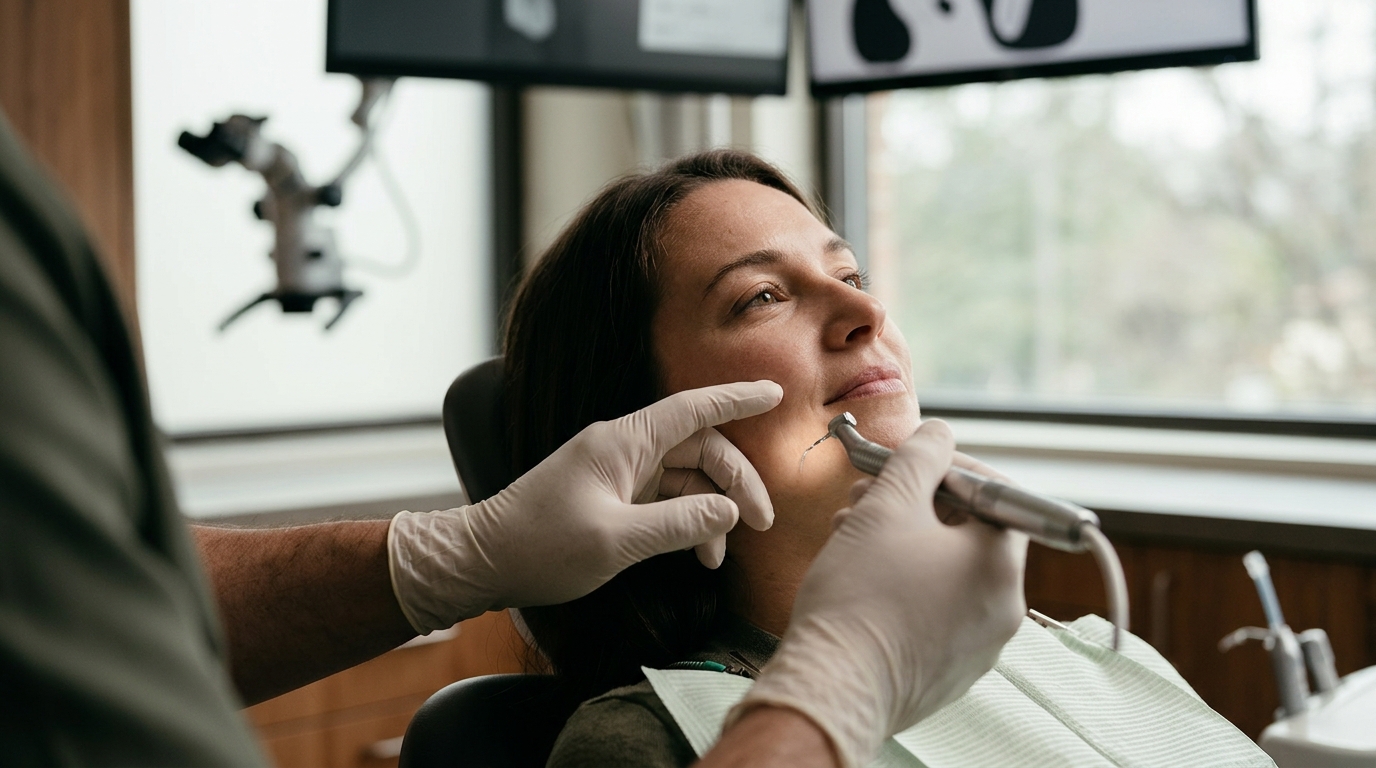
Endodontists remove root canal blockages without surgery using specialized ultrasonic instruments, rotary files, and chemical solvents. These tools navigate the tooth's internal structure to dissolve or mechanically extract obstructions like calcified tissue or separated files. This approach preserves the natural tooth structure while restoring the canal's patency for proper cleaning and filling.
Identifying Common Canal Obstructions
Root canal blockages, or obstructions, are physical barriers that prevent instruments from reaching the full length of the root canal system. These barriers can be natural or iatrogenic. Natural obstructions often result from pulp calcification, a process where the nerve tissue hardens over time. Iatrogenic obstructions occur during previous dental procedures, such as when a metal file breaks inside the canal or when restorative material like gutta-percha becomes lodged.
Identifying the specific type of obstruction is the first critical step in treatment planning. At Richmond Endodontics, Dr. Benjamin Adams utilizes advanced imaging to visualize these barriers. For instance, a PreXion CBCT scan provides a 3D view that can reveal the exact location and density of a calcified bridge or a fractured instrument. This diagnostic precision allows the clinician to select the appropriate removal technique before beginning the procedure.
Ultrasonic Instrumentation for Debridement
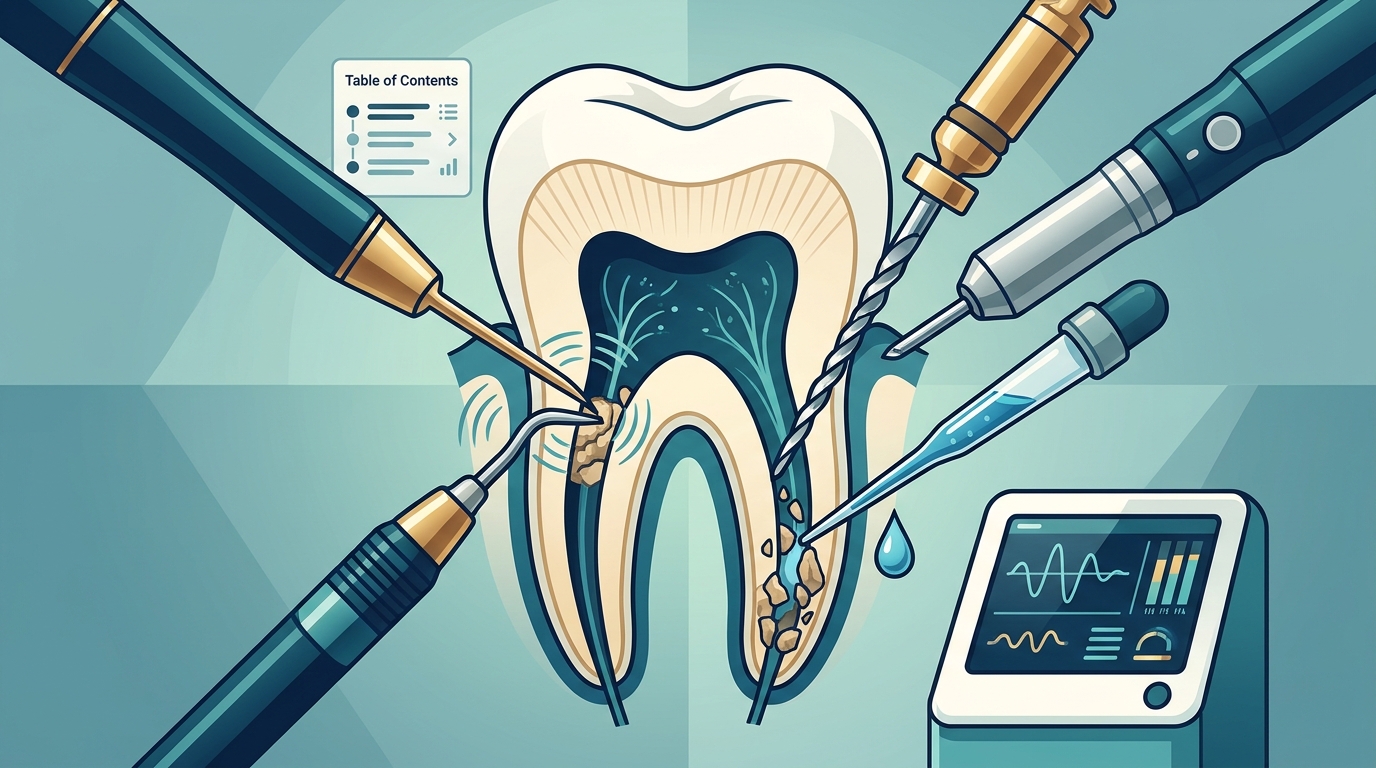
Ultrasonic instrumentation is a primary method for removing blockages in non-surgical retreatment. This technique uses high-frequency vibrations to create acoustic streaming and cavitation within the root canal. The vibrations help to loosen debris and break down calcified tissue that standard rotary files cannot penetrate. By using ultrasonic tips, the endodontist can gently navigate around the obstruction rather than forcing through it, which reduces the risk of perforating the root.
The effectiveness of this method is supported by clinical research. A study published in the Journal of Endodontics highlights that various activation systems, including ultrasonic ones, are effective in removing smear layers and debris during retreatment. At Richmond Endodontics, the use of GENTLEWAVE technology complements these mechanical methods by using acoustic streaming to thoroughly clean the canal walls after the obstruction is removed, ensuring a sterile environment for healing.
Rotary Files and Chemical Solvents
When ultrasonic tools are insufficient, endodontists employ specialized rotary files and chemical agents to bypass or dissolve blockages. Rotary files, particularly those with flexible tips, can be used to negotiate past a calcified barrier by creating a new path or enlarging an existing one. Simultaneously, chemical solvents such as sodium hypochlorite or EDTA are irrigated into the canal. These chemicals help to dissolve organic tissue and soften inorganic calcifications, making them easier to remove mechanically.
The combination of mechanical and chemical approaches is often necessary for complex cases. For example, if a previous root canal filling material is the obstruction, specific solvents may be used to soften the gutta-percha before it is removed with rotary instruments. This dual approach ensures that the canal is not only cleared but also properly disinfected. Patients can learn more about the specific tools used in these procedures by reviewing the Advanced Technology page, which details the precision instruments available at the practice.
Guided Endodontics and Microscopic Assistance
Guided endodontics is a technique that uses 3D imaging and virtual planning to navigate around blockages with extreme precision. This method is particularly useful when the obstruction is located in a curved or narrow canal where traditional 2D X-rays provide limited information. By overlaying the 3D scan with a virtual instrument path, the endodontist can guide the file through the tooth with minimal deviation, reducing the risk of creating a new defect.
The use of a surgical microscope is another critical component of non-surgical blockage removal. At Richmond Endodontics, the Zeiss ProErgo microscope provides high magnification and illumination, allowing the clinician to see details that are invisible to the naked eye. This visual clarity is essential when working near the root apex or when attempting to retrieve a separated instrument. The combination of guided planning and microscopic visualization significantly increases the success rate of non-surgical retreatment.
Retrieving Separated Instruments
Research indicates that the complete removal of such blockages is crucial for the long-term success of the tooth. A systematic review in PMC notes that removing intraradicular blockages, including separated instruments, is important to optimize sterilization before sealing the root canal space. If retrieval is not possible, the endodontist may bypass the fragment to clean the canal beyond it, though this is a more complex scenario. Patients facing this specific issue can discuss their options during a consultation at the practice.
Key Takeaways
- Root canal blockages can be natural (calcification) or iatrogenic (broken files, old filling material).
- Chemical solvents work in tandem with mechanical tools to dissolve organic tissue and soften calcifications.
- Guided endodontics utilizes 3D imaging to plan a precise path around obstructions.
- Surgical microscopes provide the magnification necessary to visualize and navigate complex canal anatomy.
- Non-surgical retreatment preserves the natural tooth structure, avoiding the need for apicoectomy surgery.
Frequently Asked Questions
Is removing a root canal blockage painful?
No, the procedure is performed under local anesthesia. Richmond Endodontics also uses X-Tip Anesthesia to ensure a comfortable and pain-free experience during the injection and treatment.
Can all blockages be removed without surgery?
Most blockages can be managed non-surgically. However, if an obstruction is located very close to the root tip or if the root is fractured, surgery may be recommended. The endodontist will determine the best approach based on imaging.
How long does the procedure take?
The duration varies depending on the complexity of the blockage. Simple cases may take one visit, while complex retreatments involving multiple obstructions may require two or more appointments.
What happens if the blockage cannot be removed?
If a blockage cannot be bypassed or removed, the endodontist may discuss alternative options, such as root canal surgery or extraction. However, advanced techniques often allow for successful non-surgical resolution.
Do I need a new crown after retreatment?
Often, yes. After the root canal is cleaned and filled, the tooth may be weakened and require a crown to protect it from fracture. Your endodontist will coordinate with your general dentist regarding the final restoration.
Conclusion
Removing blockages inside root canals without surgery is a sophisticated process that relies on a combination of advanced technology, specialized instruments, and expert skill. By utilizing ultrasonic tools, chemical solvents, and 3D guided planning, endodontists can successfully clear obstructions and save natural teeth. If you are experiencing pain or have a history of failed root canal treatment, it is important to consult with a specialist. At Richmond Endodontics, Dr. Benjamin Adams and his team are equipped with the latest technology to address these complex cases with precision and care. To schedule a consultation, please contact our office. Learn more: Contact Us Richmond Endo.