
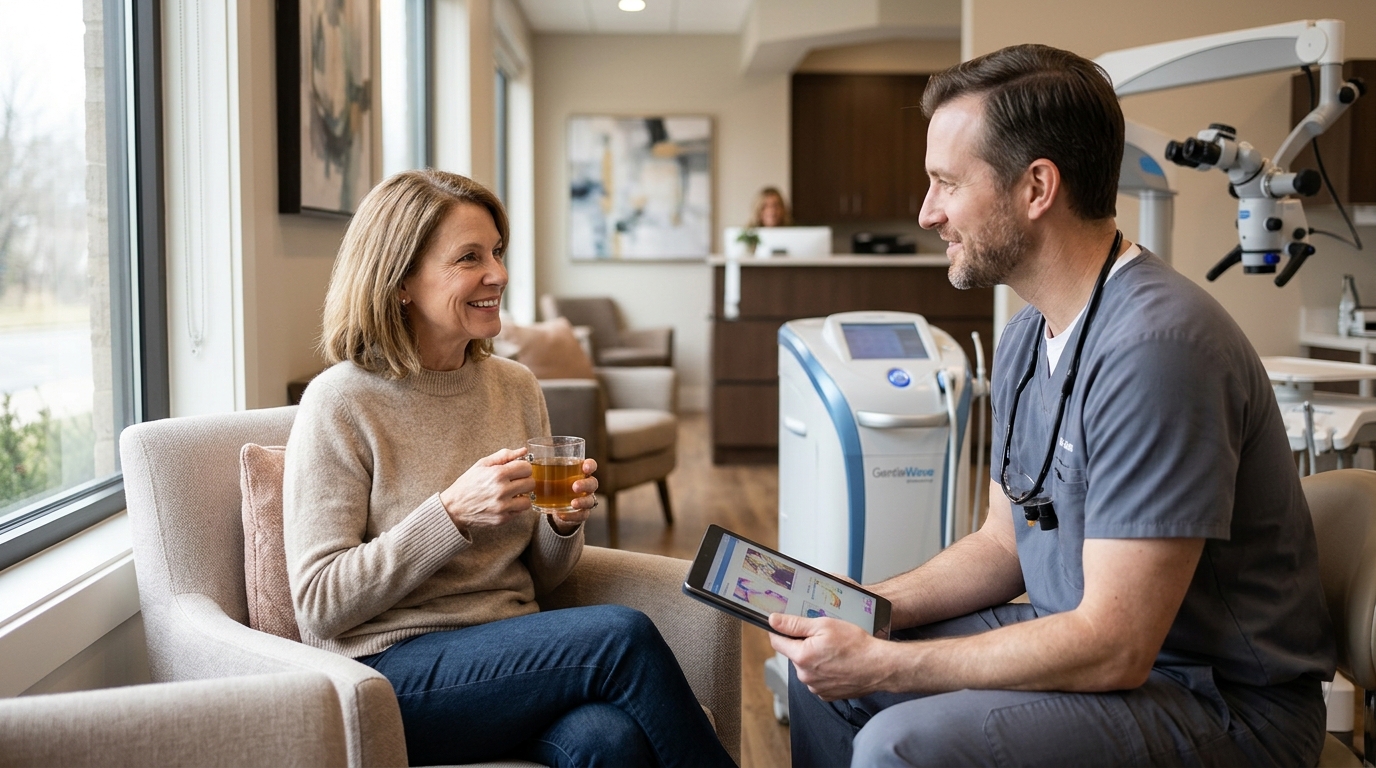
Failed root canals often persist due to biofilm and debris in complex canal anatomy that traditional irrigation cannot fully remove. GentleWave technology addresses these challenges by using acoustic streaming to enhance disinfection. At Richmond Endodontics, we utilize this advanced system to improve healing outcomes for patients in Eastern Indiana and Western Ohio who are experiencing persistent pain or reinfection after prior endodontic treatment.
1. Enhanced Biofilm Disruption
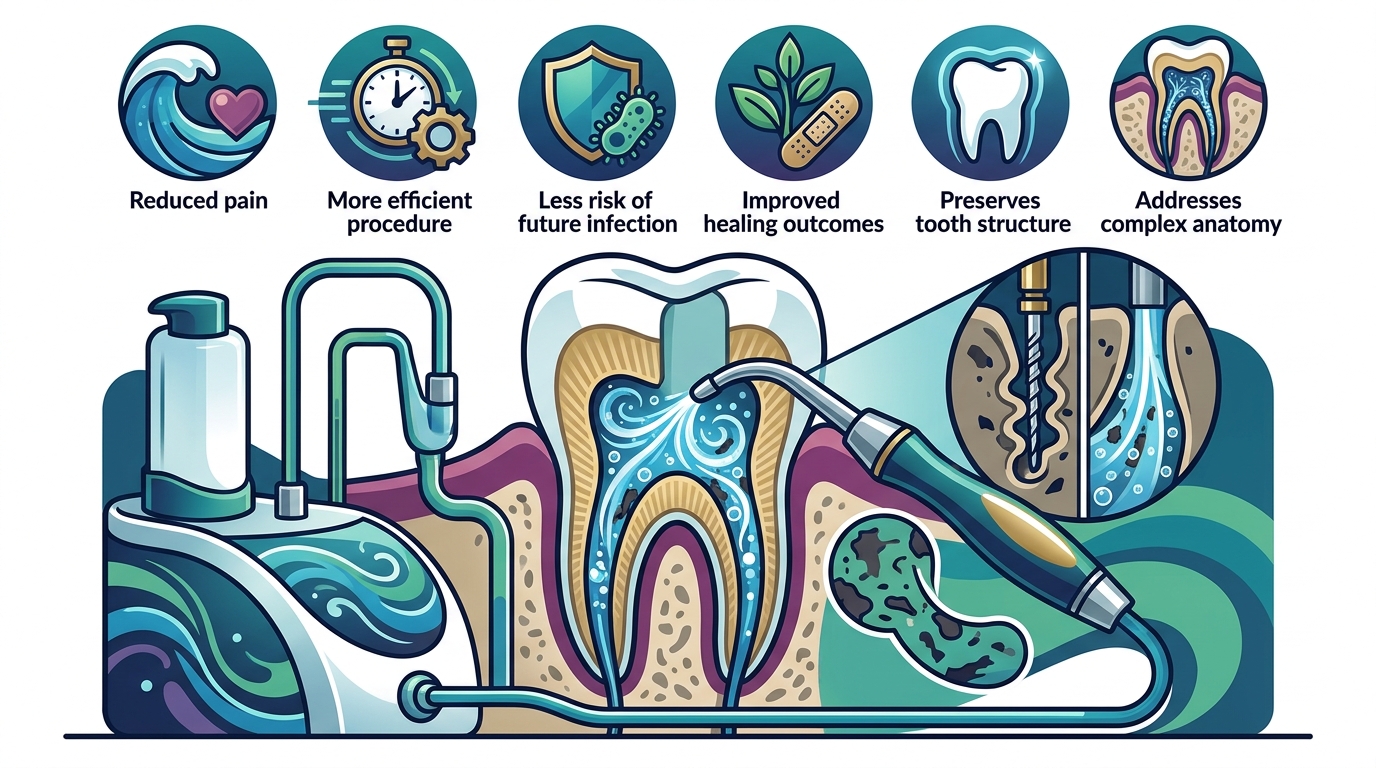
GentleWave disrupts bacterial biofilms more effectively than standard irrigation. Biofilm is a protective layer of bacteria that adheres to the root canal walls and resists traditional cleaning methods. The acoustic streaming generated by the GentleWave system creates fluid dynamics that physically break up these colonies. This action allows antimicrobial agents to penetrate deeper into the canal system, reducing the bacterial load that causes treatment failure.
2. Improved Debris and Smear Layer Removal
The system removes smear layer and debris from intricate canal spaces. The smear layer is a thin film of tooth debris that forms during instrumentation and can harbor bacteria. GentleWave technology uses high-frequency energy to flush out this material from areas that hand files and standard irrigation cannot reach. By clearing these microscopic spaces, the treatment environment becomes significantly cleaner, which is critical for successful retreatment.
3. Access to Complex and Curved Anatomy
Acoustic streaming reaches areas that straight-line irrigation misses. Root canals are rarely straight; they often contain curves, isthmuses, and fins that trap infection. Traditional syringe irrigation tends to follow the path of least resistance, leaving lateral branches untreated. The fluid dynamics of GentleWave allow the irrigant to penetrate these complex geometries, ensuring a more comprehensive clean of the entire root canal system.
4. Reduced Risk of Reinfection
Thorough disinfection lowers the likelihood of future failure. Reinfection is a primary cause of root canal retreatment. By achieving a higher level of disinfection, GentleWave helps eliminate the residual bacteria that lead to persistent symptoms. This thorough cleaning supports the body's natural healing process, increasing the probability that the tooth will remain healthy long-term without the need for extraction.
5. Compatibility with Existing Irrigants
The technology works synergistically with standard endodontic irrigants. GentleWave is not a standalone solution but an enhancement to the irrigation process. It can be used with common agents like sodium hypochlorite and EDTA to maximize their chemical and mechanical effects. This compatibility allows endodontists to integrate the technology into their existing workflow without requiring new chemical protocols, making it a practical addition to retreatment cases.
6. Patient Comfort and Efficiency
Choosing the Right Approach for Your Case
Not every failed root canal requires the same level of intervention. The decision to use GentleWave depends on the specific anatomy of the tooth and the nature of the failure. If you are experiencing pain or swelling after a previous root canal, a consultation with an endodontist is the best way to determine if this technology is appropriate for your situation. Our team at Richmond Endodontics can evaluate your case and recommend the most effective treatment plan.
Frequently Asked Questions
Is GentleWave only used for failed root canals?
No, GentleWave can be used in both initial root canal treatments and retreatments. However, its benefits are particularly pronounced in retreatment cases where previous cleaning may have been incomplete or where biofilm has re-established.
Does GentleWave replace traditional irrigation?
No, it enhances traditional irrigation. The system works by creating acoustic streaming that improves the effectiveness of the irrigants already being used. It is an additive technology that improves the overall cleaning process.
How long does a GentleWave treatment take?
The time required varies depending on the complexity of the tooth and the number of canals. Generally, the GentleWave step is integrated into the standard root canal procedure and does not significantly extend the overall appointment time.
Is the procedure painful?
Root canal treatments, including those using GentleWave, are performed under local anesthesia. Most patients report little to no pain during the procedure. Any post-operative discomfort is typically mild and manageable with over-the-counter pain medication.
Where can I find GentleWave treatment in Indiana?
Richmond Endodontics in Richmond, Indiana, offers GentleWave technology as part of its advanced endodontic services. The practice serves patients from Eastern Indiana and Western Ohio.
Will insurance cover GentleWave treatment?
Coverage varies by insurance plan. Some plans may cover the root canal procedure but not specifically the advanced technology. It is best to check with your insurance provider and our office to understand your specific benefits. Learn more: Contact Us Richmond Endo.