

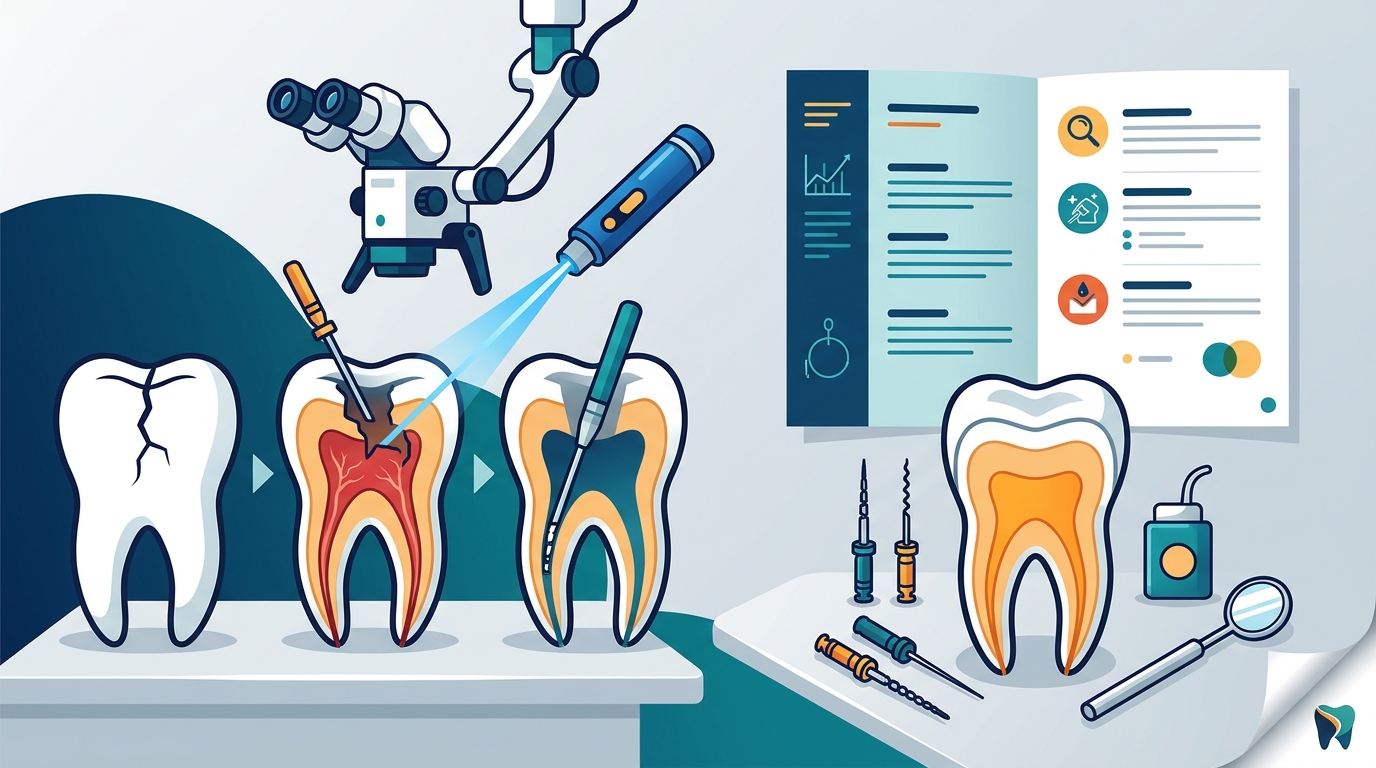
Root canal therapy for a cracked tooth involves removing damaged pulp tissue, disinfecting the canal system, and sealing the tooth to prevent infection. At Richmond Endodontics, we utilize advanced imaging and laser technology to manage these complex cases with precision. This process preserves your natural tooth structure while eliminating the pain associated with deep fractures.
Diagnostic Precision and 3D Imaging
Cracked teeth are notoriously difficult to detect because the fracture lines are often microscopic. A standard 2D x-ray may miss the extent of the crack, leading to misdiagnosis. PreXion CBCT imaging provides a three-dimensional view of the tooth and surrounding bone. This technology allows our team to visualize the crack's path and determine if the tooth is salvageable. Accurate diagnosis is the foundation of a successful treatment plan.
During your initial consultation, we will review your symptoms and medical history. We then perform a clinical examination, including tapping tests and bite tests, to identify the specific area of pain. If a crack is suspected, we will take a CBCT scan to confirm the diagnosis. This step ensures that we are treating the correct tooth and addressing the root cause of your discomfort.
Anesthesia and Patient Comfort
Pain management is a priority during any endodontic procedure. Many patients fear the injection, but we use X-Tip Anesthesia to make the process faster and more comfortable. This technology warms the anesthetic solution, which reduces the stinging sensation upon injection. The goal is to ensure you are completely numb before we begin working on the tooth.
Once the anesthesia takes effect, we will test your sensation to confirm you are ready to proceed. You should feel no pain during the actual root canal therapy. If you experience any discomfort, let us know immediately so we can administer additional anesthesia. Our team is trained to monitor your comfort levels throughout the entire appointment.
Instrumentation and Disinfection Protocols
The core of root canal therapy is the cleaning and shaping of the root canal system. We use rotary instruments to remove the infected pulp tissue and shape the canals for filling. However, mechanical cleaning alone is not always sufficient to eliminate all bacteria. This is where EdgePRO laser disinfection and GentleWave acoustic streaming come into play. These technologies work together to clean the complex anatomy of the tooth, including areas that files cannot reach.
For cracked teeth, the risk of reinfection is higher because bacteria can hide in the fracture lines. The combination of laser and acoustic energy helps to disinfect these hidden areas thoroughly. This comprehensive approach improves the long-term success rate of the treatment. We take the time to ensure every part of the canal system is clean before proceeding to the next step.
Obturation and Final Restoration
After the canals are cleaned and shaped, we fill them with a biocompatible material called gutta-percha. This material seals the canals and prevents bacteria from re-entering the tooth. We use digital x-rays to verify that the filling is complete and properly placed. The tooth is then temporarily sealed to allow you to function normally while we plan the final restoration.
A cracked tooth is structurally weaker than a healthy tooth. It requires a crown to protect it from breaking further. We will coordinate with your general dentist to ensure the crown is placed promptly. Research indicates that the timing of prosthesis placement can influence the long-term survival of the tooth. Therefore, we encourage patients to schedule their crown appointment as soon as possible after the root canal is complete.
Post-Operative Care and Follow-Up
It is normal to experience some tenderness in the treated tooth for a few days after the procedure. This discomfort is usually manageable with over-the-counter pain relievers. We will provide you with specific aftercare instructions, including which foods to avoid and how to keep the area clean. If you experience severe pain or swelling, contact our office immediately.
We will schedule a follow-up appointment to check the healing progress. This visit ensures that the tooth is responding well to the treatment. If any issues arise, we can address them early to prevent complications. Regular check-ups are essential for monitoring the long-term health of your endodontically treated teeth.
Key Takeaways
- CBCT imaging is critical for accurately diagnosing cracked teeth that may not show up on standard x-rays.
- X-Tip Anesthesia provides a more comfortable and faster numbing experience for patients.
- Laser and acoustic streaming technologies enhance the disinfection of complex root canal systems.
- Cracked teeth require a crown to protect the structure and ensure long-term survival.
- Prompt placement of the final restoration is recommended to minimize the risk of root fracture.
- Post-operative tenderness is normal and usually resolves within a few days.
- Regular follow-up appointments are necessary to monitor the healing and success of the treatment.
Frequently Asked Questions
Is root canal therapy painful?
No, the procedure is performed under local anesthesia. We use X-Tip Anesthesia to ensure the injection is comfortable. You should feel no pain during the treatment itself.
How long does a root canal for a cracked tooth take?
The duration depends on the complexity of the case. Most root canals take between 60 to 90 minutes. Cracked teeth may require additional time for thorough disinfection.
Can a cracked tooth always be saved?
Not always. If the crack extends below the gum line, the tooth may need to be extracted. Our team will evaluate the crack's depth and location to determine the best course of action.
Do I need a crown after a root canal?
Yes, especially for cracked teeth. A crown protects the weakened tooth from breaking under normal chewing forces. It is a critical step in the treatment process.
How long does a root canal last?
With proper care and a well-fitted crown, a root canal can last a lifetime. Regular dental check-ups and good oral hygiene are essential for maintaining the health of the treated tooth.
What if the crack worsens after treatment?
If the crack worsens, the tooth may become non-restorable. In such cases, extraction and replacement with an implant or bridge may be necessary. We will monitor the tooth closely during follow-up visits.
Conclusion
Root canal therapy for a cracked tooth is a precise and effective way to save your natural tooth. By leveraging advanced technology and expert skill, we can address the unique challenges presented by dental fractures. At Richmond Endodontics, we are committed to providing compassionate and high-quality care. If you are experiencing pain or suspect a cracked tooth, contact us to schedule a consultation.