
Comparing Endodontists for Complex Root Canal Cases in the Dayton Area
Complex root canal cases require more than just standard dental training. They demand specialized endodontic expertise, advanced imaging, and precise disinfection protocols. According to the American Association of Endodontists, endodontists complete an additional two to three years of specialized training beyond dental school. This distinction is critical for patients in the Dayton area facing difficult anatomical challenges or previous treatment failures. Choosing the right specialist can mean the difference between saving a tooth and losing it permanently. (About Our Office Richmond)
Why Specialists Matter for Complex Cases
General dentists are skilled at performing routine root canals. However, complex cases often involve curved canals, calcified canals, or teeth with unusual anatomy. Endodontists are the only dental specialists who diagnose and treat problems of the dental pulp. They handle the most difficult cases daily, which builds a level of proficiency that general practitioners rarely match. (Home Richmond Endo)
For patients in Dayton, Ohio, and surrounding communities like Greenville, Eaton, and Troy, access to a specialist is vital. Complex retreatments require a deep understanding of previous surgical outcomes. When a tooth has failed a prior root canal, the endodontist must navigate scar tissue and complex anatomy. This precision is not something to gamble with. The stakes are high for long-term oral health.
Endodontics is the dental specialty focused on the biological, physical, and clinical aspects of dental pulp and periradial tissues. This definition highlights the narrow focus required for success. A general dentist may see one complex case a year. An endodontist sees dozens. This volume translates to faster, more predictable outcomes.
Technology Comparison: Microscopes and Imaging
The difference between a good root canal and a great one often lies in the technology used. Modern endodontics relies heavily on magnification and three-dimensional imaging. Without these tools, a specialist is essentially working blind in microscopic spaces.
The Role of Surgical Microscopes
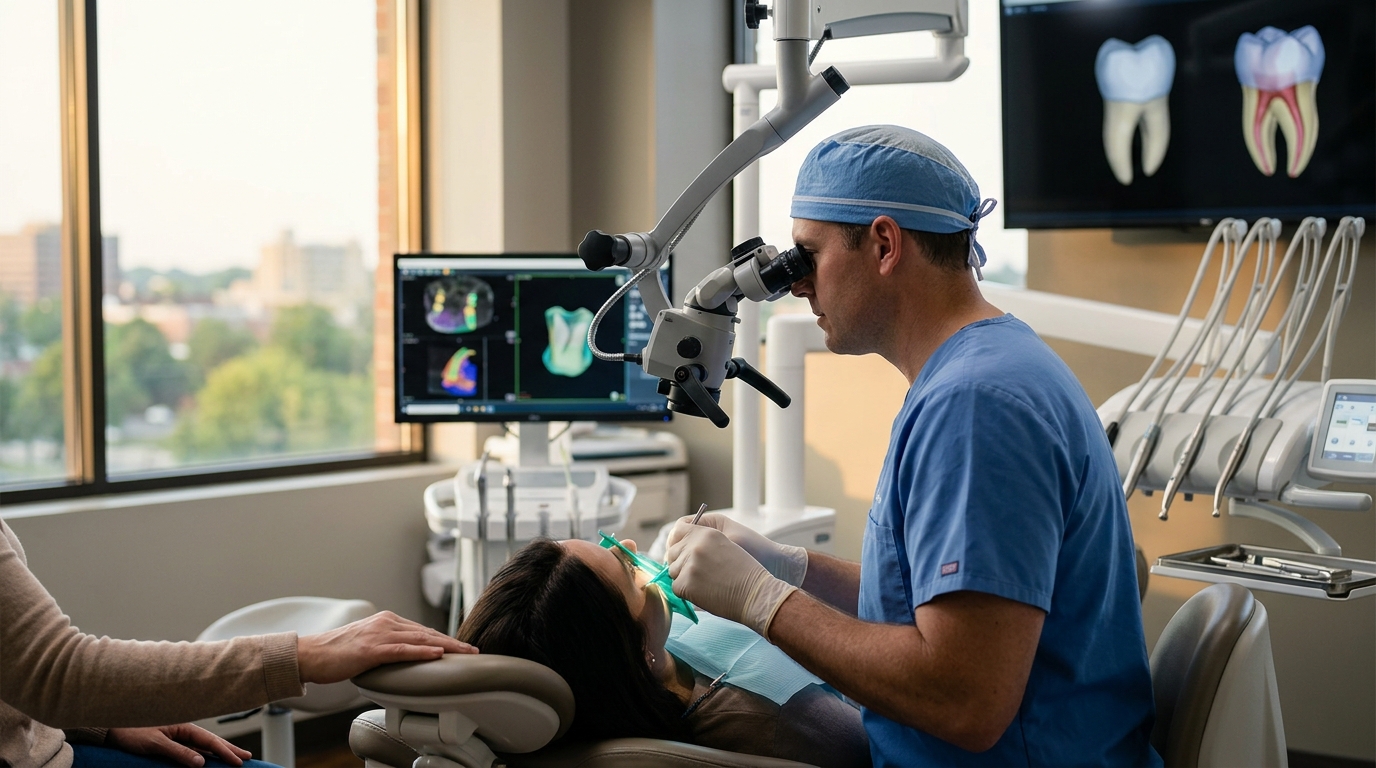
The Zeiss ProErgo surgical microscope is a gold standard in complex endodontics. It offers superior magnification and lighting, enabling clinicians to detect the finest details in the root canal system. These details are often invisible to the naked eye. For example, missed canals are a leading cause of root canal failure. A high-powered microscope allows the specialist to locate every canal with certainty.
When comparing endodontists, ask about their microscope. Some practices use older models or lower magnification. Others, like Richmond Endodontics, utilize the latest Zeiss technology. This investment directly impacts the success rate of complex cases.
CBCT Imaging vs. Traditional X-Rays
Traditional 2D X-rays can obscure critical details. A tooth might look normal on a 2D image but have a hidden fracture or infection on the side. Cone Beam Computed Tomography (CBCT) provides highly detailed 3D imaging. The PreXion CBCT system used by leading specialists allows for unparalleled clarity.
This technology ensures that all root anatomy is visualized before treatment begins. It reduces the risk of complications during surgery. For patients in the Dayton area, access to CBCT is a key differentiator. It allows for precise diagnosis of cracked teeth and periapical lesions. Without it, treatment planning is often guesswork.
Disinfection Methods: Laser vs. Traditional
Cleaning the root canal system is the most critical step in saving a tooth. Bacteria can hide in areas that files cannot reach. Traditional irrigation methods often leave these areas contaminated. Newer technologies address this gap.
GentleWave and EdgePro Systems
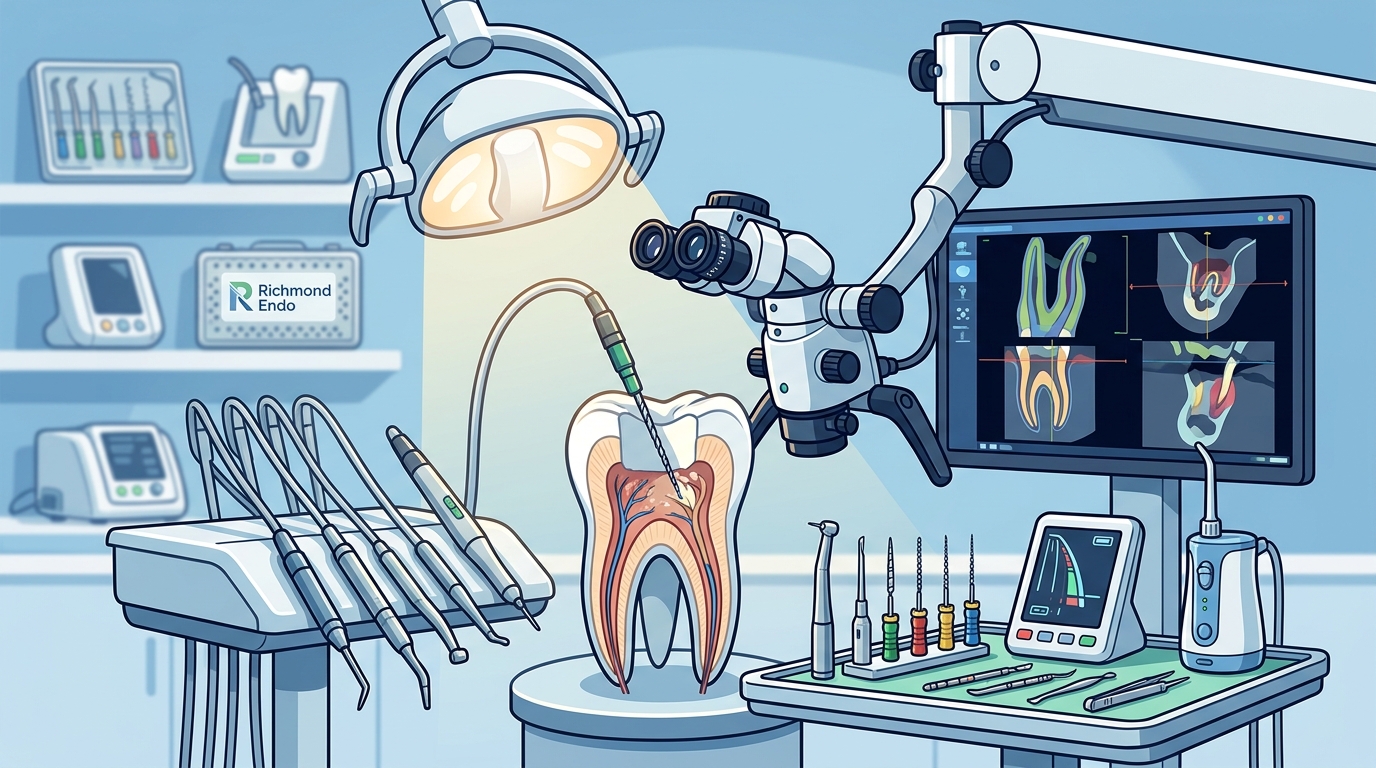
As one of the few practices in the country offering GentleWave and EdgePro laser disinfection, Richmond Endodontics represents the forefront of endodontic care. The EdgePro system uses laser energy to clean and disinfect the root canal system more efficiently than traditional methods. This enhances healing and reduces the risk of reinfection.
Traditional root canal treatment relies on mechanical filing and chemical irrigants. While effective, they have limitations. Advanced disinfection technologies target biofilms that resist standard cleaning. For complex cases, this additional step is often the deciding factor in long-term success.
When evaluating providers, inquire about their disinfection protocols. Do they use only standard irrigation? Or do they incorporate advanced energy-based systems? The latter indicates a commitment to the highest standard of care.
Evaluating Provider Credentials and Experience
Not all endodontists have the same background. Experience and education are paramount. Dr. Benjamin Adams, for instance, has over 20 years of expertise in both surgical and non-surgical endodontics. His academic journey includes a Doctor of Dental Surgery (DDS) from the Indiana University School of Dentistry and specialized residency training.
During dental school, Dr. Adams received the prestigious Clinical Excellence Award. This honor reflects a dedication to technical proficiency. Throughout his career, he has lectured nationwide on advancements in endodontics. This continuous education ensures that his practice remains at the cutting edge.
Comparing Years of Practice
Years of experience matter in complex cases. A specialist with two decades of practice has seen thousands of variations in tooth anatomy. They have developed intuitive problem-solving skills. When a case becomes difficult, experience guides the decision-making process.
Look for providers who actively contribute to the field. Those who lecture or publish are often more engaged with current research. This engagement translates to better patient outcomes. It also means they are more likely to adopt new technologies early.
Geographic Access and Patient Care
For patients in Dayton, Ohio, and surrounding areas, geographic access is a practical concern. However, complex cases often require traveling to a specialist with the right expertise. Richmond Endodontics serves patients across Eastern Indiana and Western Ohio.
The practice welcomes patients from communities including Dayton, Greenville, Eaton, Troy, Springfield, Urbana, and Celina. This regional coverage ensures that high-quality care is accessible without excessive travel. The office is located at 1427 Chester Blvd. in Richmond, IN.
Convenience should not compromise quality. For complex root canals, the right specialist is worth the drive. The peace of mind knowing your tooth is in expert hands is invaluable. Many general dentists in the Dayton area refer their complex cases to Richmond Endodontics for this reason.
Key Takeaways
- Endodontists complete two to three years of specialized training beyond dental school, making them the experts for complex cases.
- The Zeiss ProErgo surgical microscope is essential for detecting hidden canals and ensuring thorough cleaning in difficult anatomy.
- PreXion CBCT imaging provides 3D visualization that 2D X-rays cannot match, crucial for diagnosing fractures and infections.
- Advanced disinfection technologies like EdgePro laser systems offer superior cleaning compared to traditional irrigation methods.
- Dr. Benjamin Adams has over 20 years of experience and has lectured nationwide on endodontic advancements.
- Richmond Endodontics serves the Dayton area, including Greenville, Eaton, and Troy, with high-level specialized care.
- Choosing a specialist with a low patient volume per day allows for more thorough treatment and patient education.
Frequently Asked Questions
What makes a root canal case "complex"?
A complex root canal case typically involves curved or calcified canals, previous treatment failures, or unusual tooth anatomy. These factors require specialized training and advanced technology to navigate successfully.
Why is a surgical microscope important?
A surgical microscope provides high magnification and lighting, allowing the endodontist to see details invisible to the naked eye. This precision is critical for locating all canals and ensuring complete cleaning.
What is the difference between GentleWave and EdgePro?
Both are advanced disinfection technologies. GentleWave uses acoustic energy, while EdgePro uses laser energy. Both aim to clean areas that traditional files and irrigants cannot reach, reducing the risk of reinfection.
Do you treat patients from Dayton, Ohio?
Yes, Richmond Endodontics proudly serves patients from Dayton, Ohio, and surrounding communities in Western Ohio and Eastern Indiana. We welcome referrals from general dentists in the region.
How long does a complex root canal take?
Complex cases may require more than one visit. The duration depends on the anatomy and the extent of the infection. However, the goal is always to complete the treatment efficiently and comfortably.
What is the success rate of retreatment?
Success rates for retreatment vary based on the case complexity. However, using advanced technology like CBCT and microscopes significantly improves the likelihood of saving the tooth. Dr. Adams' extensive experience further enhances these outcomes.
Is the procedure painful?
Modern anesthesia techniques ensure that the procedure is virtually painless. Most patients report that the treatment feels similar to getting a filling. Post-procedure discomfort is usually mild and manageable with over-the-counter medication.
Contact Richmond Endodontics
If you are facing a complex root canal case in the Dayton area, do not settle for standard care. Choose a specialist who combines decades of experience with the latest technology. Richmond Endodontics offers the precision and compassion you need.
Dr. Benjamin Adams and his team are dedicated to providing the highest standard of endodontic care. We see fewer patients each day to ensure you receive our full attention. Contact us today to schedule a consultation or to discuss your referral.
Click here to contact Richmond Endodontics or call (765) 939-6355. We look forward to helping you achieve optimal oral health.