

If you are experiencing persistent pain, swelling, or sensitivity in a tooth that has already had a root canal, you may need a root canal retreatment. This procedure involves reopening the tooth to clean and refill the canals to resolve infection or inflammation. This guide explains the specific symptoms, radiographic signs, and underlying causes that indicate a previous treatment may have failed. It also details how advanced technology helps diagnose these complex cases accurately.
Symptom Indicators of Failed Treatment
With appropriate care, teeth that have had endodontic treatment should last as long as other natural teeth. However, a tooth that has received treatment may fail to heal, or pain may continue to exist. Sometimes, the pain may occur months or years after the initial treatment. If you notice specific changes in how your tooth feels, it is a strong indicator that root canal retreatment may be needed.
Pain Patterns and Sensitivity
Pain is the most common symptom of a failing root canal. This pain can manifest in several ways. You might experience prolonged sensitivity to heat or cold that lingers for more than a few seconds. Another common sign is pain when chewing or biting down. This occurs because chewing can cause movement of the cracked pieces of your tooth, irritating the pulp or surrounding tissues. When biting pressure is released, the crack can close quickly, resulting in sharp pain.
Swelling and Gum Changes
Visible changes in the gums are also critical indicators. Swelling or tenderness of the tooth or adjacent gums suggests an infection that has spread beyond the root canal system. You may notice a pimple-like bump on the gums near the affected tooth. This is often a sign of an abscess. If you experience any of these symptoms, it is important to seek professional evaluation promptly.
Radiographic Findings and Diagnostic Imaging
While symptoms provide clues, definitive diagnosis often requires imaging. Advanced technology plays a crucial role in identifying issues that are not visible to the naked eye or on standard x-rays. At Richmond Endodontics, we utilize state-of-the-art tools to achieve precise diagnostics.
The Role of CBCT Imaging
PreXion CBCT imaging provides highly detailed 3D images with lower radiation exposure. This technology allows us to visualize your teeth and surrounding structures with unparalleled clarity. It ensures we can locate all root canals and detect any additional pathology. This leads to better diagnosis and treatment planning, especially in complex cases where 2D x-rays may be insufficient.
Digital X-Rays and Microscopy
We also use XDR Digital X-Rays, which provide high-definition images with lower radiation exposure compared to traditional x-rays. These digital images can be optimized, archived, and sent to referring doctors via email. Additionally, the Zeiss ProErgo surgical microscope offers superior magnification and lighting. This enables our team to perform treatments with the utmost precision, especially in complex cases. The microscope allows us to detect the finest details in the root canal system that are often invisible to the naked eye.
Common Causes of Failed Root Canals
Understanding why a root canal might fail helps in determining the best course of action. Endodontic treatment is necessary when the pulp becomes inflamed or infected. The most common reasons for inflammation or infection are deep cavities, repeated dental procedures, cracks, or chips. Trauma can also cause inflammation and often shows up as discoloration of the tooth. If pulp inflammation or infection is left untreated, it can cause pain or lead to an abscess.
Missed Canals and Complex Anatomy
Teeth have several layers. The outside layer is composed of a hard layer called Enamel. Enamel is supported by an inner layer called Dentin, which has at its center a soft tissue known as the Pulp. The pulp contains blood vessels, nerves, and connective tissue. Sometimes, a tooth may have additional canals that were not detected or treated during the initial procedure. These missed canals can harbor bacteria, leading to persistent infection.
Cracked Teeth and Fractures
Cracked teeth demonstrate many types of symptoms, including pain when chewing, temperature sensitivities, or even the release of biting pressure. It is also common for pain to come and go, making it difficult to diagnose the cause of discomfort. Endodontic surgery can be used to locate fractures or hidden canals that do not appear on x-rays but still manifest pain in the tooth. In some cases, if the crack extends below the gum line, extraction may be the only option, but retreatment is often the first step to save the tooth.
The Diagnostic Process at Richmond Endodontics
At Richmond Endodontics, our practice is built on a foundation of excellence, innovation, and compassionate care. We prioritize the comfort, well-being, and long-term oral health of every patient. Unlike high-volume practices, we intentionally see fewer patients per day to allow for ample treatment time. This ensures thorough patient education, open communication, and the highest standard of care.
When you schedule your appointment, we will email you a welcome letter that will provide you a secure password to complete your online registration. This will save you time during your appointment check-in. Your initial appointment will consist of a consultation explaining your diagnosis and treatment options. Treatment is usually accomplished the same day as the consultation. However, a complex medical history or treatment plan may require an evaluation and a second appointment to provide treatment on another day.
Understanding the Retreatment Procedure
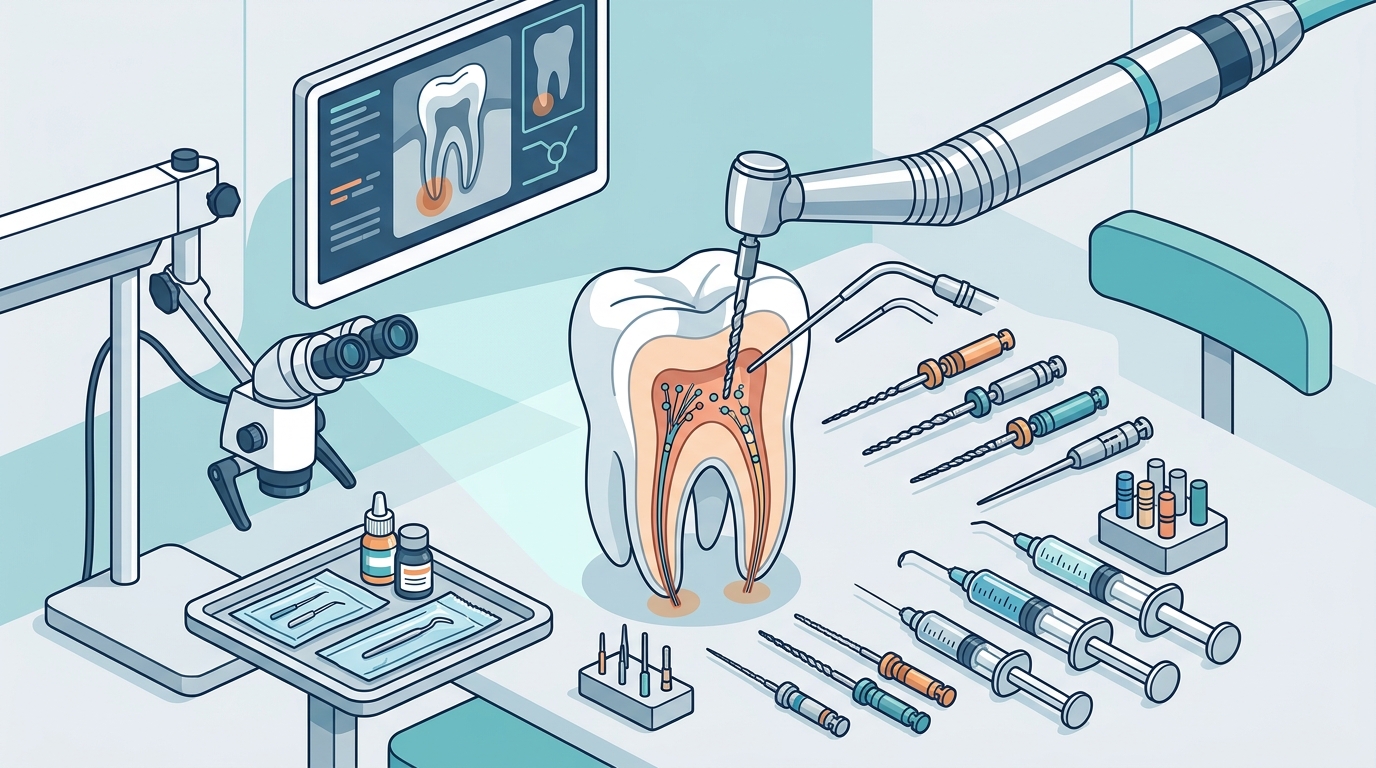
Once retreatment has been selected as a solution to your problem, the doctors will reopen your tooth to gain access to the root canal filling material. This restorative material will be removed to enable access to the root canal. The doctors will now clean your canals and carefully examine the inside of the problematic tooth. Once cleaned, the doctors will fill and seal the canals and place a temporary filling in the tooth.
We utilize EdgePro laser disinfection technology, which offers a more efficient and precise way to clean and disinfect the root canal system. This enhances healing and reduces the risk of reinfection. We also use GentleWave technology, which uses acoustic streaming and advanced fluid dynamics to thoroughly clean and disinfect the root canal system more effectively than traditional methods. For a pain-free experience, we utilize X-Tip Anesthesia, which allows for faster, more comfortable injections, significantly reducing discomfort.
Key Takeaways
- Persistent pain, swelling, or sensitivity in a previously treated tooth are primary indicators of failed endodontic treatment.
- CBCT imaging and digital x-rays are essential for detecting missed canals and hidden pathology.
- Cracked teeth often cause intermittent pain that is difficult to diagnose without specialized equipment.
- Richmond Endodontics uses advanced technology like the Zeiss ProErgo microscope for precise diagnosis and treatment.
- Retreatment involves removing old filling material, cleaning the canals, and refilling them to resolve infection.
- Our practice focuses on patient-centered care, seeing fewer patients per day to ensure thorough attention.
- Early intervention is crucial to saving a tooth that has failed initial root canal therapy.
Frequently Asked Questions
What is a root canal retreatment?
A root canal retreatment is a procedure where a previously treated tooth is reopened to remove old filling material, clean the canals, and refill them to resolve persistent infection or pain.
How long does pain last after a root canal?
For most patients, the feeling of numbness usually subsides after 2-3 hours. Some mild discomfort may last a few days, but persistent pain weeks or months later may indicate a need for retreatment.
Can a root canal fail years later?
Yes, pain may occur months or years after treatment. This can happen if bacteria were missed in a canal or if a new crack develops in the tooth.
What technology do you use for diagnosis?
We use PreXion CBCT imaging, XDR Digital X-Rays, and the Zeiss ProErgo surgical microscope to detect issues that are not visible on standard x-rays.
Is retreatment painful?
We take every measure to ensure your procedure is in no way uncomfortable or painful. We use X-Tip Anesthesia for faster, more comfortable injections.
How many patients do you see per day?
We intentionally see fewer patients per day to allow for ample treatment time, ensuring thorough patient education and open communication.
Do you accept insurance?
We accept all dental insurance plans; however, we are not in-network with any insurance providers. Our team is happy to assist you by verifying your insurance coverage and providing you with an estimated out-of-pocket cost before your appointment.
Conclusion
If you are experiencing symptoms that suggest your previous root canal may have failed, do not ignore them. Early diagnosis and treatment are key to saving your natural tooth. At Richmond Endodontics, we are committed to providing exceptional treatment in a comfortable and compassionate environment. Led by Dr. Benjamin Adams, who has over 20 years of expertise in both surgical and non-surgical endodontic care, we are dedicated to providing the highest quality treatment. To schedule a consultation or learn more about our services, please today.