

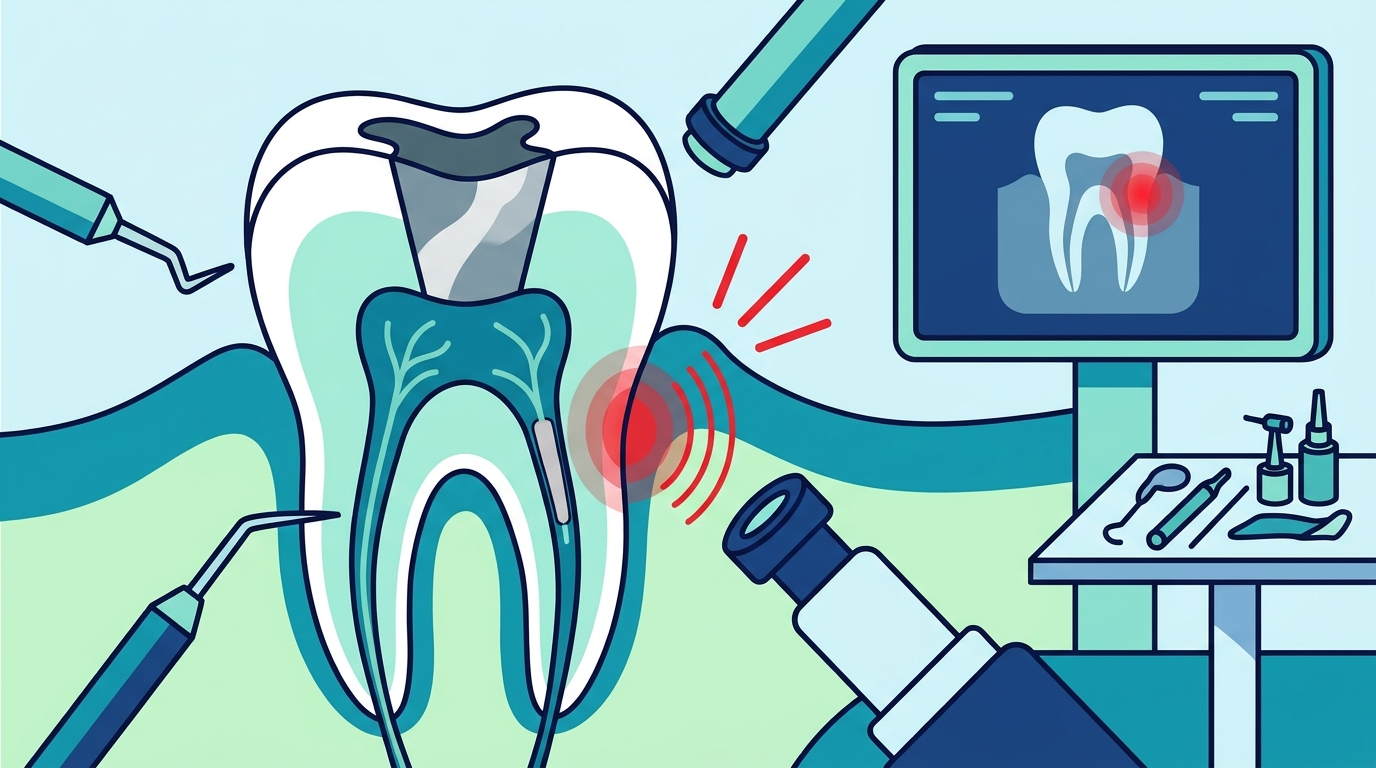
When a previously treated tooth begins to hurt again, it often signals that the initial root canal may be failing. Common pain signals include persistent sensitivity to temperature, sharp pain when biting down, or swelling in the gums. At Richmond Endodontics, we help patients identify these specific symptoms early to prevent further damage. Recognizing these signs allows for timely intervention, such as retreatment or surgery, to save your natural tooth.
Temperature Sensitivity and Lingering Pain
One of the most common indicators of a failing root canal is sensitivity to hot or cold temperatures. While some sensitivity is normal immediately after treatment, pain that lingers for several seconds or minutes after the stimulus is removed is a red flag. This lingering pain suggests that inflammation or infection may still be present in the root canal system. For example, a patient might experience a sharp jolt when drinking iced coffee that lasts longer than a few seconds.
Why Temperature Sensitivity Occurs
Temperature sensitivity in a treated tooth often points to residual infection or a missed canal. The pulp tissue has been removed, but the surrounding structures can still react to thermal changes if the seal is compromised. This reaction is distinct from the dull ache of a healthy tooth. If you notice this pattern, it is important to monitor the duration of the pain.
Sharp Pain When Biting Down
Sharp pain when biting down or releasing pressure is another critical signal. This type of pain, often described as a 'zing' or a crack, can indicate a cracked tooth or a vertical root fracture. It can also suggest that the bone around the tooth is inflamed due to a persistent infection. A specific example is pain that occurs only when chewing on a specific side of the mouth, which helps localize the problem tooth.
Diagnosing Bite-Related Pain
Diagnosing bite-related pain requires careful examination. Dentists use specific tools to isolate the tooth and determine if the pain is from the root or the crown. If the pain is consistent and reproducible, it strongly suggests a structural issue. Early detection of these fractures is vital because they can progress rapidly, leading to the need for extraction.
Gum Swelling and Pimple-Like Bumps
Visible changes in the gums, such as swelling or a pimple-like bump, are clear signs of infection. This bump, known as a sinus tract, is the body's way of draining pus from an infected root canal. It may appear and disappear over time, often coinciding with periods of pain or pressure. The presence of a sinus tract indicates that the initial treatment did not fully resolve the infection.
The Role of Drainage
Drainage through a sinus tract can provide temporary relief from pressure, but it does not cure the underlying infection. The infection remains in the bone and can spread if left untreated. Patients often ignore these bumps because they are painless, but they are a significant warning sign. Monitoring the appearance and disappearance of these bumps is essential for tracking the health of the treated tooth.
Recurring Pain Months or Years Later
Pain that returns months or even years after a root canal is a strong indicator of failure. This delayed onset can be confusing, but it often points to a missed canal or a new infection. The tooth may have been asymptomatic for a long period before the infection reactivated. For instance, a tooth treated five years ago might suddenly become painful due to a new crack or decay.
Understanding Delayed Failure
Delayed failure is common in endodontics and requires a different diagnostic approach. The initial treatment may have been successful, but new factors can compromise the tooth over time. Understanding the timeline of your symptoms helps the endodontist determine the cause. This information is crucial for deciding between retreatment and other options.
Key Takeaways
- Lingering temperature sensitivity is a primary sign of residual infection.
- Sharp pain when biting down often indicates a crack or fracture.
- Gum swelling or pimple-like bumps signal active drainage of infection.
- Pain returning years later suggests a new issue or missed canal.
- Early diagnosis is critical for saving the natural tooth.
- Regular check-ups help detect these signs before they worsen.
Frequently Asked Questions
Is it normal to have pain after a root canal?
Some mild discomfort is normal for a few days after treatment. However, pain that worsens or persists beyond a week is not normal and should be evaluated by an endodontist.
Can a root canal fail years later?
Yes, root canals can fail years later due to new cracks, decay, or missed canals. The tooth may remain asymptomatic for a long time before symptoms appear.
What does a pimple on the gum mean?
A pimple on the gum, or sinus tract, indicates that the body is draining infection from the tooth. It is a sign that the root canal may be failing.
How is a failing root canal diagnosed?
Diagnosis involves a clinical exam, x-rays, and specific tests to check for temperature sensitivity and bite pain. The endodontist will evaluate the history of your symptoms.
Can a failing root canal be saved?
In many cases, yes. Retreatment or endodontic surgery can often save a failing tooth. The success depends on the extent of the damage and the cause of failure.
When should I see an endodontist?
You should see an endodontist if you experience persistent pain, swelling, or sensitivity in a previously treated tooth. Early consultation improves the chances of saving the tooth.
Next Steps for Your Care
If you are experiencing any of these pain signals, it is important to seek professional evaluation. At Richmond Endodontics, we specialize in diagnosing and treating failing root canals. Our team uses advanced technology to identify the root cause of your pain and develop a personalized treatment plan. Do not ignore persistent symptoms, as early intervention is key to preserving your natural tooth. To plan your visit, contact our team today to schedule a consultation and take the first step toward relief. Learn more: Contact Us Richmond Endo.