
Choosing between root canal retreatment and apicoectomy is one of the most critical decisions in saving a compromised tooth. According to recent clinical data, approximately 15% of root canals may require secondary intervention due to persistent infection or complex anatomy. Making the wrong choice can lead to prolonged pain, increased costs, and eventual tooth loss. At Richmond Endodontics, we see patients who delayed care or chose the wrong path due to a lack of clear information. This guide outlines the most frequent errors patients make when evaluating these two options and how to ensure you receive the most effective treatment.
Mistake 1: Ignoring the Value of Minimally Invasive Retreatment
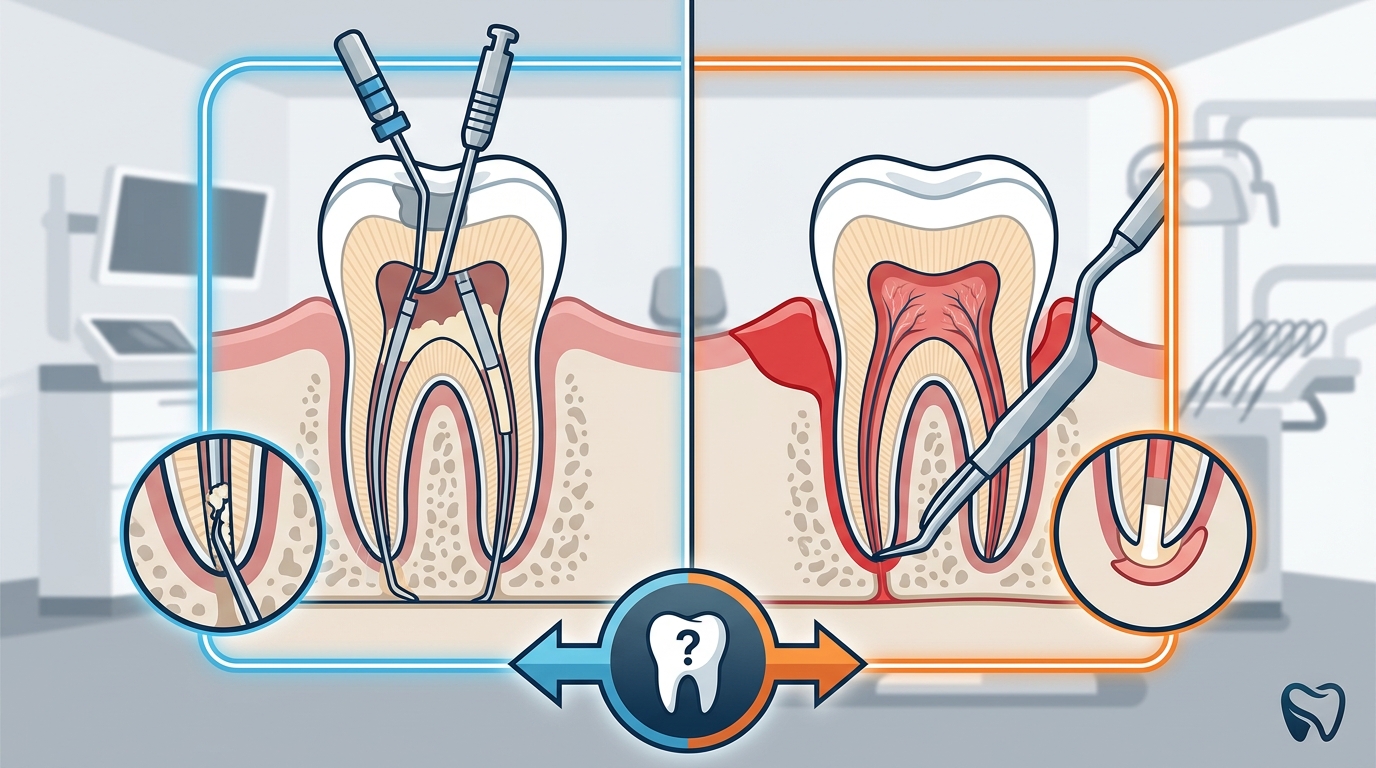
The most common error patients make is assuming that if a root canal fails, the tooth is doomed or that surgery is the only alternative. This is a dangerous misconception. Root canal retreatment is often the preferred first line of defense because it is less invasive than surgery. By re-entering the tooth, an endodontist can remove old filling materials, locate missed canals, and clean the infection from the inside out.
Many patients skip this step because they fear pain or complexity. However, modern techniques have made retreatment highly predictable and comfortable. At Richmond Endodontics, we utilize advanced tools to ensure that retreatment is performed with precision. Choosing retreatment over surgery preserves the natural structure of the tooth and avoids the healing time associated with gum incisions.
Mistake 2: Overlooking Advanced Imaging Diagnostics
Another critical mistake is relying on standard 2D X-rays to make treatment decisions. Standard radiographs can miss complex root anatomy, hidden canals, or bone defects that are crucial for determining whether retreatment or surgery is viable. Without detailed 3D imaging, both patients and general dentists may misdiagnose the cause of failure.
PreXion CBCT imaging provides a three-dimensional view of the tooth and surrounding bone. This technology allows us to see exactly where the infection is located and whether it is accessible through retreatment or requires surgical intervention. According to the American Association of Endodontists, the use of cone-beam computed tomography (CBCT) significantly improves diagnostic accuracy in complex cases. By skipping this step, you risk undergoing an unnecessary procedure or missing a treatable condition.
Mistake 3: Assuming Surgery is Always the Next Step
Patients often jump to the conclusion that an apicoectomy (root end surgery) is the default solution for a failed root canal. While surgery is a highly effective option, it is not always the best first choice. Surgery involves making an incision in the gum tissue to access the root tip, which means a longer recovery period and more post-operative discomfort.
Retreatment is generally less invasive and can often resolve the issue without touching the gum tissue. The decision should be based on the specific anatomy of the tooth. For example, if a post and core are present, or if the canal is blocked by a broken instrument, retreatment might be difficult or impossible. In such cases, surgery becomes the logical choice. However, assuming surgery is always necessary ignores the benefits of non-surgical options.
Neglecting the Role of Specialist Expertise
A frequent error is seeking care from a general dentist for complex retreatment or surgery when a specialist is required. Endodontists are specialists who have completed additional years of training focused exclusively on diagnosing tooth pain and performing root canal therapy and related procedures. They see hundreds of these cases annually, whereas general dentists may see only a few.
Dr. Benjamin Adams, DDS, has over 20 years of experience in both surgical and non-surgical endodontics. His expertise ensures that you receive the highest standard of care. According to the American Association of Endodontists, endodontists are trained to handle complex cases that general dentists may refer out. Choosing a specialist increases the likelihood of saving the tooth and reduces the risk of complications.
Failing to Consider Long-Term Tooth Preservation
Finally, many patients focus on immediate cost or convenience rather than the long-term health of their tooth. Saving your natural tooth is almost always the best option for oral health. Natural teeth maintain the integrity of the jawbone and surrounding teeth. If a tooth is extracted, you may need a bridge or implant, which are more expensive and invasive in the long run.
Both retreatment and surgery aim to preserve the tooth. However, the choice between them affects the longevity of the restoration. At Richmond Endodontics, we prioritize long-term outcomes over short-term fixes. We work closely with your general dentist to ensure that the final restoration is durable and functional. By making an informed decision, you protect your investment in your oral health.
Comparison of Treatment Options
To help you understand the differences, here is a summary of the key factors involved in choosing between root canal retreatment and surgery.
| Factor | Root Canal Retreatment | Apicoectomy (Surgery) |
|---|---|---|
| Invasiveness | Minimally invasive; no gum incision | Surgical; requires gum incision |
| Recovery Time | Short; usually 1-2 days | Longer; may take several weeks |
| Best For | Accessible canals, missed anatomy | Blocked canals, persistent infection |
| Technology Used | Microscopes, ultrasonic tips | Surgical microscopes, CBCT imaging |
Key Takeaways
- Retreatment is often the preferred first option because it is less invasive than surgery.
- Advanced 3D imaging (CBCT) is essential for accurate diagnosis and treatment planning.
- Surgery is not always necessary and may be reserved for cases where retreatment is not feasible.
- Specialist care from an endodontist like Dr. Benjamin Adams significantly improves success rates.
- Preserving your natural tooth is crucial for long-term oral health and jawbone integrity.
- Richmond Endodontics serves patients across Eastern Indiana and Western Ohio with advanced care.
- Early intervention prevents the need for more complex procedures later.
Frequently Asked Questions
What is the success rate of root canal retreatment?
Root canal retreatment has a high success rate, often comparable to initial root canal therapy. The outcome depends on the cause of the initial failure and the complexity of the case. At Richmond Endodontics, we use advanced technology to maximize the chances of saving your tooth.
When is apicoectomy recommended over retreatment?
Apicoectomy is recommended when retreatment is not possible due to blocked canals, broken instruments, or complex anatomy that cannot be accessed from the inside. It is also used when a previous retreatment has failed to resolve the infection.
How long does recovery take after root canal surgery?
Recovery from an apicoectomy typically takes a few days to a week. You may experience some swelling and discomfort, which can be managed with medication. Most patients return to normal activities within 2-3 days.
Does Richmond Endodontics offer GentleWave technology?
Yes, we are one of the few practices in the country offering GentleWave® and EdgePro® laser disinfection. These technologies enhance the cleaning process and improve outcomes for both retreatment and surgery.
Can I see an endodontist without a referral?
While many patients are referred by their general dentist, you can also contact us directly. We welcome patients from Richmond, Centerville, Cambridge City, Connersville, Winchester, Union City, Portland, and surrounding areas in Eastern Indiana, as well as Dayton, Greenville, Eaton, Troy, Springfield, Urbana, and Celina in Western Ohio.
What is the cost difference between retreatment and surgery?
The cost varies depending on the complexity of the case and the tooth involved. However, both options are generally less expensive than tooth extraction and replacement with an implant. We offer payment plans to make care accessible.
How do I know if my root canal has failed?
Signs of failure include persistent pain, swelling, tenderness, or the return of symptoms after a period of relief. If you experience these issues, it is important to see an endodontist promptly for evaluation.
Take Control of Your Dental Health
Choosing between root canal retreatment and surgery requires careful consideration of your specific dental anatomy and health goals. By avoiding common mistakes and seeking expert care, you can save your tooth and maintain your oral health. Contact Richmond Endodontics today to schedule a consultation with Dr. Benjamin Adams. We are dedicated to providing you with the highest standard of endodontic care in a comfortable and compassionate environment.