
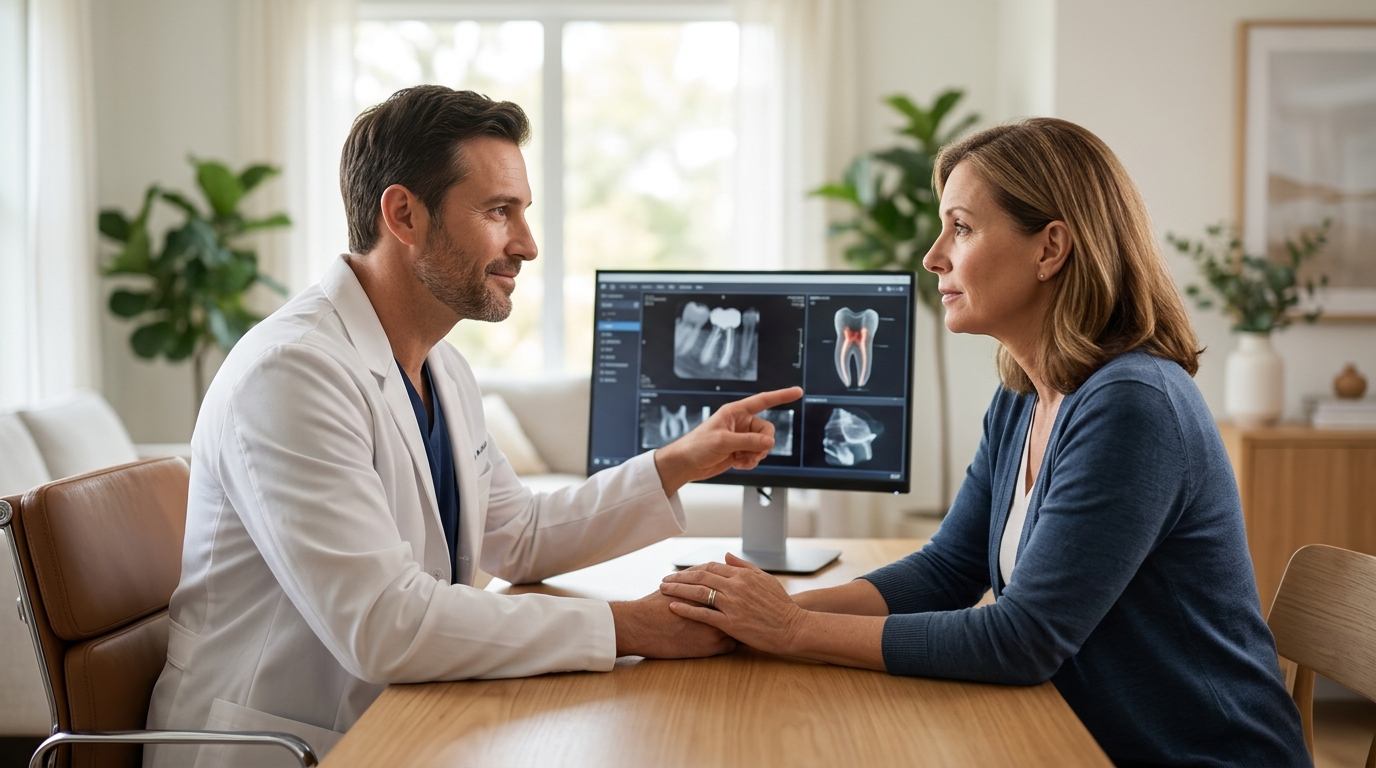
When a previous root canal treatment fails, patients face a critical decision that impacts their long-term oral health. According to recent dental literature, approximately 15% to 20% of endodontic cases may require retreatment or surgical intervention due to persistent infection or complex anatomy. This statistic highlights the importance of understanding the specific benefits of each approach. At Richmond Endodontics, we evaluate each case individually to determine whether non-surgical retreatment or apicoectomy surgery offers the highest probability of saving your natural tooth. This guide breaks down the key differences, recovery times, and success rates to help you make an informed choice alongside your specialist. (About Our Office Richmond)
Understanding Why Root Canals Fail
Before deciding between retreatment and surgery, it is essential to understand why a root canal might fail. Root canal therapy is designed to remove infected pulp and seal the tooth. However, complications can arise over time. Common causes include missed canals, complex root anatomy, or new decay that allows bacteria to re-enter the tooth. In some cases, the initial seal may break down, leading to reinfection at the root tip. When this happens, an endodontist must intervene to save the tooth. The goal is always to preserve your natural dentition whenever possible, as natural teeth provide superior function and sensation compared to implants. (Home Richmond Endo)
Benefits of Non-Surgical Retreatment
Non-surgical retreatment is often the first line of defense when a previous root canal fails. This procedure involves accessing the tooth through the crown, removing the existing filling material, and cleaning the canals again. The primary benefit of retreatment is that it is less invasive than surgery. Because it does not require incisions or bone removal, the recovery period is typically shorter and more comfortable for the patient. (Home Richmond Endo)
Another significant advantage is the preservation of the tooth structure. Retreatment allows the endodontist to address issues such as blocked canals or broken instruments that may have prevented successful healing initially. By re-cleaning and re-sealing the root canal system, we can often eliminate the infection without altering the surrounding bone or gum tissue. This approach is particularly effective when the failure is due to coronal leakage or missed anatomy that can be accessed from the top of the tooth.
Benefits of Root Canal Surgery (Apicoectomy)
Root canal surgery, also known as an apicoectomy, is a microsurgical procedure performed when non-surgical retreatment is not feasible or has already failed. This procedure involves making a small incision in the gum tissue to access the root tip and remove any infected tissue. The benefits of surgery include direct visualization of the root end and the ability to treat complex anatomical variations that cannot be reached through the crown.
Surgery is often recommended when there is a persistent lesion at the root tip that does not resolve with retreatment. It allows the endodontist to remove the very tip of the root, where infections often hide. This targeted approach can be highly effective in saving teeth that have complex curvatures or obstructions. Additionally, surgery can address issues such as root fractures or cysts that are not accessible through traditional methods. The precision of modern microsurgical techniques ensures that the procedure is both effective and minimally traumatic to the surrounding tissues.
The Role of Advanced Technology
At Richmond Endodontics, we utilize state-of-the-art technology to enhance the success of both retreatment and surgery. The Zeiss ProErgo surgical microscope provides superior magnification and lighting, enabling our team to detect the finest details in the root canal system. This level of precision is critical for identifying missed canals or complex anatomy that may have contributed to the initial failure.
We also employ GentleWave® and EdgePro® laser disinfection technologies. These advanced methods offer a more efficient and precise way to clean and disinfect the root canal system, enhancing healing and reducing the risk of reinfection. The PreXion CBCT imaging system provides highly detailed 3D imaging with lower radiation exposure, allowing us to visualize your teeth and surrounding structures with unparalleled clarity. This diagnostic tool is essential for planning both retreatment and surgical procedures, ensuring that we address all aspects of the infection.
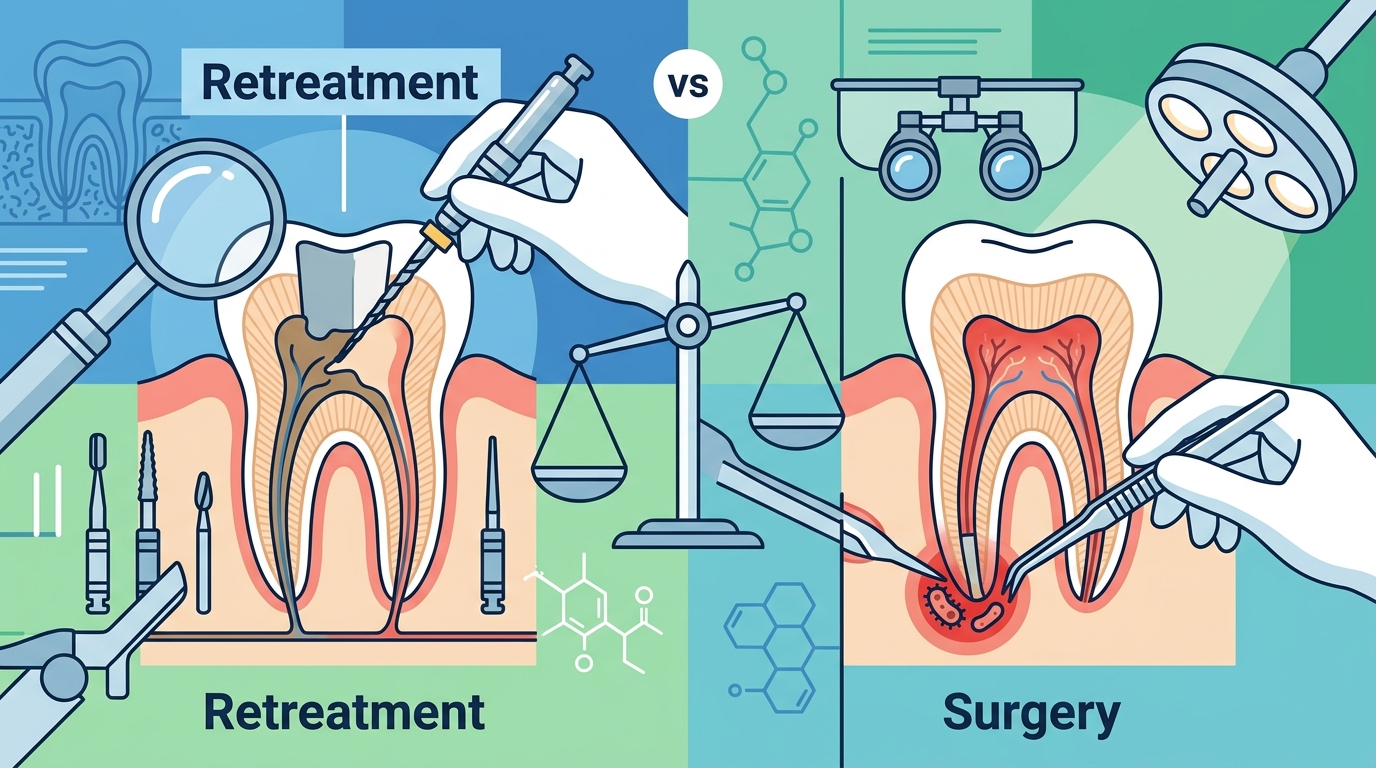
Comparison: Retreatment vs. Surgery
Choosing between retreatment and surgery depends on several factors, including the cause of failure, the complexity of the root anatomy, and the patient's overall health. The table below summarizes the key differences between the two procedures.
| Feature | Non-Surgical Retreatment | Root Canal Surgery (Apicoectomy) |
|---|---|---|
| Invasiveness | Low (Access through crown) | Higher (Incision and bone removal) |
| Recovery Time | Shorter (Days to a week) | Longer (Weeks for full healing) |
| Best For | Missed canals, blocked canals, coronal leakage | Persistent lesions, complex anatomy, failed retreatment |
| Technology Used | Microscope, XDR Digital X-Rays | Zeiss ProErgo Microscope, GentleWave®, EdgePro® |
| Success Rate | High (Depends on cause of failure) | High (85-95% in many studies) |
Key Takeaways
- Preservation Priority: The primary goal of both retreatment and surgery is to save your natural tooth, which is always preferred over extraction and replacement.
- Retreatment First: Non-surgical retreatment is often the preferred initial option because it is less invasive and preserves more tooth structure.
- Surgical Precision: Apicoectomy surgery is highly effective for complex cases where retreatment is not possible, thanks to advanced microsurgical techniques.
- Technology Matters: The use of the Zeiss ProErgo microscope and PreXion CBCT imaging significantly improves diagnostic accuracy and treatment outcomes.
- Disinfection Innovation: GentleWave® and EdgePro® laser disinfection offer superior cleaning capabilities, reducing the risk of reinfection in both procedures.
- Expert Evaluation: Dr. Benjamin Adams has over 20 years of experience in both surgical and non-surgical endodontics, ensuring expert care for every patient.
- Regional Care: We serve patients across Eastern Indiana and Western Ohio, providing accessible, high-quality endodontic care to the community.
Frequently Asked Questions
How do I know if I need retreatment or surgery?
The decision depends on the specific cause of the failure. If the issue is accessible from the crown, such as a missed canal or broken instrument, retreatment is usually preferred. If there is a persistent infection at the root tip or complex anatomy, surgery may be necessary. Dr. Adams will use CBCT imaging to determine the best approach.
Is root canal surgery painful?
Root canal surgery is performed under local anesthesia, so you should not feel pain during the procedure. Post-operative discomfort is typically manageable with over-the-counter pain medication. Most patients return to normal activities within a few days.
What is GentleWave® technology?
GentleWave® is an advanced multi-energy fluid dynamics technology that cleans and disinfects the root canal system more thoroughly than traditional methods. It is used in both retreatment and surgery to enhance healing and reduce the risk of reinfection.
How long does recovery take after an apicoectomy?
Recovery time varies by patient, but most people experience minimal swelling and discomfort within the first week. Full healing of the bone and gum tissue may take several months. Your endodontist will provide specific post-operative instructions to ensure a smooth recovery.
Can I see fewer patients per day for better care?
Yes, at Richmond Endodontics, we intentionally see fewer patients each day to allow for ample treatment time. This approach ensures that we can dedicate the proper time to each individual, providing a comfortable and informative experience.
What areas do you serve?
We proudly provide specialized endodontic care to patients across Eastern Indiana and Western Ohio. Our office is located in Richmond, IN, and we welcome patients from communities including Centerville, Cambridge City, Connersville, Dayton, Greenville, and surrounding areas.
How does the Zeiss ProErgo microscope help?
The Zeiss ProErgo surgical microscope offers superior magnification and lighting, enabling our team to perform treatments with the utmost precision. It allows us to detect the finest details in the root canal system that are often invisible to the naked eye, leading to better outcomes.
Schedule Your Consultation
If you are experiencing pain or have been diagnosed with a failed root canal, do not wait. Early intervention can save your tooth and prevent further complications. Contact Richmond Endodontics to schedule a consultation with Dr. Benjamin Adams. We are committed to providing exceptional treatment in a comfortable and compassionate environment. Visit our Contact Us page to request an appointment or call us at (765) 939-6355. We look forward to helping you achieve optimal oral health with the most advanced techniques in root canal therapy.