

Root canal retreatment is a specialized endodontic procedure designed to save a tooth that has previously undergone root canal therapy but has failed to heal or has become reinfected. According to the American Association of Endodontists, retreatment is often the first choice to preserve a natural tooth, offering a high success rate when performed by a specialist. This process involves removing the existing crown, filling, or core material to access the root canal system again, cleaning it thoroughly, and resealing it to prevent further bacterial invasion. (About Our Office Richmond)
Signs Your Root Canal May Have Failed
Identifying the need for retreatment begins with recognizing specific symptoms that indicate the original treatment may not have been fully successful or that the tooth has become reinfected. While some patients experience no symptoms at all, others may notice distinct changes in their oral health. It is critical to understand that root canal retreatment is a precise intervention aimed at resolving persistent issues that standard care could not address. (Home Richmond Endo)
One of the most common indicators is the return of pain or tenderness in the gums near the previously treated tooth. This discomfort may be constant or occur only when chewing or applying pressure. Another significant sign is the appearance of a pimple-like bump on the gums, which can indicate an abscess or infection at the root tip. You might also notice swelling in the surrounding area, which suggests that the body is fighting an ongoing bacterial presence. (Home Richmond Endo)
Additionally, the return of sensitivity to hot or cold temperatures, although less common after a root canal, can signal that nerve tissue remains or has re-entered the canal. Discoloration of the tooth or a bad taste in the mouth are also potential red flags. If you experience any of these symptoms, it is essential to consult with an endodontist immediately to determine the cause and appropriate treatment.
Why Do Root Canals Fail?
Understanding the causes of root canal failure is crucial for patients considering retreatment. One primary reason is the presence of complex canal anatomy that was not fully addressed during the initial procedure. Teeth often have additional canals that are difficult to locate and clean, and if these are missed, bacteria can persist and cause infection. Another common cause is the delay in placing a permanent restoration, such as a crown, after the root canal. This delay can allow saliva and bacteria to re-enter the tooth, leading to reinfection.
Cracked or fractured teeth are also a significant factor in root canal failure. If a tooth cracks after the initial treatment, bacteria can penetrate the crack and infect the root canal system. In some cases, the original filling material may degrade over time, creating gaps that allow bacteria to enter. Additionally, new decay can develop around the edges of the restoration, compromising the seal and leading to infection.
It is important to note that not all root canals are destined to fail. Many teeth last a lifetime with proper care and restoration. However, when failure does occur, retreatment offers a viable option to save the tooth. Root canal retreatment is a specialized procedure that requires advanced skills and technology to navigate the complex anatomy of the tooth and remove the existing materials safely.
The Diagnostic Process for Retreatment
Accurate diagnosis is the cornerstone of successful retreatment. At Richmond Endodontics, we utilize a comprehensive diagnostic process to determine the cause of failure and the best course of action. This process begins with a detailed review of your medical and dental history, followed by a thorough clinical examination. We look for signs of swelling, tenderness, and the presence of any drainage pathways.
Imaging plays a critical role in the diagnostic process. We use high-resolution digital X-rays and Cone Beam Computed Tomography (CBCT) to visualize the tooth and surrounding bone structure in three dimensions. This advanced imaging allows us to detect hidden canals, fractures, and bone loss that may not be visible on standard X-rays. The PreXion CBCT imaging system provides unparalleled clarity, enabling us to plan the retreatment with precision.
During the examination, we also test the tooth for sensitivity and mobility. These tests help us assess the health of the surrounding tissues and the stability of the tooth. By combining clinical findings with advanced imaging, we can create a personalized treatment plan that addresses the specific needs of your tooth. This thorough approach ensures that we identify all potential issues and provide the most effective treatment.
Advanced Technology in Retreatment
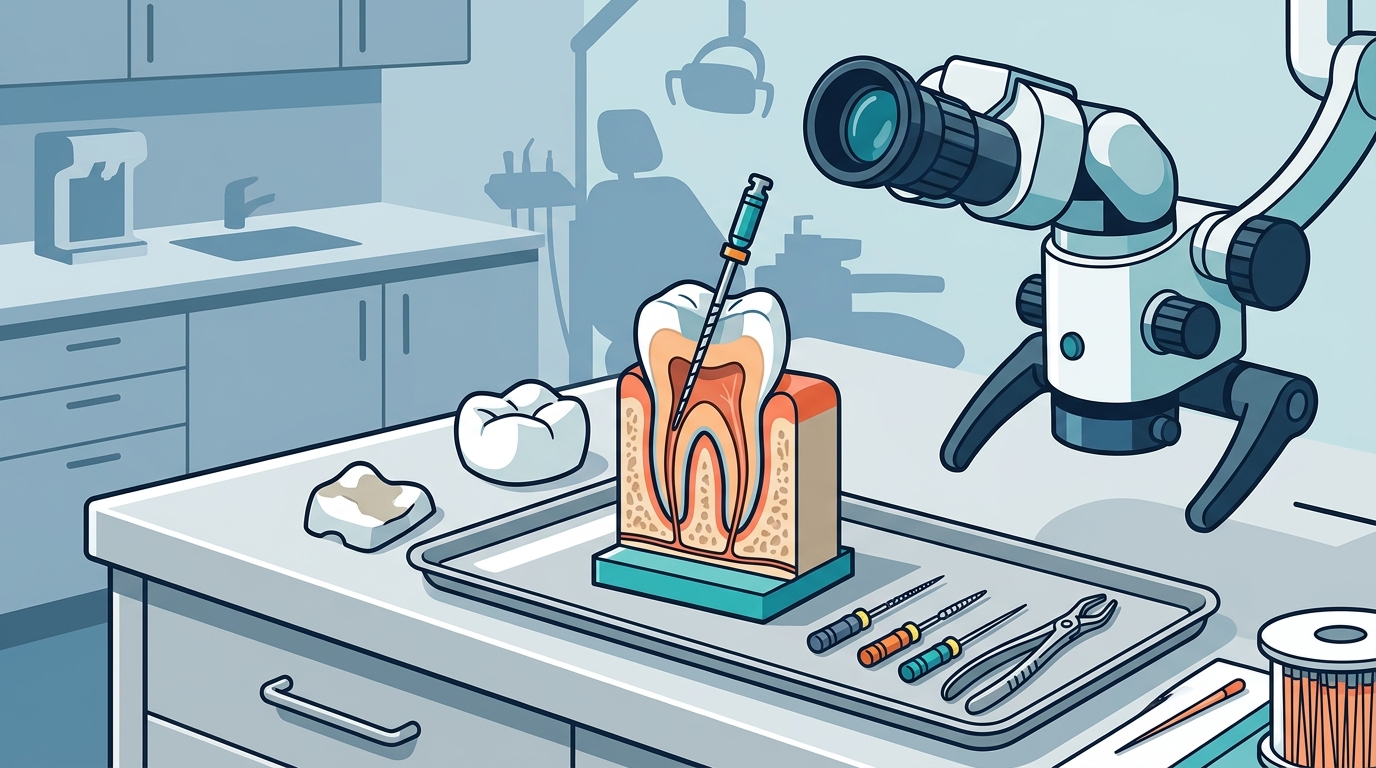
Retreatment requires specialized tools and techniques to navigate the complex anatomy of the tooth and remove the existing materials safely. At Richmond Endodontics, we leverage cutting-edge technology to enhance the precision and efficacy of our retreatment procedures. One of our key technologies is the Zeiss ProErgo surgical microscope, which provides superior magnification and lighting. This allows us to see the finest details in the root canal system, ensuring that we do not miss any hidden canals or fractures.
We also utilize GentleWave® and EdgePro® laser disinfection technologies. These advanced systems offer a more efficient and precise way to clean and disinfect the root canal system. GentleWave® uses acoustic energy to clean complex canal anatomy, while EdgePro® uses ultrasonic energy to remove debris and bacteria. These technologies enhance healing and reduce the risk of reinfection, providing better outcomes for our patients.
Additionally, we use XDR Digital X-Rays, which provide high-definition images with lower radiation exposure compared to traditional X-rays. This ensures accurate diagnostics while prioritizing your safety. By combining these technologies with our expertise, we can perform retreatment with greater accuracy and comfort. Our commitment to innovation ensures that we provide the highest standard of care for every patient.
What to Expect During Retreatment
Undergoing root canal retreatment is a straightforward process when performed by an experienced endodontist. The procedure typically begins with the removal of the existing crown, filling, or core material. This step requires careful technique to avoid damaging the tooth structure. Once the access is created, we use specialized instruments to navigate the root canal system and remove the old filling material.
After the old material is removed, we thoroughly clean and shape the canals using our advanced disinfection technologies. This step is crucial for eliminating any remaining bacteria and preparing the canals for the new filling. We then fill the canals with a biocompatible material to seal them and prevent future infection. Finally, we restore the tooth with a temporary or permanent restoration to protect it and restore its function.
The entire procedure is performed under local anesthesia to ensure your comfort. Most retreatment procedures can be completed in one or two visits, depending on the complexity of the case. After the procedure, you may experience some mild discomfort, which can be managed with over-the-counter pain medication. We provide detailed post-operative instructions to help you recover quickly and ensure the success of your treatment.
Key Takeaways
- Root canal retreatment is a specialized procedure to save a tooth that has failed initial root canal therapy.
- Common signs of failure include pain, swelling, and the return of sensitivity in the treated tooth.
- Causes of failure often include missed canals, delayed restoration, or new decay.
- Advanced imaging like PreXion CBCT is essential for accurate diagnosis and treatment planning.
- Technologies like GentleWave® and EdgePro® enhance cleaning and disinfection during retreatment.
- Dr. Benjamin Adams has over 20 years of experience in endodontics and retreatment.
- Richmond Endodontics serves patients across Eastern Indiana and Western Ohio with expert care.
Frequently Asked Questions
How long does root canal retreatment take?
Most root canal retreatment procedures can be completed in one or two visits, depending on the complexity of the case and the condition of the tooth.
Is root canal retreatment painful?
The procedure is performed under local anesthesia, so you should not feel pain during the treatment. Some mild discomfort may occur afterward, which can be managed with medication.
What is the success rate of retreatment?
Root canal retreatment has a high success rate, often comparable to initial root canal therapy, when performed by a skilled endodontist using advanced technology.
Can I keep my original crown after retreatment?
In some cases, the existing crown can be preserved if it is in good condition. However, often the crown must be removed to access the root canal system and may need to be replaced.
How do I know if I need retreatment or extraction?
An endodontist can determine the best course of action through a comprehensive examination and imaging. Retreatment is preferred to save the natural tooth whenever possible.
What is GentleWave® technology?
GentleWave® is an advanced disinfection system that uses acoustic energy to clean complex root canal anatomy, offering a more thorough clean than traditional methods.
Who is Dr. Benjamin Adams?
Dr. Benjamin Adams is a highly skilled endodontist with over 20 years of experience, specializing in retreatment and advanced endodontic care in Richmond, Indiana.
Schedule Your Consultation
If you are experiencing symptoms that suggest your root canal may have failed, do not wait to seek professional care. Early intervention can prevent further complications and save your natural tooth. Contact Richmond Endodontics today to schedule a consultation with Dr. Benjamin Adams. We are dedicated to providing you with the highest standard of care in a comfortable and compassionate environment. Visit our Contact Us page to book your appointment or call us at (765) 939-6355. We proudly serve patients across Eastern Indiana and Western Ohio, including Richmond, Dayton, and surrounding communities.