
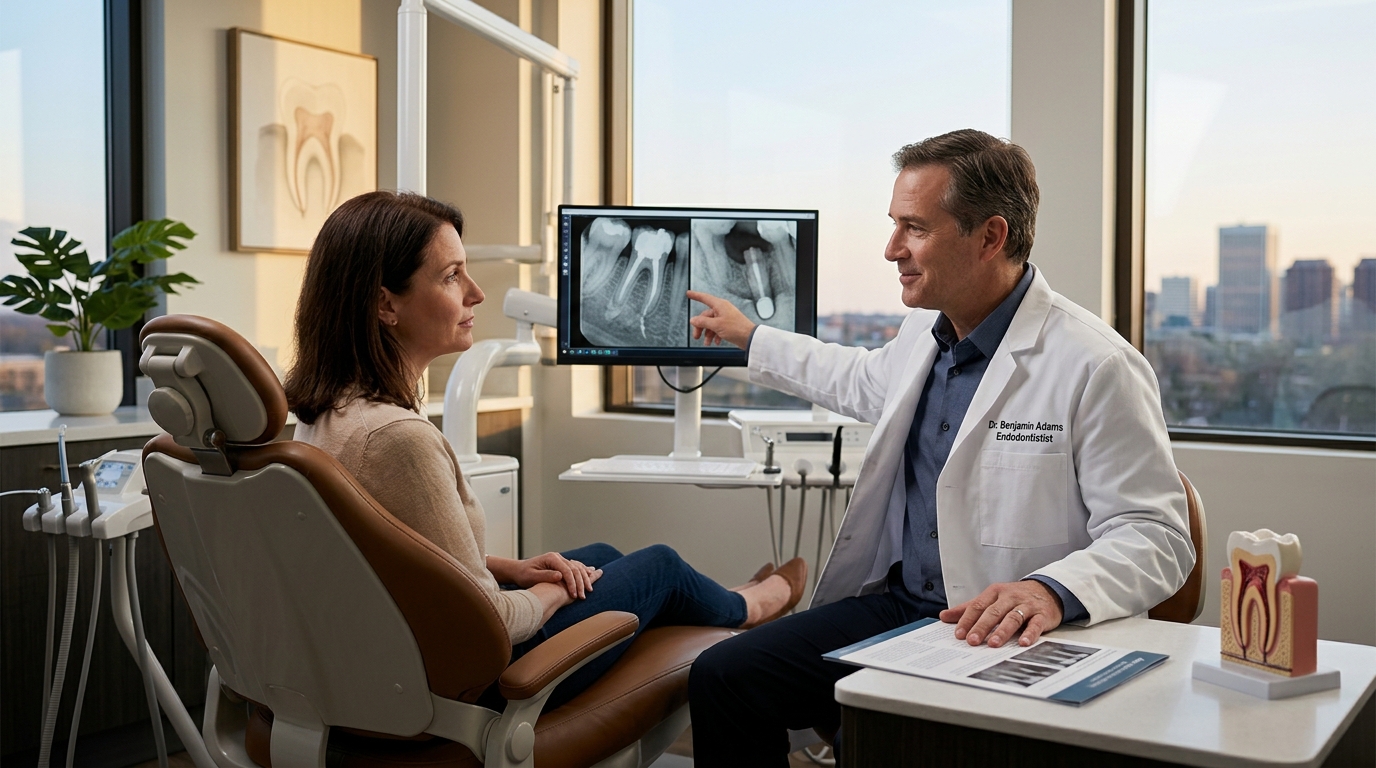
When a previous root canal treatment fails, patients often face a difficult decision between retreatment and surgical intervention. According to the American Association of Endodontists, retreatment is typically the first line of defense because it preserves the natural tooth structure and avoids invasive procedures. However, in cases where retreatment is not feasible due to complex anatomy or obstructions, endodontic surgery becomes the necessary alternative. Understanding the distinct benefits of each approach is critical for making an informed decision about your long-term oral health. (Contact Us Richmond Endo)
Understanding Why Root Canals Fail
Before deciding between retreatment and surgery, it is essential to understand why a root canal might fail. Root canal failure is not always a sign of poor initial care. Often, it results from complex anatomical variations that were missed during the first procedure. Bacteria can re-enter the tooth through new decay, loose fillings, or cracked crowns. In other cases, tiny lateral canals or complex root structures harbor bacteria that standard cleaning cannot reach. At Richmond Endodontics, we utilize PreXion CBCT imaging to visualize these hidden complexities, ensuring we accurately diagnose the source of the infection before recommending a treatment path. (Home Richmond Endo)
The Benefits of Root Canal Retreatment
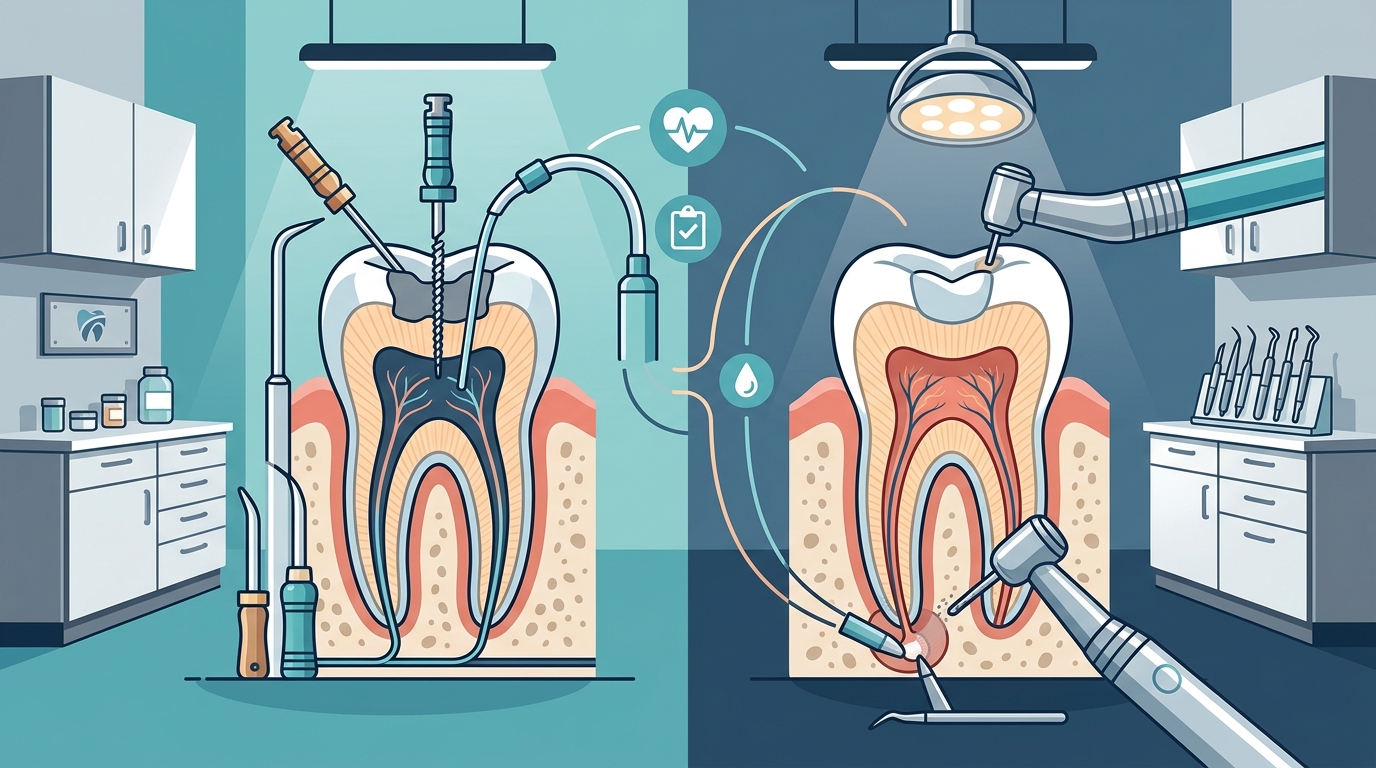
Root canal retreatment, also known as non-surgical retreatment, involves accessing the tooth through the crown to remove the existing filling material, clean the canals again, and reseal the space. This approach is generally preferred for several compelling reasons. (Home Richmond Endo)
Preservation of Natural Tooth Structure
The primary benefit of retreatment is that it is non-invasive. It does not require cutting into the gum tissue or bone. By preserving the surrounding periodontal ligament and bone structure, the tooth maintains its natural proprioception and stability. This approach aligns with the core value of patient-centered care, prioritizing the least invasive method to achieve a cure.
Higher Success Rates in Many Cases
Studies indicate that non-surgical retreatment has a high success rate, particularly when the failure is due to missed canals or inadequate sealing. Because the procedure addresses the issue from the top down, it can effectively remove bacteria that have traveled up the root canal system. Dr. Benjamin Adams, with over 20 years of expertise, often finds that retreatment can resolve the infection without the need for surgical intervention.
Shorter Recovery Time
Patients who undergo retreatment typically experience minimal discomfort and a shorter recovery period compared to surgery. Since there are no incisions or bone removal involved, the healing process is primarily focused on the internal tissues of the tooth. This allows patients to return to their normal routines more quickly.
The Benefits of Endodontic Surgery
Endodontic surgery, commonly referred to as an apicoectomy, is recommended when non-surgical retreatment is not possible or has already failed. This procedure involves making a small incision in the gum tissue to access the root tip directly. While it is more invasive, it offers unique advantages in specific clinical scenarios.
Access to Complex Anatomies
In cases where the root canal system is blocked by a post, a broken instrument, or severe calcification, retreatment may be impossible. Surgery allows the endodontist to access the root tip directly, bypassing these obstructions. This direct access ensures that the infection at the apex of the root is thoroughly cleaned and sealed.
Removal of Pathological Tissue
Surgery allows for the direct visualization and removal of cysts, granulomas, or other pathological tissues that may have formed at the root tip. This is particularly beneficial when the infection has spread into the surrounding bone. By removing this tissue, the body can heal more effectively, preventing further bone loss.
Definitive Seal with Modern Materials
Modern endodontic surgery utilizes biocompatible materials, such as mineral trioxide aggregate (MTA), to seal the root tip. These materials provide a superior seal compared to traditional materials, reducing the risk of future reinfection. The precision of this seal is critical for long-term success, especially in cases where the root canal system cannot be fully cleaned from the coronal access.
Comparison: Retreatment vs. Surgery
To help you understand the differences between these two procedures, we have compiled a detailed comparison below. This table highlights the key distinctions in approach, recovery, and indications.
| Feature | Root Canal Retreatment | Endodontic Surgery (Apicoectomy) |
|---|---|---|
| Approach | Non-invasive; accessed through the crown | Surgical; accessed through the gum and bone |
| Primary Indication | Missed canals, inadequate seal, or new decay | Blocked canals, complex anatomy, or persistent infection |
| Recovery Time | Minimal; usually 1-2 days | Moderate; swelling and discomfort for 3-7 days |
| Tissue Impact | Preserves gum and bone structure | Requires incision and minor bone removal |
| Success Rate | High, depending on case complexity | High, especially for apical pathologies |
How Advanced Technology Changes the Outcome
At Richmond Endodontics, we leverage cutting-edge technology to enhance the success of both retreatment and surgery. The use of the Zeiss ProErgo surgical microscope allows us to detect minute fractures and canal variations that are invisible to the naked eye. This level of precision is crucial for both procedures, ensuring that no bacteria are left behind.
Furthermore, our adoption of GentleWave® and EdgePro® laser disinfection represents a significant advancement in endodontic care. GentleWave® uses multi-frequency acoustic energy to clean complex root canal systems, reaching areas that traditional files cannot. EdgePro® laser disinfection further enhances this by eliminating resistant bacteria. These technologies improve the outcomes of retreatment by ensuring a more thorough cleaning, potentially reducing the need for surgery in complex cases.
Key Takeaways
- Retreatment is First-Line: Non-surgical retreatment is generally preferred because it preserves natural tooth structure and has a high success rate.
- Surgery for Complex Cases: Endodontic surgery is indicated when retreatment is not feasible due to obstructions or complex anatomy.
- Technology Matters: The use of Zeiss ProErgo microscopes and GentleWave® technology significantly improves cleaning efficacy and outcomes.
- CBCT Imaging: PreXion CBCT imaging provides 3D visualization, allowing for accurate diagnosis and treatment planning.
- Expert Care: Dr. Benjamin Adams has over 20 years of experience in both surgical and non-surgical endodontics.
- Patient Comfort: We prioritize patient comfort by seeing fewer patients per day, allowing for thorough education and care.
- Regional Service: We serve patients across Eastern Indiana and Western Ohio, including Richmond, Dayton, and surrounding areas.
Frequently Asked Questions
How long does root canal retreatment take?
Root canal retreatment typically requires one to two appointments, similar to the initial root canal treatment. The duration depends on the complexity of the case and the number of canals involved.
Is endodontic surgery painful?
Endodontic surgery is performed under local anesthesia, so you should not feel pain during the procedure. Post-operative discomfort is usually manageable with over-the-counter pain medication and subsides within a few days.
What is GentleWave® technology?
GentleWave® is a multi-frequency acoustic energy technology that cleans and disinfects the root canal system more thoroughly than traditional methods, reaching complex anatomy that files cannot.
When is surgery preferred over retreatment?
Surgery is preferred when there are obstructions in the root canal, such as broken instruments or posts, or when the anatomy is too complex for effective non-surgical cleaning.
How do I know if my root canal failed?
Signs of root canal failure include persistent pain, swelling, tenderness in the gums, or the return of symptoms after a period of healing. A dental X-ray or CBCT scan can confirm the presence of infection.
Does insurance cover root canal retreatment or surgery?
Many insurance plans cover a portion of root canal retreatment and surgery. It is best to check with your provider and our office for specific coverage details and payment plan options.
What is the success rate of endodontic surgery?
Endodontic surgery has a high success rate, particularly when performed by an experienced endodontist using modern techniques and materials like MTA for sealing.
Schedule Your Consultation
If you are experiencing pain or have been diagnosed with a failed root canal, do not wait. Early intervention can save your tooth and prevent further complications. At Richmond Endodontics, we are committed to providing you with the highest standard of care. Contact us today to schedule a consultation with Dr. Benjamin Adams. We are located at 1427 Chester Blvd. in Richmond, IN, and serve patients across Eastern Indiana and Western Ohio. Call us at (765) 939-6355 to discuss your options and take the first step toward a healthy smile.