
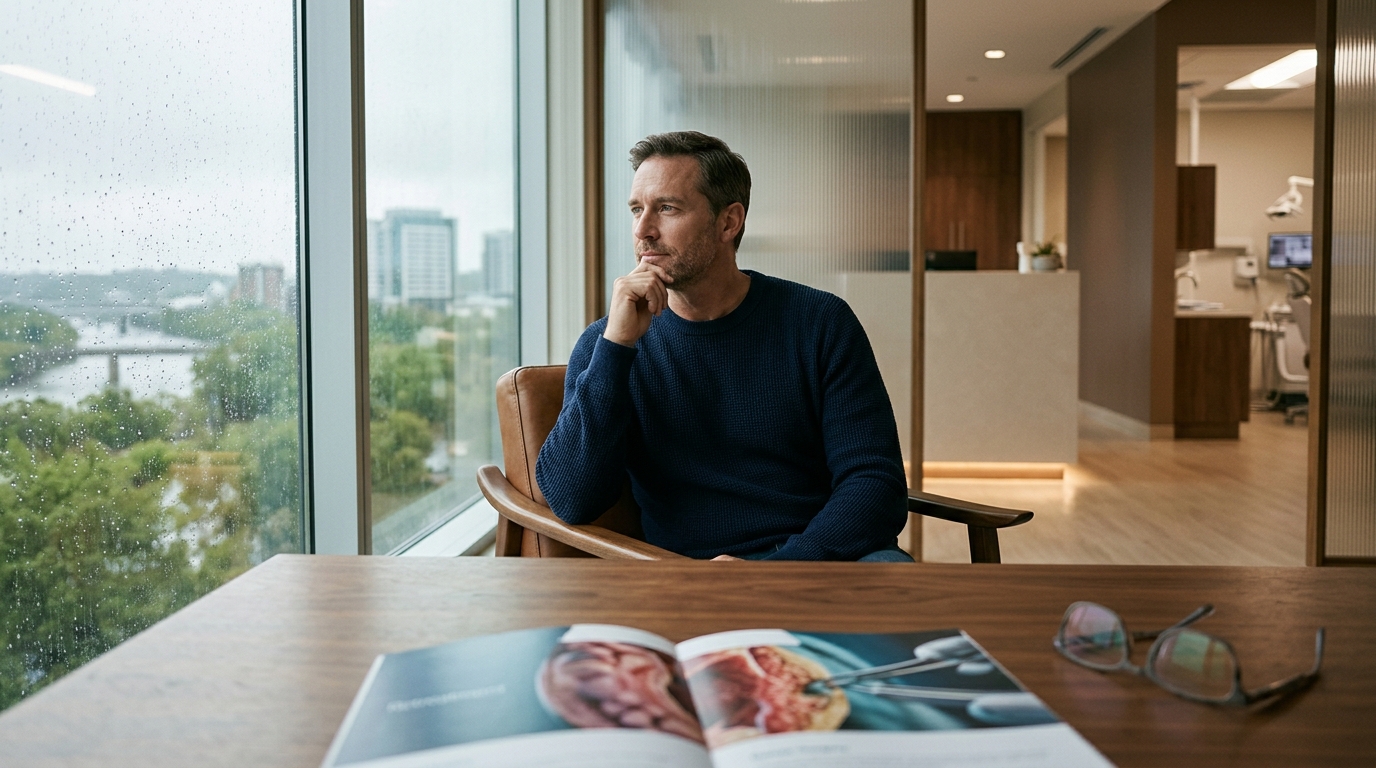
When a previous root canal treatment fails, patients face a critical decision that impacts their long-term oral health. Research indicates that the success rate of initial root canal therapy is approximately 90% to 95%, but when complications arise, the choice between nonsurgical retreatment and endodontic surgery becomes vital for saving the tooth. According to clinical studies, nonsurgical retreatment is generally preferred as the first line of defense because it is less invasive and preserves the natural tooth structure more effectively than surgical intervention. Understanding the specific benefits of each approach helps patients and referring dentists make informed decisions about preserving natural dentition. (Retreatment versus initial) (Home Richmond Endo)
Understanding Why Root Canals Fail
Before deciding between retreatment and surgery, it is essential to understand why a root canal might fail. Endodontic failure typically occurs due to persistent infection, missed canals, or new decay that allows bacteria to re-enter the tooth. When primary root canal therapy fails, periapical lesions can develop at the root tip, causing pain, swelling, or bone loss. In many cases, the infection is caused by bacteria such as Enterococcus faecalis, which can be difficult to eliminate without thorough cleaning.
Dr. Benjamin Adams at Richmond Endodontics utilizes advanced diagnostic tools to identify the exact cause of failure. By using high-resolution imaging, we can determine whether the issue is accessible through the crown of the tooth or if it requires surgical access from the gum line. This precise diagnosis is the first step in determining the most effective treatment path.
The Benefits of Nonsurgical Retreatment
Nonsurgical root canal retreatment is often the recommended first option for saving a tooth. This procedure involves removing the existing crown, filling material, and cement to access the root canal system again. The primary benefit of this approach is that it avoids cutting into the gum tissue and bone, making it less invasive than surgery.
One of the most significant advantages of nonsurgical retreatment is its ability to address issues that are not visible on standard X-rays. By using magnification and specialized instruments, endodontists can locate missed canals that were overlooked during the initial treatment. According to retrospective investigations, late failures are more prone to occur in surgically treated teeth, suggesting that nonsurgical retreatment offers a more durable long-term solution in many cases. (Nonsurgical Retreatment of)
Additionally, nonsurgical retreatment allows for the removal of fractured instruments or broken posts that may be blocking the canal. This approach is generally less expensive and requires a shorter recovery time compared to surgical options. Patients often report less postoperative discomfort, allowing them to return to their normal activities more quickly.
The Role of Root Canal Surgery
When nonsurgical retreatment is not feasible or has already failed, root canal surgery, also known as an apicoectomy, becomes the necessary next step. This procedure involves making a small incision in the gum tissue to access the root tip directly. The surgeon then removes the infected tissue and the tip of the root, sealing the end of the root canal to prevent further infection.
The primary benefit of root canal surgery is its ability to treat complex cases where nonsurgical methods cannot reach the infection. For example, if a large post or crown makes retreatment too risky for the tooth's structural integrity, surgery provides a direct route to the problem area. Surgery is also beneficial when there are calcified canals that cannot be navigated from the top of the tooth.
While surgery is more invasive, modern techniques have significantly improved its success rates and reduced recovery time. The use of surgical microscopes allows for precise visualization of the root tip, ensuring that all infected tissue is removed. This targeted approach minimizes damage to surrounding healthy tissue and promotes faster healing.
How Advanced Technology Improves Outcomes
At Richmond Endodontics, we leverage cutting-edge technology to enhance both retreatment and surgical procedures. The use of the Zeiss ProErgo surgical microscope provides superior magnification and lighting, enabling our team to perform treatments with the utmost precision. This level of detail is crucial for detecting the finest details in the root canal system that are often invisible to the naked eye.
We also utilize GentleWave® and EdgePro® laser disinfection technologies. These advanced cleaning methods offer a more efficient and precise way to disinfect the root canal system, enhancing healing and reducing the risk of reinfection. The GentleWave® System uses acoustic energy to clean complex canal anatomy, while EdgePro® provides targeted laser disinfection that eliminates bacteria without damaging surrounding tissues.
Furthermore, PreXion CBCT imaging allows us to visualize the tooth and surrounding structures in three dimensions. This 3D imaging provides unparalleled clarity, ensuring we locate all root canals and identify any hidden fractures or lesions. By combining these technologies, we can tailor each treatment plan to the specific needs of the patient, maximizing the chances of saving the natural tooth.

Comparison Summary: Retreatment vs. Surgery
Choosing between retreatment and surgery depends on several factors, including the location of the infection, the condition of the tooth, and the patient's overall health. The table below summarizes the key differences between the two procedures.
| Feature | Nonsurgical Retreatment | Root Canal Surgery (Apicoectomy) |
|---|---|---|
| Invasiveness | Low (Access through the crown) | High (Incision into gum and bone) |
| Recovery Time | Shorter (1-2 days) | Longer (Several days to weeks) |
| Best For | Missed canals, broken instruments, persistent infection | Complex anatomy, calcified canals, failed retreatment |
| Success Rate | High (Often preferred first option) | High (Effective for complex cases) |
| Technology Used | Microscopes, GentleWave®, EdgePro® | Surgical microscopes, CBCT imaging |
Key Takeaways
- First-Line Treatment: Nonsurgical retreatment is generally preferred over surgery because it is less invasive and preserves more natural tooth structure.
- Success Rates: According to clinical data, nonsurgical retreatment has a high success rate, and late failures are less common compared to surgically treated teeth.
- Technology Matters: The use of GentleWave® and EdgePro® laser disinfection significantly enhances cleaning efficacy in both retreatment and surgery.
- Diagnostics: PreXion CBCT imaging is critical for accurately diagnosing the cause of failure and planning the appropriate treatment.
- Expert Care: Dr. Benjamin Adams has over 20 years of experience in both surgical and non-surgical endodontics, ensuring high-quality outcomes.
- Preservation Goal: Both procedures aim to save the natural tooth, avoiding the need for extraction and implant placement.
- Patient Comfort: Richmond Endodontics prioritizes patient comfort by seeing fewer patients per day, allowing for thorough treatment and education.
Frequently Asked Questions
What is the main difference between root canal retreatment and surgery?
Nonsurgical retreatment accesses the root canal through the top of the tooth, while surgery involves making an incision in the gum to access the root tip directly. Retreatment is less invasive, while surgery is used for complex cases.
Which procedure has a higher success rate?
Both procedures have high success rates. However, nonsurgical retreatment is often preferred as the first option because it avoids the risks associated with surgery and preserves more tooth structure.
Is root canal surgery painful?
Root canal surgery is performed under local anesthesia, so patients should not feel pain during the procedure. Postoperative discomfort is typically manageable with over-the-counter pain medication.
How long does it take to recover from root canal surgery?
Recovery from root canal surgery usually takes a few days to a week. Patients may experience some swelling and bruising, which subsides with time and proper care.
Can I save my tooth if retreatment fails?
Yes, if nonsurgical retreatment fails, root canal surgery is often the next step. In some cases, if both treatments fail, extraction and replacement with an implant may be necessary.
What technology does Richmond Endodontics use?
We use advanced technology including the Zeiss ProErgo surgical microscope, GentleWave® and EdgePro® laser disinfection, and PreXion CBCT imaging to ensure precise and effective treatment.
How do I know if I need retreatment or surgery?
The decision depends on the specific condition of your tooth. Dr. Adams will use CBCT imaging and clinical examination to determine the most appropriate treatment plan for your situation.
Schedule Your Consultation
If you are experiencing pain or have been diagnosed with a failed root canal, do not wait. Early intervention is key to saving your natural tooth. Contact Richmond Endodontics to schedule a consultation with Dr. Benjamin Adams. We are dedicated to providing exceptional, patient-focused endodontic care to patients in Richmond, Centerville, Cambridge City, Connersville, Winchester, Union City, Portland, and surrounding areas in Eastern Indiana, as well as Dayton, Greenville, Eaton, Troy, Springfield, Urbana, Celina, and nearby communities in Western Ohio.
Visit our Contact Us page to learn more about our office hours and how to book your appointment. You can also explore our Endodontics services to understand the full range of treatments we offer. For more information about our approach to care, read about our About Our Office values and mission.