
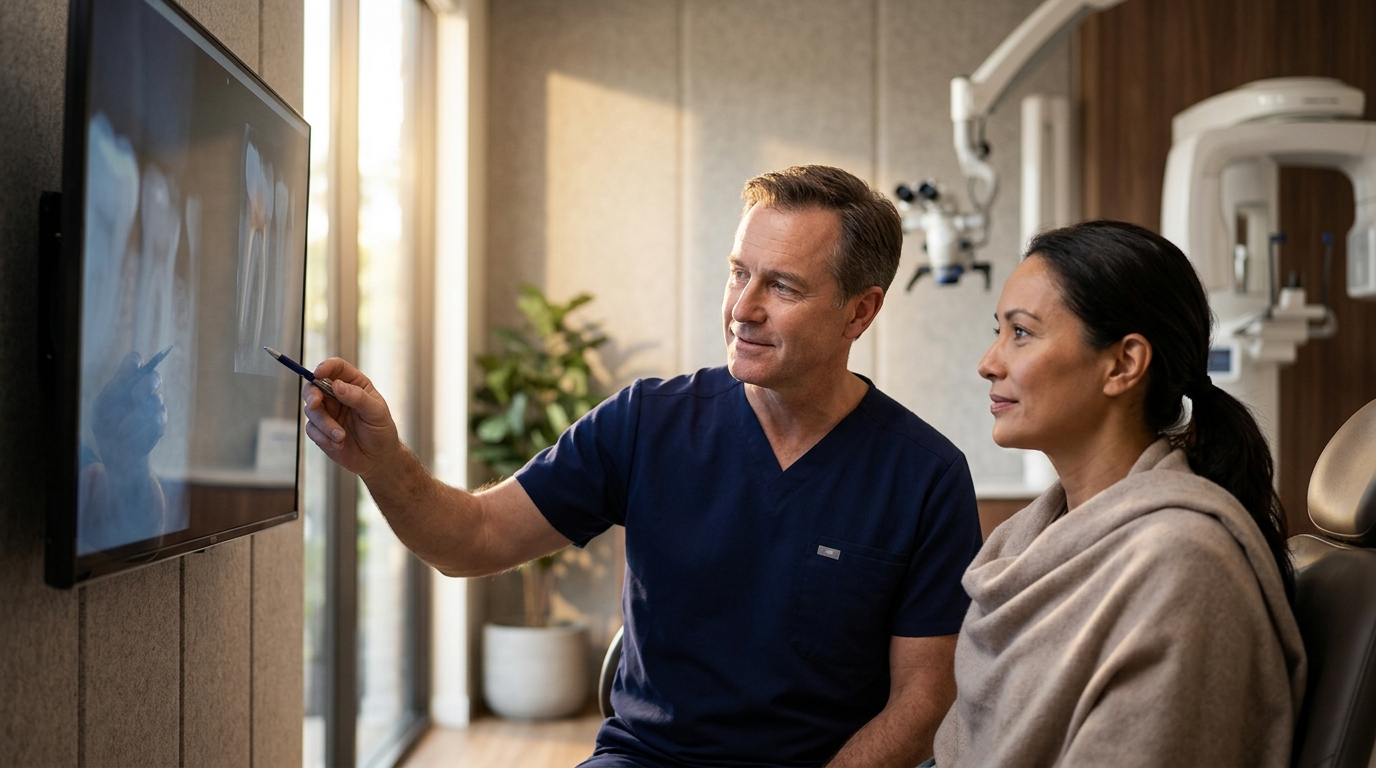
When a previous root canal treatment fails, patients face a critical decision that impacts their long-term oral health. According to recent clinical data, the success rate of nonsurgical retreatment is generally regarded to be higher than that of primary treatment in specific contexts, yet it remains lower than the initial success rate of the first procedure. This statistic highlights the complexity of saving a compromised tooth. At Richmond Endodontics, we understand that choosing between nonsurgical retreatment and endodontic surgery is not a one-size-fits-all scenario. It requires a precise diagnosis using advanced imaging to determine the most viable path for preserving your natural dentition. (Retreatment versus initial) (About Our Office Richmond)
Understanding Why Root Canals Fail
Before deciding on a treatment path, it is essential to understand why a root canal might fail. Endodontics is the branch of dentistry concerned with the biological, physical, and chemical study of the normal and diseased conditions of the pulp. A failed root canal often results from persistent infection within the root canal system. Bacteria such as Enterococcus faecalis are notorious for surviving initial treatment and causing reinfection. Other common causes include missed canals, poor obturation, or coronal leakage where bacteria re-enter the tooth from the top. (Home Richmond Endo)
When these issues arise, patients may experience pain, sensitivity, or periapical radiolucency, which indicates treatment failure. In such cases, the goal is to eliminate the infection and save the tooth. The two primary options for achieving this are nonsurgical retreatment and endodontic surgery, also known as an apicoectomy. Both procedures aim to resolve the infection, but they approach the problem from different directions. (Home Richmond Endo)
The Benefits of Nonsurgical Retreatment
Nonsurgical retreatment is often the first line of defense when a previous root canal fails. This procedure involves removing the existing crown, filling materials, and cement from the root canal system. The canals are then cleaned, shaped, and obturated again. The primary benefit of this approach is that it is less invasive than surgery. It allows the endodontist to address issues that may have been missed during the initial treatment, such as additional canals or complex anatomy.
One of the most significant advantages of nonsurgical retreatment is the preservation of the tooth's structural integrity. By working through the original access point, we avoid the need for surgical incisions and bone removal. This method is particularly effective when the failure is due to coronal leakage or missed anatomy that can be accessed non-surgically. Furthermore, retreatment is generally less expensive and involves a shorter recovery time compared to surgical options.
However, the success of nonsurgical retreatment depends heavily on the ability to locate and clean all canals. In some cases, obstructions such as broken instruments or calcified canals may prevent effective cleaning. In these scenarios, surgical intervention may be necessary to address the infection from the root tip.
The Role of Root Canal Surgery
Endodontic surgery, or apicoectomy, is typically recommended when nonsurgical retreatment is not feasible or has already failed. This procedure involves making a small incision in the gum tissue to access the root tip and the surrounding bone. The endodontist then removes the infected tissue and the tip of the root, followed by a small filling to seal the end of the root canal. The primary benefit of surgery is its ability to address infections that are inaccessible via nonsurgical means.
Surgery is particularly effective for treating persistent periapical lesions that do not resolve with retreatment. It allows for direct visualization and removal of pathology that may be hidden deep within the bone. Additionally, surgical intervention can correct anatomical anomalies, such as curved or blocked canals, that prevent effective nonsurgical cleaning. For patients with complex root structures, surgery offers a targeted approach to eliminating infection and promoting healing.
While surgery is highly effective, it is more invasive than retreatment. It requires a longer recovery period and involves more post-operative discomfort. However, with modern techniques and advanced imaging, the risks and complications associated with surgery have been significantly reduced. The decision to proceed with surgery is always made after careful consideration of the patient's specific clinical situation.
How Advanced Technology Changes Outcomes
At Richmond Endodontics, we leverage cutting-edge technology to enhance the success of both retreatment and surgery. The use of the Zeiss ProErgo surgical microscope provides superior magnification and lighting, enabling us to detect the finest details in the root canal system. This precision is crucial for identifying missed canals and ensuring thorough cleaning during retreatment.
For surgical cases, the PreXion CBCT imaging system provides highly detailed 3D imaging with lower radiation exposure. This technology allows us to visualize the tooth and surrounding structures with unparalleled clarity, ensuring accurate diagnosis and treatment planning. Additionally, our use of GentleWave® and EdgePro® laser disinfection technology offers a more efficient and precise way to clean and disinfect the root canal system, enhancing healing and reducing the risk of reinfection.
These technological advancements have transformed endodontic care, allowing us to achieve better outcomes with less invasiveness. By combining advanced imaging with precise instrumentation, we can tailor each treatment plan to the individual needs of the patient. This personalized approach ensures that we select the most effective option for saving your natural tooth.
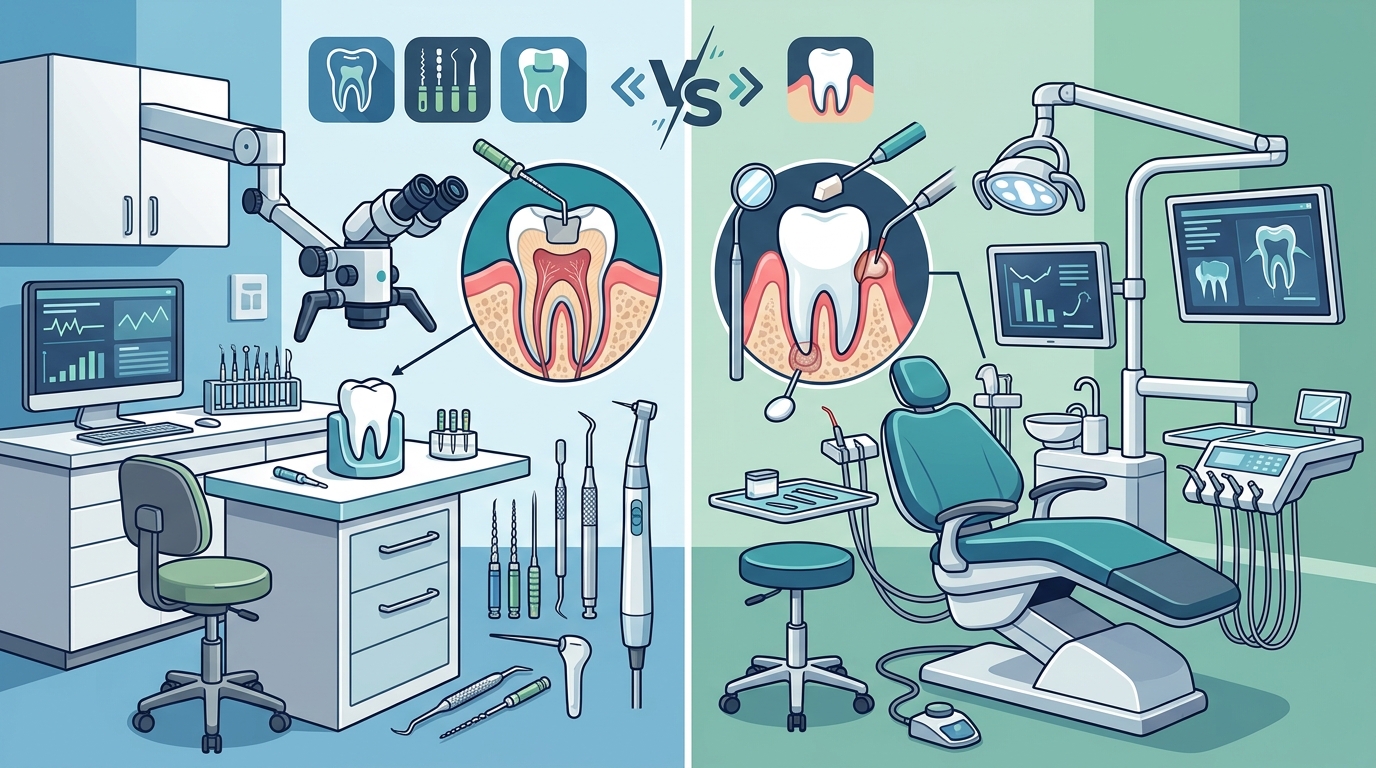
Comparison of Procedures
To help you understand the differences between nonsurgical retreatment and endodontic surgery, we have compiled a comparison of their key features. This table outlines the benefits, indications, and recovery times for each procedure.
| Feature | Nonsurgical Retreatment | Endodontic Surgery (Apicoectomy) |
|---|---|---|
| Invasiveness | Low. Access through the crown. | High. Requires gum incision and bone access. |
| Primary Benefit | Preserves tooth structure; shorter recovery. | Addresses inaccessible infections; direct visualization. |
| Best For | Missed canals, coronal leakage, accessible pathology. | Blocked canals, persistent lesions, complex anatomy. |
| Recovery Time | Short. Usually a few days. | Moderate. May take several weeks for full healing. |
| Success Rate | High, when anatomy allows complete cleaning. | High, for cases where retreatment is not feasible. |
Key Takeaways
- Retreatment is often the first choice: Nonsurgical retreatment is less invasive and preserves more of the tooth's natural structure compared to surgery.
- Surgery addresses complex cases: Apicoectomy is essential when infections are inaccessible via the crown or when retreatment has failed.
- Technology improves outcomes: The use of the Zeiss ProErgo microscope and PreXion CBCT imaging significantly enhances diagnostic accuracy and treatment precision.
- Disinfection is critical: Advanced technologies like GentleWave® and EdgePro® laser disinfection reduce the risk of reinfection in both procedures.
- Recovery varies: Retreatment typically involves a shorter recovery period, while surgery requires more time for gum and bone healing.
- Expertise matters: Dr. Benjamin Adams has over 20 years of experience in both surgical and non-surgical endodontics, ensuring high-quality care.
- Personalized care: We see fewer patients per day to dedicate ample time to each individual, ensuring thorough education and comfort.
Frequently Asked Questions
What is the main difference between retreatment and surgery?
Nonsurgical retreatment involves cleaning the root canals from the top of the tooth through the crown, while surgery involves accessing the root tip through the gum and bone to remove infection directly.
Which procedure has a higher success rate?
The success rate depends on the specific case. Generally, nonsurgical retreatment is preferred when feasible, but surgery is highly effective for cases where retreatment is not possible or has failed.
Is root canal surgery painful?
With modern anesthesia and techniques, most patients report minimal discomfort during and after the procedure. Some soreness is normal, but it is typically manageable with over-the-counter pain medication.
How long does recovery take for each procedure?
Recovery from nonsurgical retreatment is usually quick, often within a few days. Surgery may require a longer recovery period, typically several weeks for complete healing of the gum and bone.
Can I save my tooth with retreatment?
In many cases, yes. Nonsurgical retreatment is highly effective at saving teeth that have failed due to missed canals or coronal leakage, provided the tooth structure is sufficient.
What technology does Richmond Endodontics use?
We utilize the Zeiss ProErgo surgical microscope, PreXion CBCT imaging, and advanced disinfection technologies like GentleWave® and EdgePro® to ensure precise and effective treatment.
How do I know which option is right for me?
The best option depends on your specific clinical situation. Dr. Adams will evaluate your case using advanced imaging to determine the most effective and conservative treatment plan.
Schedule Your Consultation
Choosing between root canal retreatment and surgery is a significant decision that requires expert guidance. At Richmond Endodontics, we are committed to providing the highest standard of care with a focus on precision and compassion. Led by Dr. Benjamin Adams, our team utilizes the latest technology to ensure the best possible outcomes for our patients.
If you are experiencing pain or have been diagnosed with a failed root canal, do not wait. Contact us today to schedule a consultation. We serve patients across Eastern Indiana and Western Ohio, including Richmond, Dayton, and surrounding communities. Visit our Contact Us page to book your appointment or call us at (765) 939-6355. Let us help you preserve your natural smile with advanced endodontic care.