

Endodontic failure is a rare but documented occurrence in dental medicine. According to the American Association of Endodontists, the success rate for initial root canal therapy is approximately 95 percent. This means that in roughly 5 percent of cases, the original treatment may not achieve long-term healing. When this happens, patients often face renewed pain or infection. Understanding the specific symptoms that indicate a need for retreatment is critical for preserving your natural tooth. This guide outlines the clinical signs, diagnostic processes, and advanced treatment options available at Richmond Endodontics. (About Our Office Richmond)
Recognizing the Symptoms of Failure
One of the most common misconceptions about root canal retreatment is that it is always preceded by severe pain. While discomfort is a frequent indicator, the absence of pain does not guarantee that the tooth is healthy. The following symptoms are primary indicators that you may need to consult an endodontist for a second procedure. (Endodontic FAQ Richmond Endo)
1. Return of Pain or Tenderness
If you experienced relief after your initial root canal but notice that pain has returned, this is a significant red flag. The pain may manifest as tenderness when chewing or applying pressure to the tooth. In some cases, the pain can be intermittent, coming and going over several weeks. This often suggests that bacteria have re-entered the root canal system or that a new infection has developed at the tip of the root. (Home Richmond Endo)
2. Swelling and Gum Boils
Visible swelling in the gums adjacent to the treated tooth is a classic sign of infection. Patients may notice a pimple-like bump on the gum line, often referred to as a sinus tract or gum boil. This is the body's attempt to drain pus from the infected area. According to clinical data, the presence of such lesions indicates an active bacterial infection that requires immediate professional intervention to prevent bone loss. (Home Richmond Endo)
3. Discoloration of the Tooth
While some discoloration is normal after trauma, a tooth that was previously root-canaled may darken over time if the internal tissues become necrotic or if the seal has failed. This change in color can be a subtle indicator that the internal environment of the tooth is no longer sterile.
4. Sensitivity to Temperature
Although a root-canaled tooth should not have vital nerve tissue, some patients report sensitivity to hot or cold temperatures. This can occur if the tooth has a cracked root or if there is a missed canal that still contains vital pulp tissue. Sensitivity is a clear signal that the tooth's structural integrity or internal health is compromised.
Why Root Canals Fail
Understanding the root cause of failure is essential for determining the appropriate retreatment strategy. Endodontic failure is rarely random; it is usually the result of specific biological or mechanical factors.
Complex Root Canal Anatomy
Teeth often have complex internal structures that are difficult to navigate. Curved or narrow canals can prevent instruments from reaching the full length of the root. Additionally, some teeth have accessory canals or lateral branches that are invisible on standard X-rays. If these areas are not cleaned and sealed, bacteria can survive and multiply, leading to reinfection.
Delayed Placement of Restoration
After a root canal, the tooth must be restored with a crown or filling. If this restoration is delayed, saliva can seep into the root canal system through the temporary filling. Saliva contains a high concentration of bacteria. Microleakage is a leading cause of failure, as it allows new bacteria to contaminate the previously sterile canal space.
Cracked or Fractured Teeth
Teeth that have undergone root canal therapy are more brittle than vital teeth because they no longer receive nourishment from the pulp. If a crack develops in the root, it can act as a highway for bacteria to enter the surrounding bone. Vertical root fractures are particularly problematic and often cannot be saved, requiring extraction. However, if the crack is limited to the crown, retreatment may be viable.
Missed Canals
Some teeth, particularly molars, have four or more canals. If a canal is missed during the initial treatment, the remaining pulp tissue can become infected. This is why advanced imaging is critical in both initial and retreatment cases.
The Diagnostic Process
At Richmond Endodontics, we do not rely on symptoms alone to diagnose the need for retreatment. We utilize a comprehensive diagnostic protocol to ensure accuracy.
Clinical Examination
Our first step is a thorough clinical examination. We check for tenderness to percussion, palpation, and biting. We also examine the gums for signs of swelling or drainage. This physical assessment helps us narrow down the potential causes of the issue.
Advanced Imaging
Standard 2D X-rays provide a good overview, but they have limitations. They can flatten 3D structures, making it difficult to see all canals or detect subtle bone loss. To overcome this, we use PreXion CBCT imaging. This technology provides a three-dimensional view of the tooth and surrounding bone. It allows us to see the exact shape of the root canals, identify missed canals, and detect fractures that are invisible on traditional X-rays. This level of detail is crucial for planning a successful retreatment.
Pulp Vitality Testing
In some cases, we may perform vitality tests on adjacent teeth to rule out referred pain. If the pain is coming from a neighboring tooth, retreatment of the original tooth will not solve the problem. Accurate diagnosis prevents unnecessary procedures and ensures you receive the correct treatment.
Retreatment vs. Apicoectomy
When retreatment is necessary, there are two primary approaches: nonsurgical retreatment and surgical retreatment (apicoectomy). The choice depends on the specific clinical findings.
| Procedure | Description | Best For | Success Rate |
|---|---|---|---|
| Nonsurgical Retreatment | Accessing the tooth through the crown to remove old filling material and clean the canals again. | Cases with missed canals, complex anatomy, or accessible obstructions. | High (when performed with advanced technology) |
| Apicoectomy | Surgical removal of the root tip and surrounding infected tissue. | Cases with large cysts, persistent infection, or inaccessible retreatment paths. | High (with Zeiss ProErgo microscope) |
Nonsurgical Retreatment
This is typically the first line of defense. We remove the existing crown or filling to access the root canal system. Using specialized instruments, we remove the old gutta-percha filling material. We then clean and shape the canals again, ensuring that all bacteria are eliminated. Finally, we seal the canals with a new biocompatible material. This approach is less invasive and preserves the tooth structure.
Apicoectomy (Root End Surgery)
If nonsurgical retreatment is not feasible or has failed, an apicoectomy may be recommended. This minor surgical procedure involves making a small incision in the gum to access the root tip. We remove the infected tissue and the very end of the root, then place a small filling to seal the root end. This procedure is highly effective for treating persistent infections at the tip of the root.
Advanced Technology in Retreatment
At Richmond Endodontics, we leverage cutting-edge technology to maximize the success of retreatment procedures. Our use of advanced tools sets us apart from general dentists and many other specialists.
GentleWave® and EdgePro® Laser Disinfection
One of the biggest challenges in retreatment is eliminating bacteria from complex canal systems. Traditional cleaning methods may not reach every nook and cranny. We are one of the few practices in the country offering GentleWave® and EdgePro® laser disinfection. These technologies use multi-frequency acoustic energy and laser light to clean the entire root canal system, including areas that instruments cannot reach. This significantly reduces the risk of reinfection and promotes faster healing.
Zeiss ProErgo Surgical Microscope
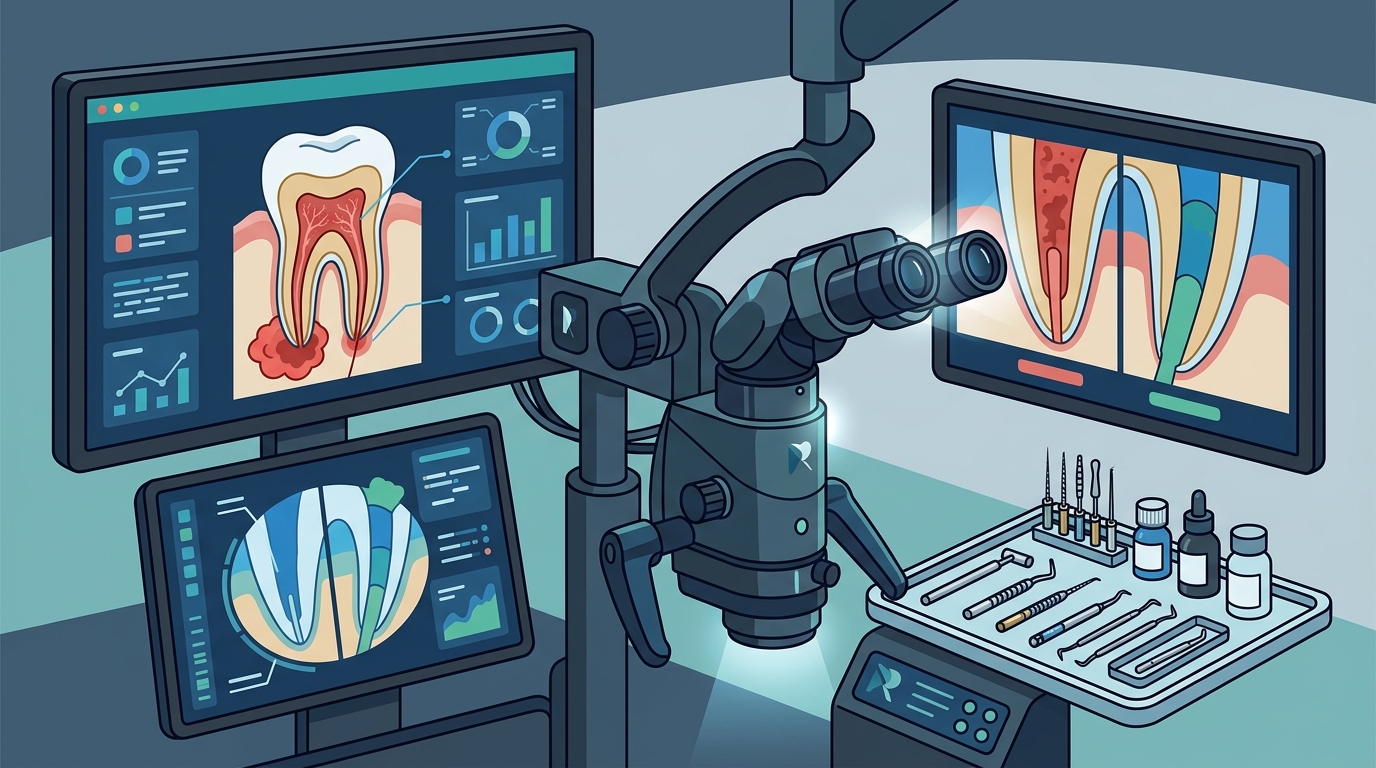
Retreatment requires extreme precision. The Zeiss ProErgo surgical microscope provides superior magnification and lighting, allowing us to see the finest details in the root canal system. This is essential for locating missed canals, removing broken instruments, and ensuring a complete seal. Without this level of visualization, the risk of failure increases substantially.
PreXion CBCT Imaging
As mentioned earlier, PreXion CBCT imaging is critical for accurate diagnosis. It allows us to plan the retreatment with confidence, knowing exactly what we are dealing with before we begin. This reduces the likelihood of surprises during the procedure and improves overall outcomes.
Key Takeaways
- Failure Rate: Approximately 5 percent of root canals may require retreatment due to complex anatomy or reinfection.
- Symptoms: Pain, swelling, gum boils, and discoloration are key indicators of potential failure.
- Diagnosis: PreXion CBCT imaging is essential for detecting missed canals and fractures that X-rays miss.
- Technology: GentleWave® and EdgePro® laser disinfection offer superior cleaning compared to traditional methods.
- Microscope: The Zeiss ProErgo surgical microscope is vital for precision in both retreatment and apicoectomy.
- Timeliness: Early intervention prevents bone loss and increases the chances of saving the tooth.
- Expertise: Dr. Benjamin Adams has over 20 years of experience in both surgical and non-surgical endodontics.
Frequently Asked Questions
How long does root canal retreatment take?
Retreatment typically takes one to two appointments, similar to an initial root canal. The duration depends on the complexity of the case and the number of canals involved. We use advanced technology to streamline the process and ensure efficiency.
Is retreatment painful?
With modern anesthesia and sedation options, retreatment is generally not more painful than the initial procedure. Most patients report minimal discomfort afterward, which can be managed with over-the-counter pain relievers.
Can a root canal be retreated multiple times?
While it is possible to retreat a tooth more than once, each subsequent procedure reduces the amount of remaining tooth structure. If the tooth is too weak to support a restoration, extraction may be the only option. We always strive to save the tooth if it is structurally sound.
What is the success rate of retreatment?
The success rate of nonsurgical retreatment is high, particularly when performed with advanced technology like the Zeiss ProErgo microscope and GentleWave® disinfection. Studies suggest success rates comparable to initial root canal therapy when the cause of failure is addressed.
How do I know if I need an apicoectomy?
An apicoectomy is recommended when nonsurgical retreatment is not possible or has failed. This is often due to large cysts, persistent infection at the root tip, or obstructions that cannot be bypassed from the crown. Our CBCT imaging helps determine if surgery is the best option.
Does insurance cover root canal retreatment?
Many dental insurance plans cover retreatment, similar to the initial procedure. However, coverage varies by plan. We recommend checking with your insurance provider or contacting our office for assistance with pre-authorization.
How soon should I seek treatment if I suspect failure?
It is important to seek treatment as soon as you notice symptoms. Delaying care can lead to increased pain, swelling, and bone loss, which may complicate the retreatment or reduce the chances of saving the tooth.
Contact Richmond Endodontics
If you are experiencing any of the symptoms described above, do not wait. Early diagnosis and treatment are key to preserving your natural tooth. Richmond Endodontics, led by Dr. Benjamin Adams, is dedicated to providing the highest standard of care using the latest technology. We serve patients across Eastern Indiana and Western Ohio, including Richmond, Dayton, and surrounding communities.
Contact us today to schedule a consultation. Call (765) 939-6355 or visit our Contact Us page to learn more about our services. We look forward to helping you achieve optimal oral health.