

When a previous root canal fails, patients in Richmond, Indiana, face a critical decision that impacts both their oral health and their wallet. The choice between root canal retreatment and endodontic surgery (apicoectomy) is rarely just about which procedure is cheaper. It is about which option offers the highest probability of saving the tooth with the least amount of trauma and long-term risk. According to recent dental industry data, the average cost of endodontic procedures can vary significantly based on the tooth's location and the complexity of the case, making local expertise in Eastern Indiana vital for accurate financial planning.
Why Previous Root Canals Fail
Endodontic failure is not always a sign of poor initial care. Sometimes, complex anatomy or delayed restoration allows bacteria to re-enter the root canal system. In other cases, a tiny fracture in the root or a missed canal can lead to persistent infection. Understanding the cause of failure is the first step in determining whether retreatment or surgery is the appropriate path.
At Richmond Endodontics, we see patients from across Eastern Indiana and Western Ohio who are dealing with these complications. Whether you are traveling from Centerville, Cambridge City, or Dayton, the goal remains the same: preserve your natural tooth. Dr. Benjamin Adams and his team utilize advanced diagnostics, including PreXion CBCT imaging, to visualize the root structure in three dimensions. This level of detail is crucial for determining if a tooth is salvageable through retreatment or if surgical intervention is necessary.
Root Canal Retreatment: The Process and Cost
Root canal retreatment is often the first line of defense when a previous procedure fails. This process involves removing the existing crown, filling material, and any posts to access the root canal system again. The dentist then cleans, shapes, and disinfects the canals before resealing them.
The Retreatment Process
Retreatment is less invasive than surgery because it does not require incisions into the gum tissue. However, it can be time-consuming. The dentist must carefully navigate around existing materials, which can be difficult if the original root canal was filled with dense materials or if a post is embedded in the root. Root canal retreatment requires a high degree of skill and patience to ensure that all bacteria are removed without damaging the surrounding tooth structure.
Cost Factors for Retreatment
The cost of retreatment is generally lower than that of apicoectomy. However, it is not a flat rate. Factors influencing the price include:
- Tooth Location: Molars have more canals and are more complex to retreat than front teeth.
- Complexity: The presence of posts, crowns, or calcified canals increases the time and effort required.
- Technology Used: Practices using GentleWave® or EdgePro® laser disinfection may offer more thorough cleaning, potentially improving long-term outcomes.
While the upfront cost is lower, the success rate of retreatment depends heavily on the ability to completely clean the canal system. If the failure was due to a complex anatomical issue that retreatment cannot address, surgery may become the only viable option.
Apicoectomy: Surgical Intervention and Pricing
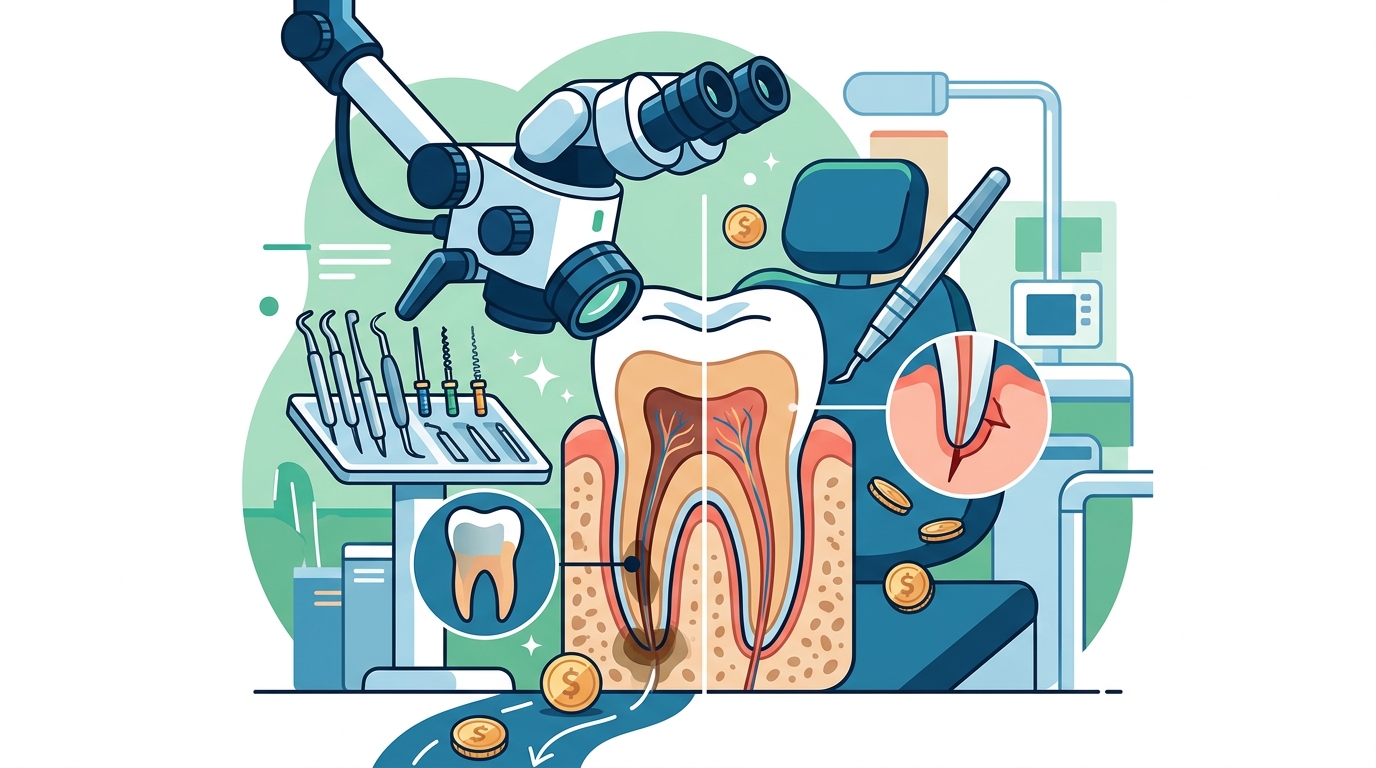
An apicoectomy, or root end surgery, is a surgical procedure performed when retreatment is not feasible or has already failed. This procedure involves making a small incision in the gum tissue to access the tip of the root. The infected tissue is removed, and the tip of the root is trimmed to ensure all infected material is eliminated. A small filling is then placed at the end of the root to seal it.
When Surgery is Necessary
Surgery is typically recommended when:
- A complex root canal anatomy prevents effective retreatment.
- A large post or crown makes retreatment too risky or impossible.
- A persistent infection remains at the root tip despite previous treatments.
- A fracture or cyst is present at the root apex.
According to dental health statistics, apicoectomy has a high success rate, often exceeding 90% when performed by a specialist. The procedure is more invasive than retreatment, which contributes to a higher cost. However, it offers a direct view of the root tip, allowing for precise removal of pathology that non-surgical methods might miss.
Cost Factors for Surgery
The cost of an apicoectomy is higher due to the surgical nature of the procedure. Additional costs may include:
- Surgical Microscope: The use of the Zeiss ProErgo surgical microscope ensures precision but adds to the operational cost.
- Anesthesia: Local anesthesia and potentially sedation options.
- Recovery Time: While recovery is generally quick, the post-operative care requirements are more involved than retreatment.
Cost Comparison: Retreatment vs. Surgery
Comparing the costs of root canal retreatment and apicoectomy requires looking beyond the initial price tag. While retreatment is typically less expensive upfront, the long-term value of each procedure must be considered. In many cases, the cost difference is not as significant as the difference in success rates and patient comfort.
| Factor | Root Canal Retreatment | Apicoectomy (Surgery) |
|---|---|---|
| Upfront Cost | Lower | Higher |
| Invasiveness | Non-surgical | Surgical (incision required) |
| Success Rate | High, but depends on anatomy | Very High (>90%) |
| Recovery Time | Minimal | Short (few days) |
| Best For | Accessible canals, no posts | Complex anatomy, posts, persistent infection |
It is important to note that insurance coverage for both procedures is often similar, typically covering a percentage of the cost based on your plan's endodontic benefits. However, coverage for surgical procedures may vary more widely among insurance providers. Patients in Richmond, IN, should consult with their insurance company to understand their specific coverage limits for endodontic surgery.
How Advanced Technology Affects Value
At Richmond Endodontics, we believe that technology is not just a luxury; it is a critical component of successful treatment. Our use of advanced tools directly impacts the value you receive for your investment.
GentleWave® and EdgePro® Laser Disinfection
One of the few practices in the country offering GentleWave® and EdgePro® laser disinfection, we can achieve a level of cleanliness in the root canal system that traditional methods cannot match. This reduces the risk of reinfection, which is a common cause of treatment failure. By using these technologies, we increase the likelihood that your retreatment or surgery will be successful the first time, saving you from the cost and discomfort of additional procedures.
Zeiss ProErgo Surgical Microscope
The Zeiss ProErgo surgical microscope provides superior magnification and lighting. This allows Dr. Adams to detect fine fractures and complex anatomy that are invisible to the naked eye. This precision is crucial for both retreatment and surgery, ensuring that no infected tissue is left behind and that the tooth is preserved as effectively as possible.
Key Takeaways
- Retreatment is Less Invasive: Root canal retreatment is generally less expensive and less invasive than apicoectomy, making it the preferred first option when feasible.
- Surgery Offers High Success: Apicoectomy has a success rate exceeding 90% and is ideal for complex cases where retreatment is not possible.
- Technology Matters: The use of GentleWave® and EdgePro® disinfection significantly improves long-term outcomes.
- Local Expertise: Dr. Benjamin Adams, with over 20 years of experience, provides specialized care to patients in Richmond, IN, and surrounding areas.
- Insurance Coverage: Both procedures are typically covered by dental insurance, but coverage details vary by plan.
- Diagnostic Accuracy: PreXion CBCT imaging is essential for determining the correct treatment path.
- Patient-Centered Care: We see fewer patients per day to ensure thorough treatment and education.
Frequently Asked Questions
How much does root canal retreatment cost in Richmond, IN?
The cost of root canal retreatment in Richmond, IN, varies based on the tooth's location and complexity. Generally, it is less expensive than apicoectomy. Patients should consult with Richmond Endodontics for a precise estimate based on their specific case.
Is apicoectomy more painful than retreatment?
Apicoectomy is a surgical procedure, but it is performed under local anesthesia. Most patients report minimal discomfort during the procedure and manageable pain afterward. Recovery is typically quick, with most patients returning to normal activities within a few days.
Can I afford both retreatment and surgery?
Many dental insurance plans cover a portion of both procedures. Additionally, Richmond Endodontics offers payment plans to help make advanced endodontic care accessible to patients in Eastern Indiana and Western Ohio.
Why would I need surgery instead of retreatment?
Surgery is necessary when retreatment is not feasible due to complex anatomy, the presence of posts or crowns, or persistent infection at the root tip. Dr. Adams uses PreXion CBCT imaging to determine the best course of action.
How long does recovery take after apicoectomy?
Recovery from apicoectomy is generally short. Most patients experience some swelling and discomfort for a few days, which can be managed with over-the-counter pain medication. Full healing of the bone takes several months.
Does Dr. Adams use advanced technology?
Yes, Dr. Adams utilizes state-of-the-art technology, including the Zeiss ProErgo surgical microscope, GentleWave®, and EdgePro® laser disinfection, to ensure the highest standard of care.
What areas do you serve?
We serve patients from Richmond, Centerville, Cambridge City, Connersville, Winchester, Union City, Portland, and surrounding areas in Eastern Indiana, as well as Dayton, Greenville, Eaton, Troy, Springfield, Urbana, and Celina in Western Ohio.
Contact Richmond Endodontics
If you are experiencing pain or have been diagnosed with a failed root canal, do not wait. Early intervention is key to saving your tooth. Contact Richmond Endodontics today to schedule a consultation with Dr. Benjamin Adams. We are dedicated to providing exceptional, patient-focused endodontic care in a comfortable and compassionate environment. Call us at (765) 939-6355 or visit our office at 1427 Chester Blvd., Richmond, IN 47374.