

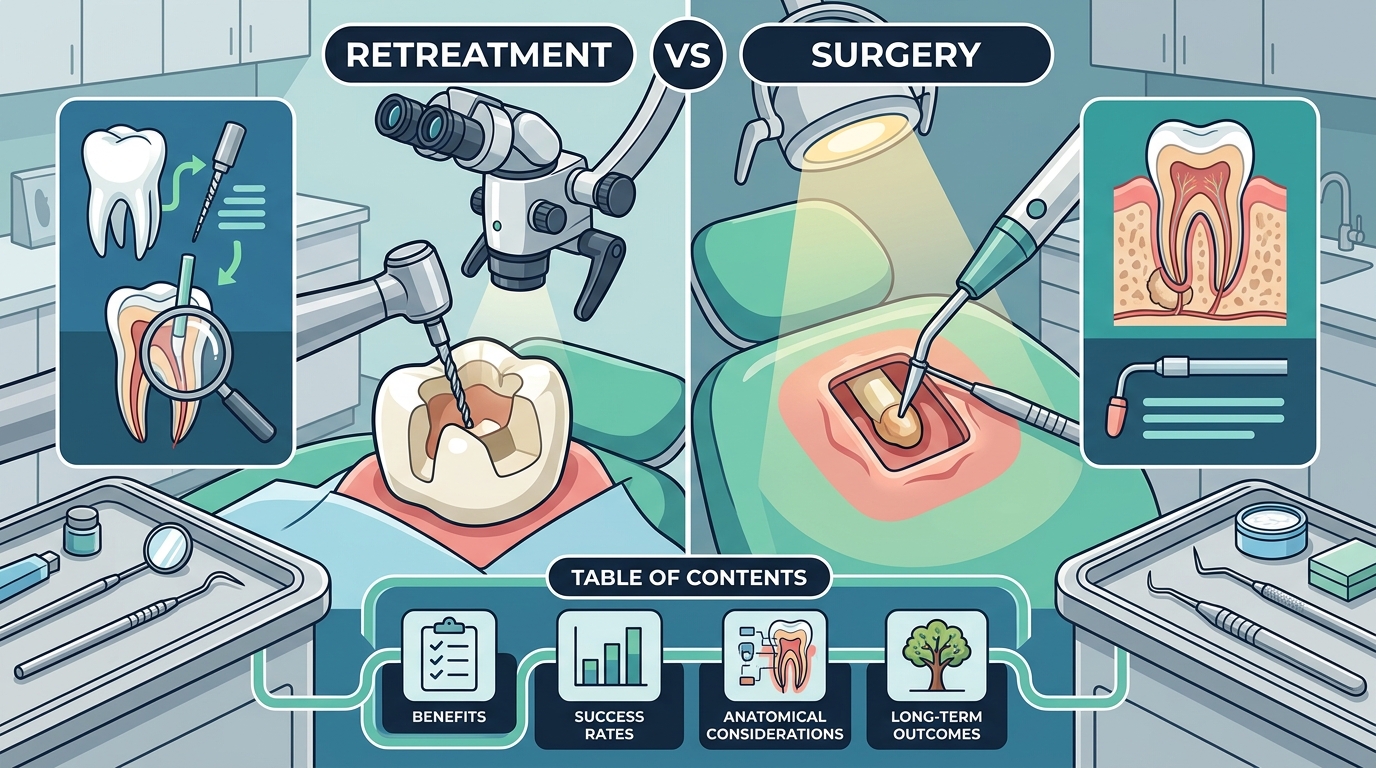
Root canal retreatment is generally preferred over surgery because it is less invasive and preserves more natural tooth structure. At Richmond Endodontics, we evaluate each case to determine if reopening the tooth or performing an apicoectomy yields the best long-term outcome. This guide details the clinical benefits, success rates, and anatomical considerations for both procedures.
Managing Canal Obstructions
Obstructed canals are a primary reason for endodontic failure. When previous filling material blocks the path, the endodontist must decide between bypassing the blockage or accessing the root tip surgically. Retreatment allows the clinician to remove old gutta-percha and attempt to negotiate the canal system from the top down. This approach is often less traumatic to the surrounding bone and gum tissue.
Techniques for Bypassing Blockages
Modern rotary instruments and ultrasonic tips allow specialists to carefully remove old material. If the canal is completely blocked, the specialist may use a microscope to locate the true canal orifice. This precision is critical for ensuring the entire root system is disinfected.
When Surgery is Required
If the obstruction is near the apex and cannot be bypassed, an apicoectomy may be necessary. This surgical procedure involves removing the tip of the root and sealing it from the outside. It is a viable option when non-surgical retreatment is impossible.
Retreatment Success Rates
Root canal retreatment is a non-surgical procedure that involves reopening a previously treated tooth. The goal is to remove old filling material, clean the canals again, and refill them. Success depends heavily on the reason for the initial failure. If the failure was due to a missed canal or a crack, retreatment may not resolve the issue.
Factors Influencing Outcomes
The success of retreatment is higher when the tooth has a good restoration and no vertical root fracture. Patients with persistent pain after a root canal often benefit from retreatment if the source of infection is identified. The use of 3D imaging helps predict these outcomes before treatment begins.
Long-Term Viability
When successful, retreated teeth can last for many years. The tooth continues to function normally and is protected by a crown. Regular follow-up appointments are essential to monitor healing and ensure the restoration remains intact.
Apicoectomy Surgical Access
An apicoectomy, or root canal surgery, is a procedure where the endodontist accesses the root tip through the gum tissue. This is typically recommended when retreatment is not feasible or has failed. The surgeon removes the infected tissue and the tip of the root, then places a seal on the end of the root.
The Surgical Process
The procedure is performed under local anesthesia. A small incision is made in the gum to expose the bone and root tip. The end of the root is trimmed, and the canal is sealed with a biocompatible material. The gum is then sutured closed.
Recovery and Healing
Recovery from an apicoectomy is generally faster than from a full extraction. Most patients return to normal activities within a few days. Swelling and discomfort are managed with over-the-counter pain medication and ice packs.
Comparing Success Rates
Both retreatment and surgery have high success rates, but the choice depends on the specific clinical scenario. Retreatment is less invasive and preserves more tooth structure. Surgery is more direct but involves cutting through bone and gum tissue. The following table summarizes the key differences.
| Feature | Retreatment | Apicoectomy |
|---|---|---|
| Invasiveness | Non-surgical | Surgical |
| Tooth Structure | Preserves more structure | Removes root tip |
| Healing Time | Variable | 1-2 weeks |
| Best For | Missed canals, poor cleaning | Obstructed canals, bone lesions |
At Richmond Endodontics, we use advanced technology to evaluate which option is best for your specific case. The decision is based on a thorough examination and 3D imaging. according to Advanced endodontics clinical
Addressing Missed Canals
Missed canals are a common cause of root canal failure. Teeth, especially molars, can have extra canals that are difficult to locate. Retreatment is the preferred method for addressing missed canals because it allows the specialist to search for and clean these additional pathways. Surgery is less effective for missed canals because it only addresses the root tip.
Role of 3D Imaging
PreXion CBCT imaging is crucial for identifying missed canals. This 3D technology provides a detailed view of the root anatomy, allowing the endodontist to plan the retreatment accurately. It helps avoid unnecessary surgery and ensures all canals are treated.
Complex Anatomy
Some teeth have complex root systems with curved or narrow canals. These are challenging to treat but can often be managed with retreatment. The use of microscopes and specialized instruments improves the success rate in these complex cases.
Bone Preservation and Healing
Preserving the surrounding bone is a critical goal in endodontic treatment. Retreatment is less likely to cause bone loss because it does not involve cutting through the bone. Surgery, by contrast, requires removing a small amount of bone to access the root tip. This can affect the long-term stability of the tooth.
Impact on Adjacent Teeth
Surgery can sometimes affect the health of adjacent teeth if the bone support is compromised. Retreatment minimizes this risk by working within the tooth structure. Maintaining healthy bone is essential for the longevity of the tooth and the surrounding gum tissue.
Healing Environment
Post Removal Obstacles
Removing old posts and cores is a significant challenge in retreatment. Many previously treated teeth have posts cemented into the root canals. These posts can be difficult to remove without damaging the tooth. If the post cannot be removed, retreatment may not be possible, and surgery or extraction may be required.
Techniques for Post Removal
Specialized instruments and ultrasonic tips are used to carefully remove posts. The process requires precision to avoid fracturing the root. If the post is firmly cemented, the endodontist may need to use a microscope to guide the removal process.
When Retreatment is Not Possible
If the post cannot be removed or the tooth is fractured, retreatment is not an option. In these cases, an apicoectomy may be considered if the root tip is the source of infection. Otherwise, extraction and replacement with an implant or bridge may be necessary.
Key Takeaways
- Retreatment is less invasive and preserves more natural tooth structure than surgery.
- Missed canals are best addressed through retreatment rather than surgery.
- 3D imaging is essential for diagnosing the cause of failure and planning treatment.
- Surgery is recommended when canals are obstructed or when retreatment has failed.
- Both procedures have high success rates when performed by an experienced endodontist.
- Post removal is a major obstacle in retreatment and may limit treatment options.
- Regular follow-up appointments are crucial for monitoring healing and long-term success.
Frequently Asked Questions
Is root canal retreatment painful?
No, retreatment is performed under local anesthesia. Most patients experience little to no pain during the procedure. Discomfort after the procedure is usually manageable with over-the-counter pain medication.
How long does an apicoectomy take?
An apicoectomy typically takes 30 to 60 minutes, depending on the complexity of the case. The procedure is performed under local anesthesia and is generally well-tolerated.
Can I eat normally after retreatment?
You can eat soft foods after retreatment. Avoid chewing on the treated tooth until it is restored with a permanent crown. Your endodontist will provide specific dietary instructions.
What is the success rate of root canal surgery?
The success rate of root canal surgery is high, often exceeding 90% in experienced hands. The outcome depends on the specific cause of failure and the overall health of the tooth.
Do I need a crown after retreatment?
Yes, a crown is usually recommended after retreatment to protect the tooth. The crown helps prevent fracture and ensures the tooth can withstand normal chewing forces.
How long does it take to heal after an apicoectomy?
Initial healing takes about one to two weeks. Complete healing of the bone may take several months. Your endodontist will schedule follow-up appointments to monitor the healing process.
Conclusion
Choosing between root canal retreatment and surgery depends on the specific clinical situation. Retreatment is generally preferred for its less invasive nature and ability to address missed canals. Surgery is a valuable option when retreatment is not feasible. At Richmond Endodontics, we use advanced technology and expertise to provide the best possible outcome for your tooth. To discuss your options, for a consultation.