
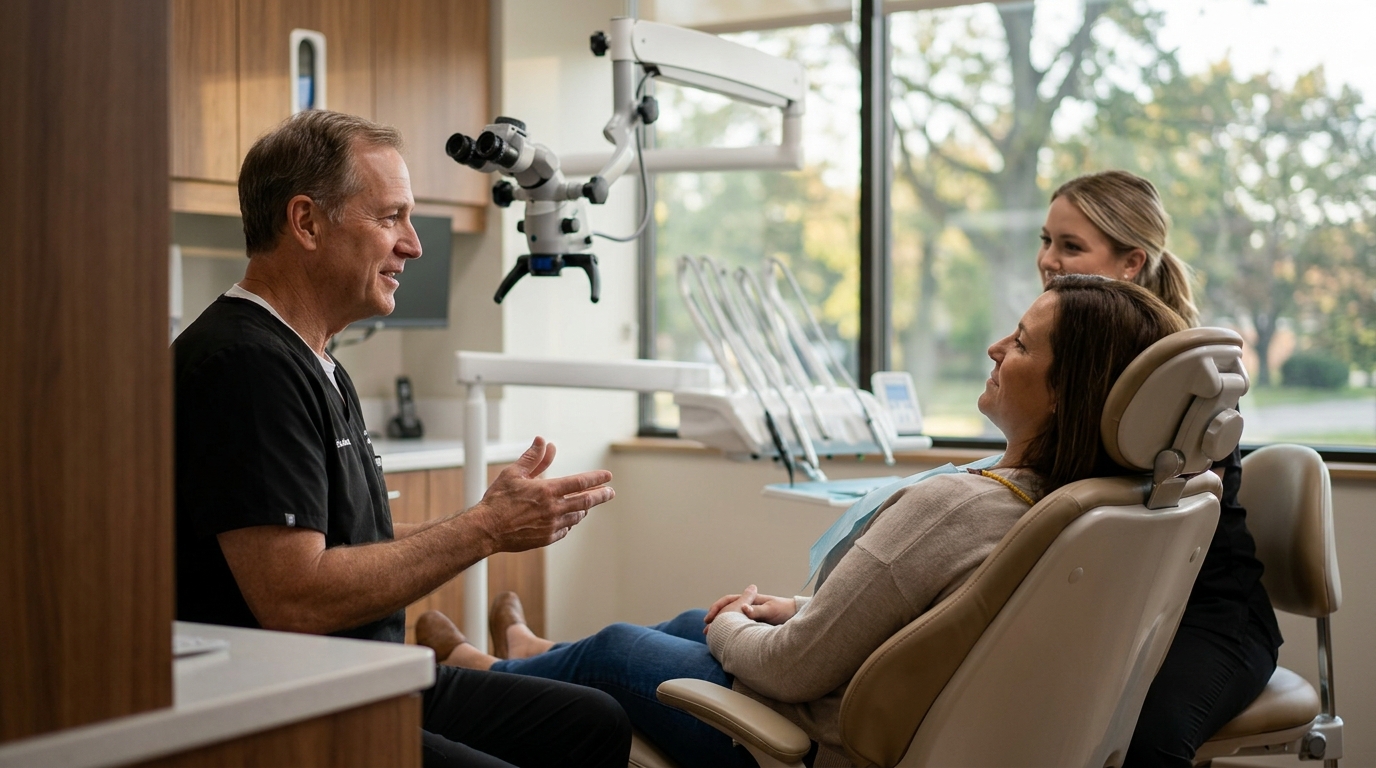
Dr. Benjamin Adams at Richmond Endodontics provides advanced endodontic care for complex root canal cases in Eastern Indiana and Western Ohio. This guide explains how to identify a specialist equipped for difficult dental anatomy, detailing the specific technologies and surgical techniques required to save teeth that standard treatments cannot address.
Understanding Complex Root Canal Cases
Not all root canals are created equal. A complex root canal case is a dental procedure involving anatomical challenges that make standard treatment difficult or impossible. These challenges often include curved roots, calcified canals, or hidden fractures. General dentists are trained to perform routine endodontics, but they may refer patients to a specialist when the case exceeds standard complexity.
An endodontist is a dentist who has completed a minimum of two years of postgraduate training in the specialty of endodontics. This additional education allows them to diagnose and treat diseases of the dental pulp and supporting structures. For patients in the Dayton, Ohio area, finding a specialist with specific microsurgical training is critical. Dr. Benjamin Adams, DDS, brings over 20 years of experience to these challenging cases. He completed his residency at the Indiana University School of Dentistry, a program known for rigorous clinical training.
Signs of a Difficult Case
Patients often experience symptoms that indicate a complex issue. Pain when chewing, temperature sensitivities, or pain that comes and go are common indicators. Cracked teeth, for example, present a unique diagnostic challenge. The crack can close when biting pressure is released, resulting in sharp pain that is hard to replicate in a clinical setting. Accurate diagnosis requires advanced imaging and a specialist's eye.
Endodontic Surgery and Microsurgery
Generally, a non-surgical root canal is sufficient to save a tooth with injured pulp. However, occasionally this procedure is not enough. Endodontic surgery, often called an apicoectomy, is a surgical procedure performed to remove the tip of the root and any surrounding infected tissue. This is necessary when a tooth fails to heal after a standard root canal or when hidden canals are present.
At Richmond Endodontics, surgical procedures are performed using the Zeiss ProErgo surgical microscope. This tool offers superior magnification and lighting, enabling the team to detect the finest details in the root canal system. These details are often invisible to the naked eye. The microscope allows for precise removal of the root tip and sealing of the canal, significantly improving the success rate of the surgery.
The Role of Microsurgery
Microsurgery has transformed endodontic outcomes. It allows for the location of fractures or hidden canals that do not appear on standard x-rays. By using high-magnification optics, the endodontist can visualize the anatomy with unparalleled clarity. This precision reduces trauma to the surrounding bone and gums, leading to faster healing and better long-term results.
Root Canal Retreatment
With appropriate care, teeth that have had endodontic treatment can last as long as other natural teeth. Yet, a tooth that has received treatment may fail to heal, or pain may continue to exist. Sometimes, this pain occurs months or years after the initial treatment. Root canal retreatment is the process of reopening a previously treated tooth to address persistent infection or inflammation.
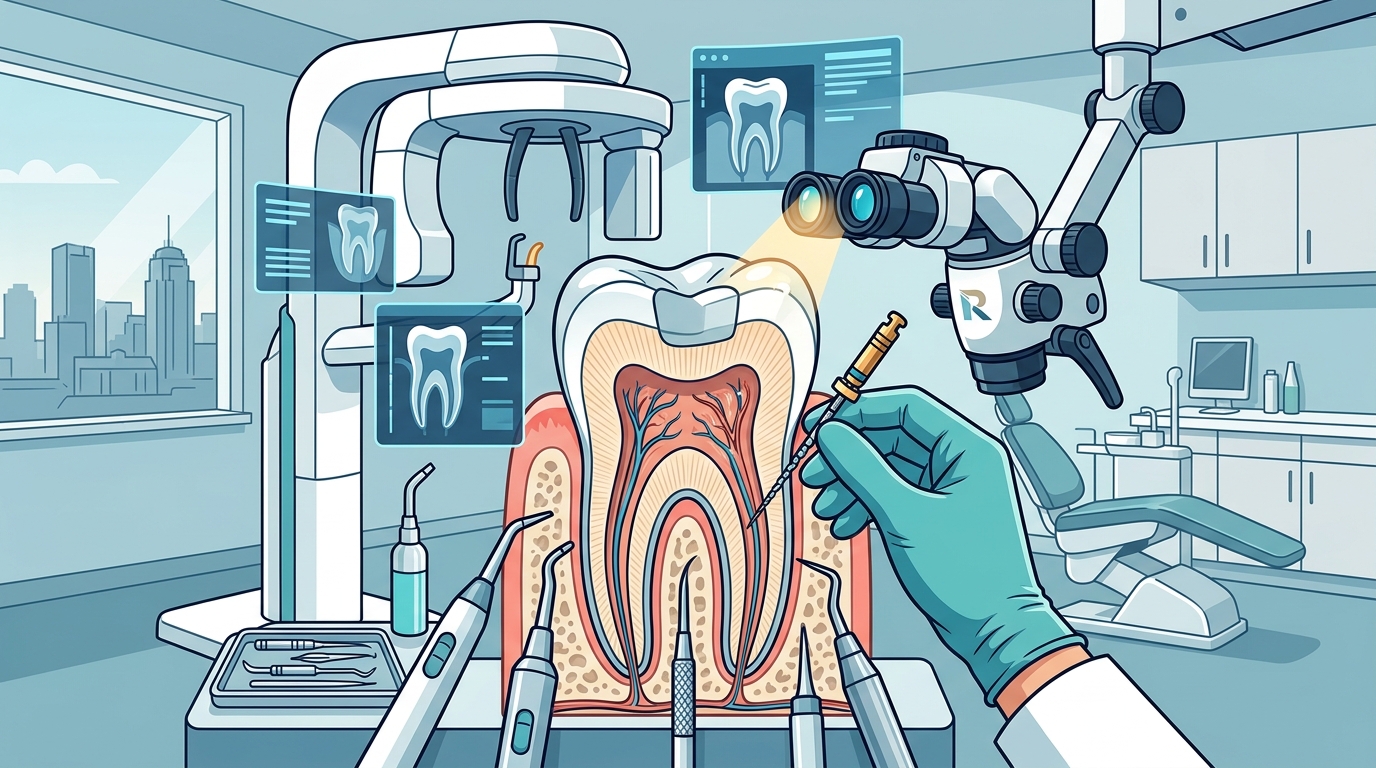
The retreatment process involves removing the existing root canal filling material to gain access to the root canal system. The endodontist then cleans the canals and carefully examines the inside of the tooth. Once cleaned, the canals are filled and sealed again. This procedure is complex because it requires navigating through old materials and potentially altered anatomy.
Why Retreatment Fails Without a Specialist
Retreatment is technically demanding. It requires the ability to locate and remove old gutta-percha and sealer without damaging the tooth structure. Advanced imaging, such as PreXion CBCT, is often required to visualize the 3D structure of the tooth. This ensures that all infected areas are addressed. A specialist with extensive experience in both surgical and non-surgical endodontics is best equipped to handle these cases.
Advanced Technology in Endodontics
Technology plays a pivotal role in the success of complex endodontic treatments. Richmond Endodontics utilizes state-of-the-art tools to ensure precision and patient comfort. These technologies are not just for show; they directly impact diagnostic accuracy and treatment outcomes.
Key Technologies Used
- Zeiss ProErgo Microscope: Provides high magnification for surgical precision.
- PreXion CBCT: Offers 3D imaging with lower radiation exposure for detailed diagnosis.
- GentleWave System: Uses acoustic streaming to clean and disinfect the root canal system more effectively than traditional methods.
- EdgePro Laser: Provides laser disinfection to reduce the risk of reinfection.
- X-Tip Anesthesia: Allows for faster, more comfortable injections, reducing patient anxiety.
The GentleWave system is particularly noteworthy for complex cases. It uses advanced fluid dynamics to thoroughly clean the intricate shapes of the root canal system. This improves success rates and promotes better long-term outcomes. Similarly, the EdgePro laser enhances healing by disinfecting areas that traditional irrigation might miss.
Choosing the Right Specialist
When selecting an endodontist for a complex case, experience and technology are the two most critical factors. The table below compares the capabilities of a general dentist versus a specialist like Dr. Adams at Richmond Endodontics.
| Feature | General Dentist | Specialist (Richmond Endodontics) |
|---|---|---|
| Training | Dental Degree (DDS/DMD) | Dental Degree + 2-3 Year Residency |
| Microscope Use | Variable / Limited | Zeiss ProErgo Surgical Microscope |
| 3D Imaging | Standard 2D X-rays | PreXion CBCT 3D Imaging |
| Disinfection | Traditional Irrigation | GentleWave + EdgePro Laser |
| Complex Case Focus | Routine Cases | Retreatment, Surgery, Cracked Teeth |
Dr. Adams frequently lectures nationwide on advancements in endodontics, including the GentleWave System. This commitment to education ensures that the techniques used in the office are current and evidence-based. Patients can trust that they are receiving care that reflects the latest standards in the field.
Key Takeaways
- Complex root canal cases require a specialist with advanced training and specific technology.
- Dr. Benjamin Adams has over 20 years of experience in surgical and non-surgical endodontics.
- The Zeiss ProErgo microscope is essential for precise microsurgical procedures.
- PreXion CBCT imaging allows for 3D visualization of hidden canals and fractures.
- GentleWave and EdgePro technologies enhance disinfection and healing outcomes.
- Root canal retreatment is a complex procedure that benefits from specialist expertise.
- Richmond Endodontics is located in Richmond, Indiana, serving the Dayton, Ohio region.
- Flexible payment plans, including CareCredit, are available to make treatment accessible.
Frequently Asked Questions
Is Richmond Endodontics close to Dayton, Ohio?
Richmond Endodontics is located in Richmond, Indiana. It serves patients from Eastern Indiana and Western Ohio, including the Dayton, Ohio area. The location is convenient for residents in the tri-state region.
What makes a root canal case complex?
A case is considered complex if it involves curved roots, calcified canals, hidden fractures, or previous failed treatments. These factors require advanced imaging and microsurgical skills to treat successfully.
Does Dr. Adams perform root canal surgery?
Yes, Dr. Adams is experienced in endodontic surgery, including apicoectomies. He uses the Zeiss ProErgo microscope to perform these procedures with high precision.
What is the GentleWave system?
The GentleWave system is an advanced irrigation technology that uses acoustic streaming to clean the root canal system. It is more effective than traditional methods in removing bacteria and debris.
How long does a root canal retreatment take?
The duration of a retreatment depends on the complexity of the case. It may take longer than a standard root canal due to the need to remove old materials and address persistent infection.
Do you accept dental insurance?
Richmond Endodontics accepts all dental insurance plans, though they are not in-network with any providers. The team can verify your coverage and provide an estimated out-of-pocket cost before your appointment.
Is the treatment painful?
No, the team uses X-Tip Anesthesia to ensure a pain-free experience. This technology allows for faster and more comfortable injections, significantly reducing discomfort.
How can I schedule an appointment?
You can schedule an appointment by contacting the office at 765-939-6355 or by filling out the contact form on the website. The team will guide you through the registration process.
Conclusion
Choosing the right endodontist for a complex root canal case is a critical decision for your long-term oral health. Dr. Benjamin Adams and the team at Richmond Endodontics bring over 20 years of expertise and the latest technology to every treatment. Whether you need endodontic surgery or root canal retreatment, their commitment to precision and patient comfort sets them apart. For residents of Dayton, Ohio and the surrounding areas, Richmond Endodontics offers a trusted destination for advanced dental care. To discuss your specific case, today.