
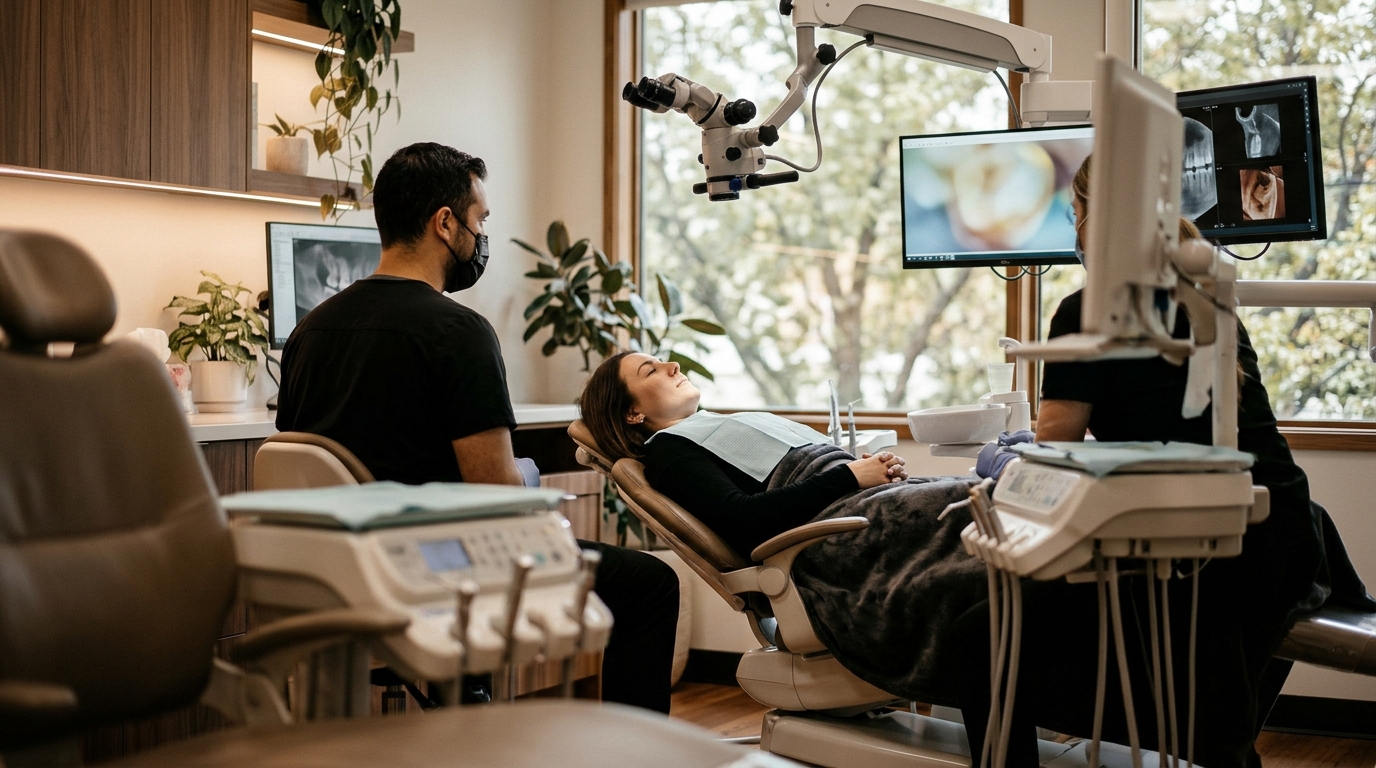
Patients with sensitive teeth often worry about pain during root canal therapy, but modern endodontic techniques have made these procedures remarkably comfortable. At Richmond Endodontics, we prioritize patient comfort by utilizing advanced anesthesia delivery systems and precise diagnostic tools. Understanding the various numbing options available can help you feel more confident and relaxed before your appointment.
1. X-Tip Anesthesia
X-Tip Anesthesia is a computer-controlled delivery system that provides a pain-free and faster injection experience. This technology uses a microprocessor to control the flow rate of the anesthetic, ensuring the solution is delivered slowly and evenly. For patients with sensitive teeth, this method significantly reduces the discomfort associated with traditional needle injections. The steady pressure and controlled flow allow the tissue to expand gradually, minimizing the sensation of the needle.
2. Topical Anesthetic Gels
Topical anesthetics are numbing gels or sprays applied to the gum tissue before the injection. These products contain lidocaine or benzocaine, which temporarily desensitize the surface of the gums. By numbing the area first, the needle insertion becomes virtually painless. This is a standard first step in many practices to ensure a smooth start to the procedure.
3. Local Anesthetic Injections
Local anesthesia is the standard method used to numb the specific tooth and surrounding tissues. The anesthetic, typically lidocaine with epinephrine, blocks nerve signals from the treated area. While the injection itself may cause a brief pinch, the resulting numbness lasts for several hours. This ensures that you feel no pain during the actual root canal treatment, only gentle pressure as the dentist works.
4. Nerve Block Anesthesia
Nerve block anesthesia numbs an entire section of the mouth by targeting a major nerve. This technique is often used for lower teeth, where the inferior alveolar nerve is targeted. It provides comprehensive numbness to the lower jaw, lip, and tongue on the treated side. For patients with high sensitivity, this ensures that no unexpected pain is felt during the procedure.

5. Intraligamentary Injection
Intraligamentary injection is a technique where anesthetic is delivered directly into the periodontal ligament. This method provides rapid onset of numbness, often within seconds. It is particularly useful for patients who have a history of difficult anesthesia or for specific teeth that require immediate numbing. The precision of this technique allows for targeted relief without affecting a large area of the mouth.
6. Intraosseous Anesthesia
Intraosseous anesthesia is a specialized technique used when traditional injections are ineffective. This method involves delivering the anesthetic directly into the bone surrounding the tooth. It is a highly effective backup option for patients with sensitive teeth who may not respond to standard local anesthesia. This ensures that the tooth is fully numbed before any treatment begins.
7. Sedation Options
Sedation dentistry is an option for patients who experience significant anxiety or extreme sensitivity. While not a numbing agent itself, sedation helps manage the overall experience by reducing stress and anxiety. Options range from nitrous oxide to oral sedatives. At Richmond Endodontics, we discuss these options during your consultation to ensure you are as comfortable as possible.
Choosing the Right Approach
The best numbing option for you depends on your specific dental anatomy and sensitivity levels. Your endodontist will evaluate your case and recommend the most effective combination of techniques. By choosing a specialist who utilizes advanced technology, you can ensure a pain-free and comfortable root canal experience.
Frequently Asked Questions
Is a root canal painful for sensitive teeth?
No, with modern anesthesia techniques, a root canal is no more painful than getting a filling. The key is effective numbing, which is achieved through various methods like X-Tip Anesthesia and topical gels.
How long does the numbness last?
The numbness typically lasts for 2 to 4 hours after the procedure. You should avoid eating or drinking until the numbness wears off to prevent accidental biting of your lip or tongue.
What is X-Tip Anesthesia?
X-Tip Anesthesia is a computer-controlled delivery system that administers anesthetic slowly and evenly, making the injection virtually painless for sensitive patients.
Can I choose my numbing method?
While you can discuss your preferences with your dentist, the final decision is based on your dental anatomy and the specific tooth being treated. Your endodontist will recommend the most effective method for your case.
Do I need sedation for a root canal?
Sedation is not required for most patients, but it is an option if you have severe dental anxiety. It helps manage stress and ensures a more relaxed experience during the procedure. Learn more: Contact Us 8211 Richmond.