
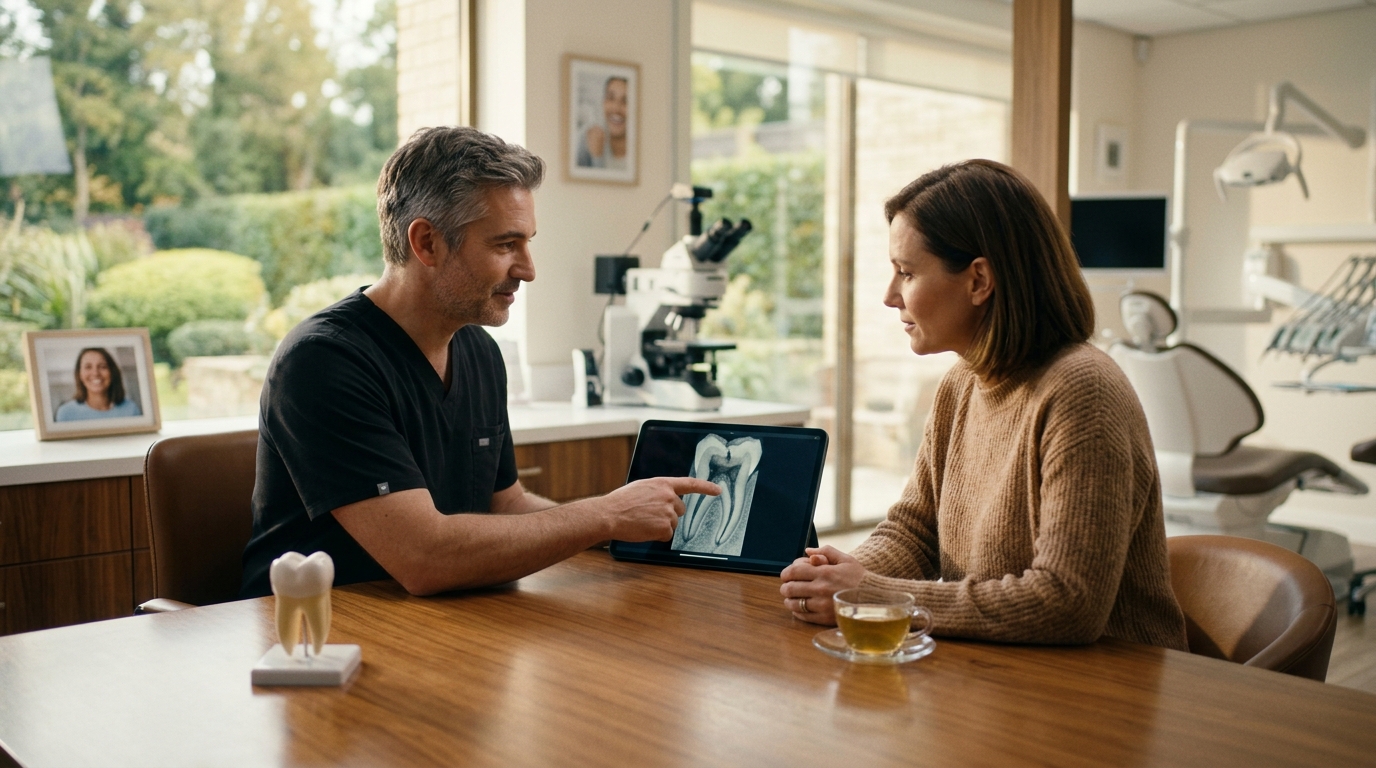
When a previous root canal fails, patients face a critical decision that impacts their long-term oral health. According to recent dental literature, approximately 15% to 20% of teeth that have undergone root canal treatment may require retreatment due to persistent infection or new complications. This statistic highlights the importance of understanding your options. At Richmond Endodontics, we specialize in saving natural teeth through both non-surgical retreatment and advanced surgical interventions. Choosing the right path depends on the specific anatomy of your tooth, the location of the infection, and your overall health goals. (About Our Office Richmond)
Understanding Why Root Canals Fail
Before deciding between retreatment and surgery, it is vital to understand why the initial procedure might have failed. Root canal failure is rarely due to a single cause. Often, it stems from complex canal anatomy that was missed during the first treatment. Microscopic canals can harbor bacteria that survive initial cleaning, leading to reinfection. Additionally, a delayed or defective crown or filling can allow saliva to contaminate the root canal system. In some cases, the original seal may have broken down over time, allowing bacteria to re-enter the root. (Home Richmond Endo)
Another common cause is a cracked tooth. If the tooth structure has fractured below the gum line, it can create a pathway for bacteria to reach the surrounding bone. Identifying the exact cause of failure is the first step in determining whether a non-surgical approach or a surgical one is necessary. This diagnostic clarity is why we utilize advanced imaging before recommending any treatment plan. (Home Richmond Endo)
The Benefits of Non-Surgical Retreatment
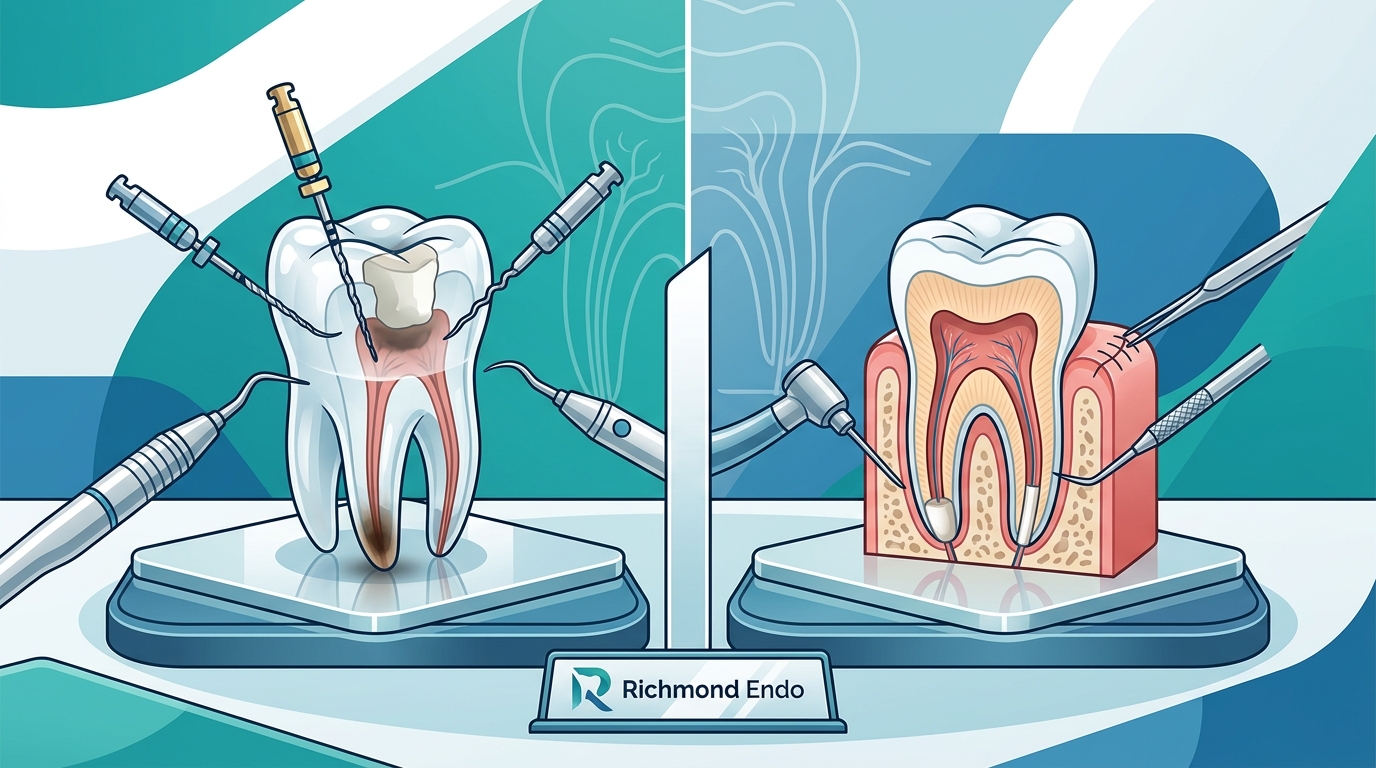
Non-surgical root canal retreatment is often the first line of defense when a previous root canal fails. This procedure involves accessing the tooth through the crown, removing the existing filling materials, and cleaning the canals again. The primary benefit of retreatment is that it preserves the natural structure of the tooth without the need for incisions. By avoiding surgery, patients typically experience less post-operative discomfort and a faster recovery time.
Retreatment also allows the endodontist to address issues that were not visible during the initial procedure. For example, if there are additional canals that were missed, they can be located and treated now. This approach is particularly effective when the failure is due to persistent bacteria or a broken instrument within the canal. It is a conservative approach that aims to save the tooth using the least invasive method possible.
At Richmond Endodontics, we use specialized techniques to navigate complex root structures. Our goal is to remove all infected tissue and seal the canals tightly to prevent future reinfection. This method is often preferred when the tooth has a crown or bridge that can be safely removed and restored without compromising the tooth's integrity.
The Benefits of Root Canal Surgery
Root canal surgery, also known as an apicoectomy, is recommended when non-surgical retreatment is not feasible or has already failed. This procedure involves making a small incision in the gum tissue to access the tip of the root directly. The surgeon removes the infected tissue and the tip of the root, then seals the end of the root from the inside. The primary benefit of surgery is its ability to address problems that are inaccessible through the crown.
Surgery is particularly beneficial when there is a persistent infection at the tip of the root that cannot be reached by retreatment. It is also the preferred option when there is a large cyst or lesion in the bone surrounding the root. By removing the source of infection directly, surgery can promote healing of the surrounding bone and save the tooth from extraction. This approach is crucial for teeth with complex anatomy or those that have been previously treated with posts or crowns that cannot be removed.
Another significant advantage of modern root canal surgery is the use of high-powered microscopes. These instruments allow the surgeon to see minute details that are invisible to the naked eye. This precision ensures that all infected tissue is removed and that the seal is perfect. The result is a high success rate for saving teeth that might otherwise be lost. Our practice is equipped with the Zeiss ProErgo surgical microscope to ensure the highest level of precision during these procedures.
Comparing Retreatment and Surgery
Choosing between retreatment and surgery can be challenging. The following table outlines the key differences to help you understand the distinctions between these two procedures.
| Feature | Non-Surgical Retreatment | Root Canal Surgery (Apicoectomy) |
|---|---|---|
| Access Method | Through the crown of the tooth | Through a small incision in the gum |
| Invasiveness | Less invasive, no incisions | Surgical, requires incision and sutures |
| Recovery Time | Typically shorter, minimal swelling | May involve some swelling and bruising |
| Best For | Missed canals, broken instruments | Persistent apical infection, cysts |
| Technology Used | Microscopes, ultrasonic instruments | Surgical microscopes, CBCT imaging |
Both procedures aim to save your natural tooth. The decision often depends on the specific clinical findings. If the tooth is accessible and the failure is due to bacterial persistence, retreatment is usually the first choice. If the failure is due to anatomical complexity or a lesion at the root tip, surgery may be the better option.
How Technology Changes the Outcome
Advancements in endodontic technology have significantly improved the success rates of both retreatment and surgery. At Richmond Endodontics, we utilize state-of-the-art tools to ensure the best possible outcomes. One of our key technologies is the GentleWave® procedure. This multi-energy fluid dynamics technology allows for thorough disinfection of the root canal system. It is particularly effective in removing bacteria from complex anatomy that traditional methods might miss.
We also use EdgePro® laser disinfection to further enhance the cleaning process. Lasers can reach areas that instruments cannot, providing an additional layer of sterilization. This is crucial for preventing reinfection, especially in retreatment cases where bacteria may be entrenched in the canal walls.
Another critical tool is the PreXion CBCT imaging system. This 3D imaging technology provides a detailed view of the tooth and surrounding bone. It allows us to identify fractures, cysts, and complex root anatomy with precision. This diagnostic capability is essential for planning both retreatment and surgery. By understanding the exact structure of the tooth, we can tailor the treatment to your specific needs.
The Zeiss ProErgo surgical microscope is another cornerstone of our practice. This microscope provides high-magnification views of the surgical site. It allows the surgeon to see minute details, such as tiny fractures or missed canals. This level of precision is vital for the success of apicoectomies. It ensures that all infected tissue is removed and that the seal is perfect.
Key Takeaways
- Root canal failure occurs in approximately 15% to 20% of cases, often due to missed canals or reinfection.
- Non-surgical retreatment is less invasive and preserves the natural tooth structure by accessing the canals through the crown.
- Root canal surgery (apicoectomy) is recommended for persistent infections at the root tip or when retreatment is not feasible.
- Advanced technology, including GentleWave® and EdgePro® laser disinfection, enhances the success of both procedures.
- PreXion CBCT imaging provides 3D diagnostic clarity, essential for accurate treatment planning.
- The Zeiss ProErgo surgical microscope allows for precise visualization during surgical interventions.
- Dr. Benjamin Adams has over 20 years of expertise in both surgical and non-surgical endodontics.
Frequently Asked Questions
Is root canal retreatment painful?
Retreatment is typically performed under local anesthesia, similar to the initial root canal. Most patients report minimal discomfort during the procedure. Post-operative sensitivity is common but can be managed with over-the-counter pain medication. The goal is to provide a comfortable experience, which is why we prioritize patient-centered care.
How long does root canal surgery take?
The duration of an apicoectomy varies depending on the complexity of the case. Generally, the procedure takes between 60 to 90 minutes. However, multiple teeth may require treatment, which can extend the time. We will provide a detailed timeline during your consultation.
What is the success rate of root canal surgery?
Root canal surgery has a high success rate, often exceeding 85% to 90%. The success depends on various factors, including the size of the lesion and the health of the surrounding bone. Our use of advanced microscopes and precise sealing techniques contributes to these high success rates.
Can I keep my crown after retreatment?
In many cases, the existing crown can be preserved. If the crown is intact and provides a good seal, we may be able to access the canals through it. If the crown is damaged or compromised, it may need to be replaced. We will assess the condition of your crown during the examination.
What is GentleWave® technology?
GentleWave® is a multi-energy fluid dynamics technology that cleans and disinfects the root canal system. It uses acoustic energy and fluid dynamics to reach complex anatomy. This technology is particularly effective in removing bacteria and debris that traditional instruments might miss.
How do I know if I need surgery?
The need for surgery is determined by diagnostic imaging and clinical examination. If retreatment is not possible or has failed, surgery may be recommended. We will discuss all your options and recommend the best course of action based on your specific condition.
What is the recovery time after surgery?
Recovery from root canal surgery is generally straightforward. Most patients can return to normal activities within a day or two. Some swelling and bruising may occur, but it typically subsides within a few days. We will provide detailed post-operative instructions to ensure a smooth recovery.
Schedule Your Consultation
If you are experiencing pain or have been diagnosed with a failed root canal, do not wait. Early intervention can save your tooth and prevent further complications. At Richmond Endodontics, we are committed to providing exceptional treatment in a comfortable and compassionate environment. Our team is here to answer your questions and guide you through your treatment options.
We serve patients across Eastern Indiana and Western Ohio. Whether you need non-surgical retreatment or advanced root canal surgery, we have the expertise and technology to help. Contact us today to schedule your consultation. Visit our Contact Us page to learn more about our office and how we can help you.