
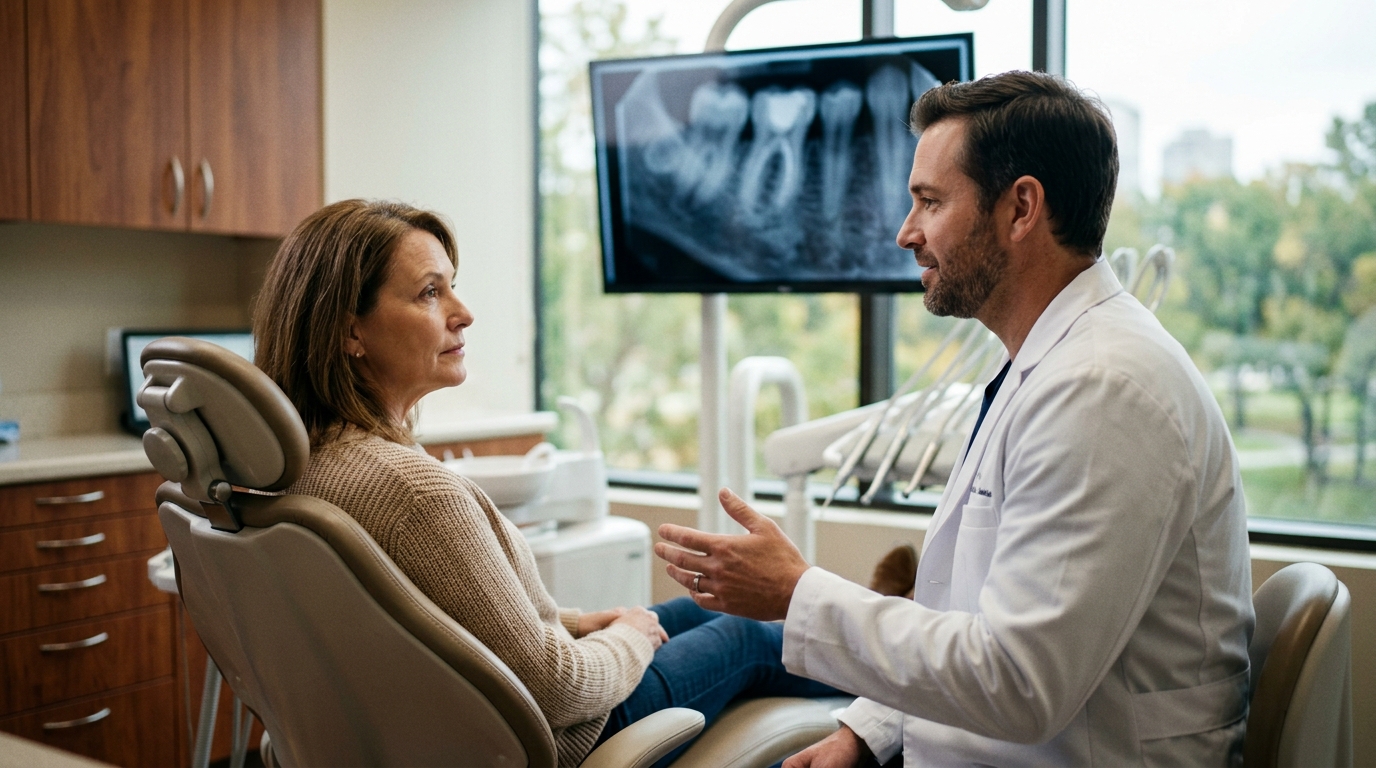
When a previous root canal treatment fails, patients often face a difficult decision regarding the next steps for saving their tooth. According to recent dental literature, approximately 15% to 20% of endodontic treatments may require retreatment due to complex anatomy or new infections. This statistic highlights that retreatment is a common, viable path, but it is not the only one. Understanding the nuanced differences between nonsurgical retreatment and endodontic surgery is critical for making an informed choice that preserves your long-term oral health.
Understanding Why Root Canals Fail
Before deciding between retreatment and surgery, it is essential to understand why a root canal might fail in the first place. Root canal therapy is designed to remove infected pulp tissue and seal the tooth from further bacterial invasion. However, complications can arise that compromise this seal.
Common causes of failure include missed canals that were not detected during the initial procedure, complex root anatomy that prevents thorough cleaning, or new decay that allows bacteria to re-enter the tooth. In some cases, a crown or filling may have leaked, allowing saliva and bacteria to penetrate the root canal system. Identifying the specific cause of failure is the first step in determining whether retreatment or surgery is the appropriate solution.
Benefits of Nonsurgical Retreatment
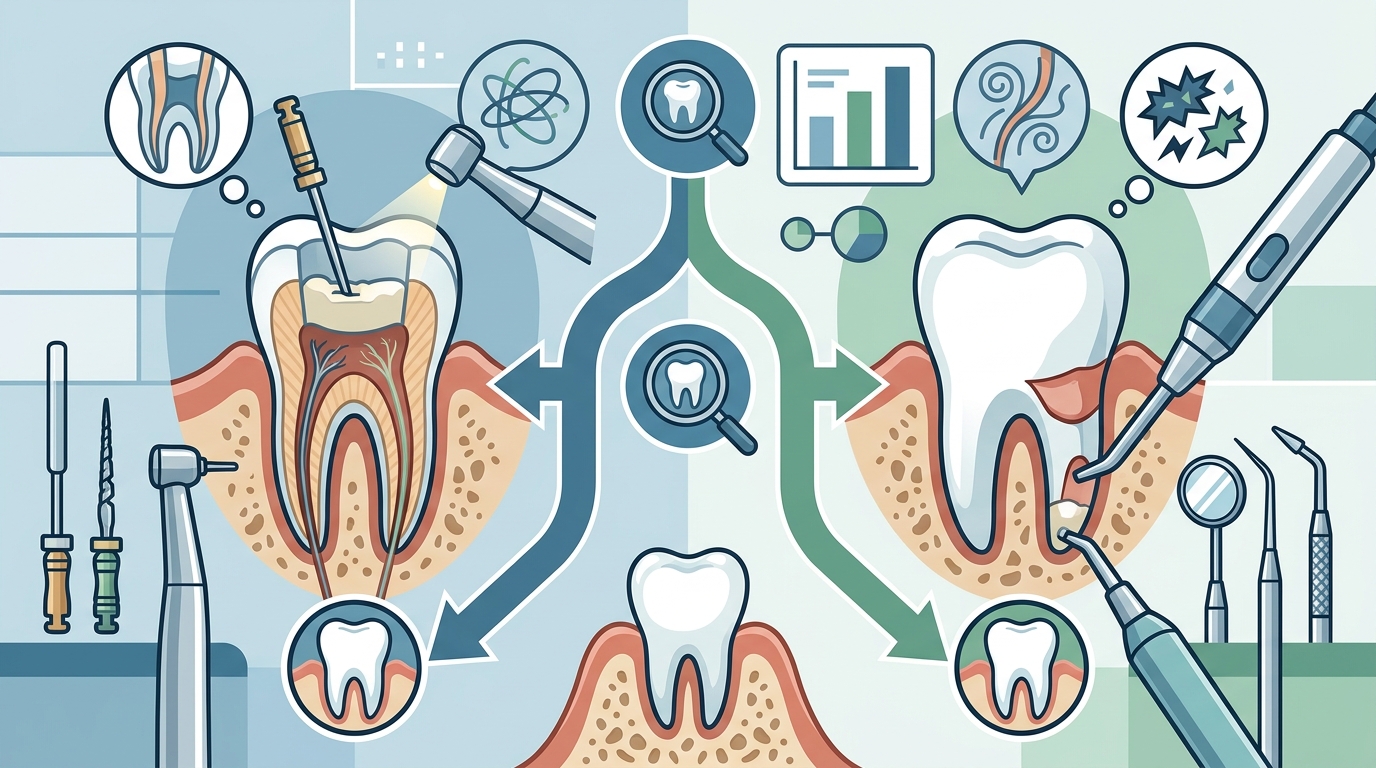
Nonsurgical retreatment involves accessing the tooth through the crown, removing the existing filling material, and cleaning and reshaping the root canals again. This approach is often the first line of defense against failure. The primary benefit of retreatment is that it is less invasive than surgery. By avoiding incisions and bone removal, patients typically experience less postoperative discomfort and a faster recovery time.
Another significant advantage is the preservation of the tooth's structural integrity. Since the procedure does not require altering the surrounding bone or gum tissue, the natural support structure remains intact. Additionally, retreatment allows the endodontist to address issues that may have been overlooked during the initial treatment, such as additional canals or complex curvatures. At Richmond Endodontics, we utilize advanced imaging to ensure every canal is identified and treated effectively.
Benefits of Endodontic Surgery
Endodontic surgery, often referred to as an apicoectomy, is typically recommended when nonsurgical retreatment is not feasible or has already failed. This procedure involves making a small incision in the gum tissue to access the root tip and remove any infected tissue. The benefits of surgery include the ability to directly visualize the root end and surrounding bone, allowing for precise removal of pathology.
Surgery is particularly beneficial when there are obstructions in the root canal that prevent retreatment, such as separated instruments or post-and-core restorations that cannot be safely removed. Furthermore, surgical intervention allows for the placement of a small filling at the tip of the root to seal the canal from the bottom up. This approach can be highly effective in resolving persistent infections that have spread into the surrounding bone. For patients in Eastern Indiana and Western Ohio, this specialized care is available locally without the need for extensive travel.
Comparison of Retreatment and Surgery
Choosing between retreatment and surgery depends on several factors, including the specific cause of failure, the patient's overall health, and the structural condition of the tooth. The following table outlines the key differences to help you understand the implications of each option.
| Feature | Nonsurgical Retreatment | Endodontic Surgery (Apicoectomy) |
|---|---|---|
| Invasiveness | Low. Access is through the crown. | Higher. Requires gum incision and bone access. |
| Recovery Time | Generally faster with minimal swelling. | May involve more swelling and bruising. |
| Indications | Missed canals, new decay, or leakage. | Obstructions, persistent infection, or complex anatomy. |
| Success Rate | High, depending on the cause of failure. | High, especially for specific pathologies. |
| Technology Used | Microscopes and CBCT imaging. | Surgical microscopes and ultrasonic tips. |
The Role of Advanced Technology
Modern endodontics relies heavily on advanced technology to improve outcomes for both retreatment and surgery. At Richmond Endodontics, we utilize the Zeiss ProErgo surgical microscope to enhance visibility during complex procedures. This magnification allows us to detect tiny fractures or additional canals that might be missed with the naked eye.
Additionally, PreXion CBCT imaging provides a three-dimensional view of the tooth and surrounding bone. This technology is crucial for planning both retreatment and surgery, as it helps us understand the exact location of infections and the proximity to vital structures like nerves and sinuses. For disinfection, we employ GentleWave® and EdgePro® laser technologies, which offer superior cleaning capabilities compared to traditional methods. These innovations ensure that patients receive the highest standard of care, regardless of the chosen treatment path.
Key Takeaways
- Retreatment is less invasive: Nonsurgical retreatment avoids incisions and is often the first option considered for failed root canals.
- Surgery addresses specific issues: Apicoectomy is ideal for cases with obstructions or persistent infections in the bone.
- Technology improves success: The use of microscopes and CBCT imaging increases the accuracy of both procedures.
- Dr. Adams has extensive experience: With over 20 years of expertise, Dr. Benjamin Adams specializes in both surgical and non-surgical endodontics.
- Comfort is a priority: Our practice focuses on patient-centered care, ensuring a stress-free experience for all procedures.
- Local expertise is available: Patients in Eastern Indiana and Western Ohio have access to top-tier endodontic specialists.
- Early intervention matters: Addressing signs of failure promptly can preserve the tooth and prevent more complex treatments.
Frequently Asked Questions
How do I know if I need retreatment or surgery?
The decision depends on the cause of the failure. If the issue is related to missed canals or leakage, retreatment is often preferred. If there are obstructions or persistent bone infections, surgery may be necessary. A consultation with an endodontist will determine the best path.
Is root canal surgery painful?
Endodontic surgery is performed under local anesthesia, so you should not feel pain during the procedure. Postoperative discomfort is typically manageable with over-the-counter pain medication and subsides within a few days.
What is GentleWave technology?
GentleWave is a multi-energy fluid dynamics technology that cleans and disinfects the root canal system without the need for manual instrumentation. It is designed to improve outcomes and patient comfort.
Can a failed root canal be saved?
In many cases, yes. Both retreatment and surgery have high success rates for saving teeth that have failed initial root canal therapy. Extraction is usually a last resort.
How long does the recovery take?
Recovery from nonsurgical retreatment is usually quick, often within a day or two. Surgery may require a few days to a week for complete healing, depending on the complexity of the case.
What is the role of the Zeiss ProErgo microscope?
The Zeiss ProErgo surgical microscope provides high-magnification visualization, allowing the endodontist to see fine details in the root canal system that are invisible to the naked eye, ensuring thorough cleaning and sealing.
Do you treat patients in Western Ohio?
Yes, Richmond Endodontics proudly serves patients across Eastern Indiana and Western Ohio, providing specialized endodontic care to the broader regional community.
Schedule Your Consultation
If you are experiencing pain or have been diagnosed with a failed root canal, do not wait. Early intervention can save your tooth and prevent further complications. Contact Richmond Endodontics today to schedule a consultation with Dr. Benjamin Adams. We are dedicated to providing exceptional treatment in a comfortable and compassionate environment. Call us at (765) 939-6355 or visit our office to learn more about your options.