
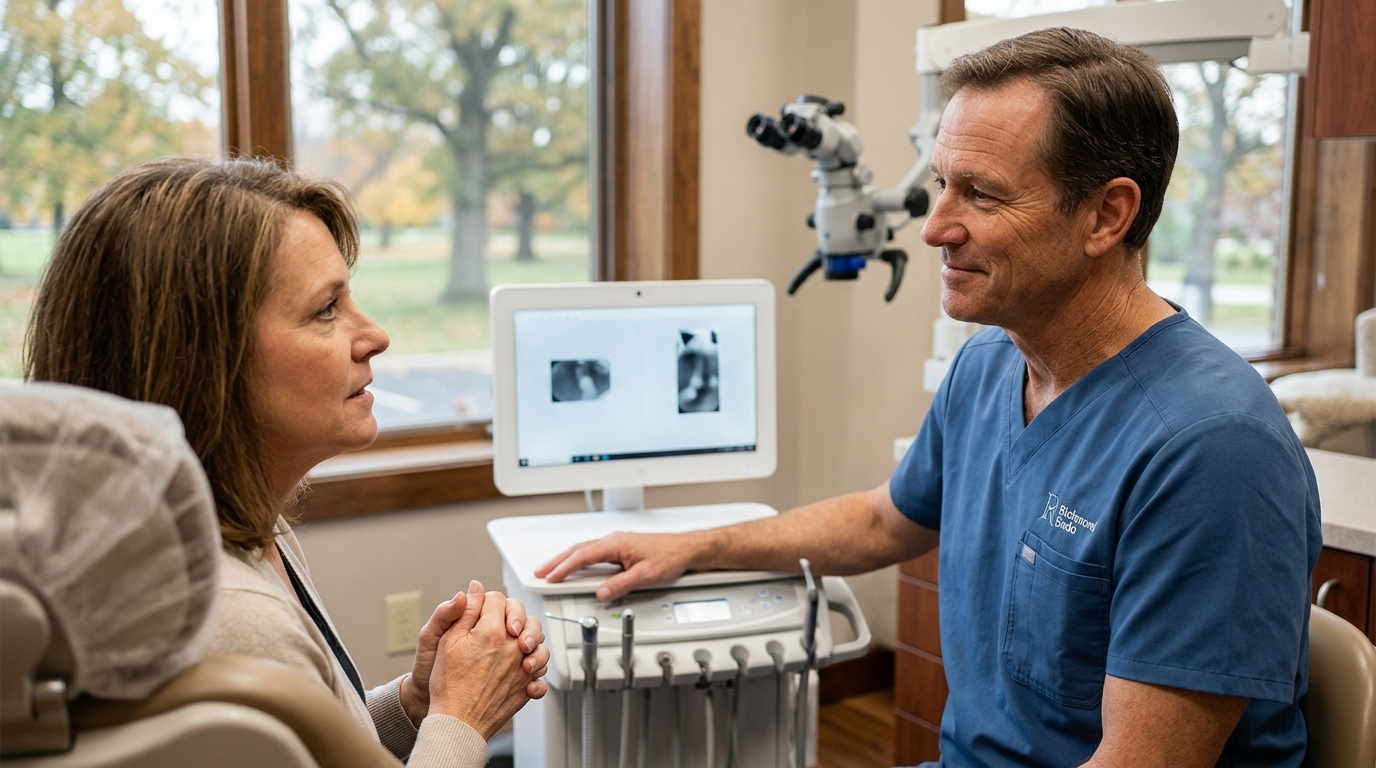
Endodontic complications can occur even after a successful initial root canal treatment. When a tooth fails to heal or symptoms persist, patients in Richmond, Indiana, face a critical decision: should they undergo root canal retreatment or proceed directly to endodontic surgery? Understanding the cost differences, procedural complexity, and success rates is essential for making an informed financial and medical choice. According to recent dental industry data, retreatment is often the first line of defense due to its non-invasive nature, while surgery is reserved for cases where retreatment is not feasible or has failed.
Understanding the Procedures
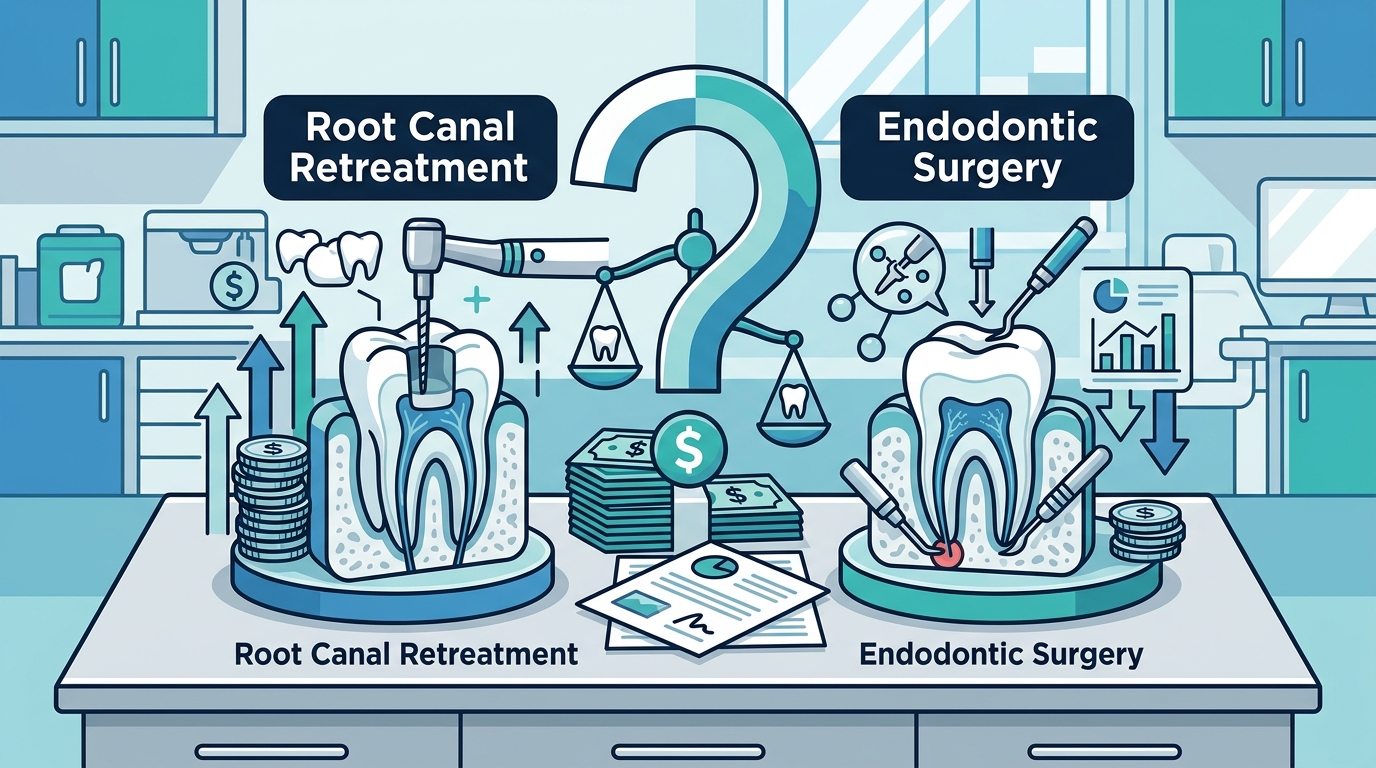
Before comparing costs, it is vital to understand what each procedure entails. Root canal retreatment involves accessing the tooth again to remove the existing filling material, cleaning the canals, and resealing them. This approach is less invasive because it does not require incisions into the gum tissue. In contrast, endodontic surgery, often called an apicoectomy, involves a surgical approach where the tip of the root is accessed through the gum bone to remove infected tissue and seal the root end.
At Richmond Endodontics, we prioritize preserving your natural tooth structure whenever possible. Dr. Benjamin Adams, with over 20 years of expertise, evaluates each case to determine if retreatment is a viable option before suggesting surgery. The decision often hinges on the presence of complex anatomy, such as blocked canals or broken instruments, which may make retreatment impossible.
Cost Breakdown and Factors
The cost of endodontic care varies based on several factors, including the tooth's location, the complexity of the case, and the technology used. Generally, root canal retreatment is less expensive than surgical intervention. This is because retreatment is a non-surgical procedure that utilizes advanced cleaning techniques to resolve the infection without the need for operating room facilities or surgical sutures.
However, the "cheaper" option is not always the most cost-effective in the long run. If retreatment fails due to inaccessible anatomy, the patient may eventually require surgery anyway, leading to higher cumulative costs. Therefore, the initial diagnostic phase is crucial. Our team uses PreXion CBCT imaging to create a 3D view of the tooth, allowing for precise treatment planning and accurate cost estimation.
Factors Influencing Price
- Tooth Location: Molars have more canals and are more complex to treat than front teeth, increasing the cost for both retreatment and surgery.
- Complexity of Anatomy: Curved or calcified canals require more time and specialized instruments, such as the Zeiss ProErgo surgical microscope, which can affect pricing.
- Additional Procedures: Some cases may require bone grafting or other adjunctive therapies, which are billed separately.
Success Rates and Longevity
Success rates are a critical component of the value proposition for each procedure. Non-surgical root canal retreatment has a high success rate, often cited between 75% and 85%, depending on the initial cause of failure. This makes it a preferred first option for many patients and specialists.
Endodontic surgery, specifically apicoectomy, also boasts high success rates, typically ranging from 75% to 90%. However, surgery is generally considered when retreatment is not possible or has already failed. The use of modern techniques like GentleWave® and EdgePro® laser disinfection has further improved outcomes by ensuring thorough cleaning in complex anatomical areas.
How Technology Impacts Cost
Investing in advanced technology allows specialists to perform procedures with greater precision and efficiency. At Richmond Endodontics, we utilize state-of-the-art equipment to enhance patient comfort and treatment outcomes. While this technology may contribute to the overall cost, it reduces the likelihood of complications and repeat procedures.
For instance, the use of ultrasonic instruments in retreatment allows for the removal of broken files and calcifications that traditional methods cannot reach. Similarly, surgical microscopes enable surgeons to visualize tiny structures that are invisible to the naked eye, ensuring complete removal of infected tissue. These advancements justify the investment by providing higher quality care and longer-lasting results.
Insurance and Financing
Most dental insurance plans cover a portion of both root canal retreatment and endodontic surgery. However, coverage limits and deductibles vary significantly. It is essential to verify your benefits before starting treatment. Our office staff is experienced in working with insurance providers to maximize your coverage and minimize out-of-pocket expenses.
For patients without adequate insurance, we offer flexible financing options to make necessary care accessible. Understanding your financial responsibility upfront allows you to focus on your health rather than worrying about unexpected bills. We believe in integrity and transparency, ensuring that every patient understands their treatment options and associated costs.
Key Takeaways
- Root canal retreatment is generally less expensive than surgery but depends on tooth complexity.
- Success rates for both procedures are high, with surgery often reserved for complex or failed retreatment cases.
- Advanced technology like CBCT imaging and surgical microscopes improves diagnostic accuracy and treatment outcomes.
- Richmond Endodontics serves patients across Eastern Indiana and Western Ohio with specialized care.
- Dr. Benjamin Adams brings over 20 years of expertise to every endodontic case.
- Insurance coverage varies, so verifying benefits is a critical first step.
- Non-surgical retreatment is typically the first line of defense to preserve natural tooth structure.
Frequently Asked Questions
Is root canal retreatment more painful than surgery?
Both procedures are performed under local anesthesia, ensuring you feel no pain during the treatment. Post-operative discomfort is typically mild and manageable with over-the-counter medication for both options.
How long does each procedure take?
Root canal retreatment may require one to two visits, depending on the complexity. Endodontic surgery is often completed in a single visit, lasting approximately 60 to 90 minutes.
Can I afford endodontic surgery?
Many patients find surgery affordable through dental insurance or financing plans. We encourage you to contact our office to discuss your specific financial situation and available options.
Why would retreatment fail?
Retreatment may fail if the canals are too curved, blocked by calcification, or if there is a complex anatomy that cannot be accessed non-surgically. In such cases, surgery becomes the necessary next step.
What is GentleWave technology?
GentleWave is a multi-energy fluid dynamics technology that cleans and disinfects the root canal system without the need for manual instrumentation, offering a more thorough and less invasive cleaning process.
Do you treat cracked teeth?
Yes, we evaluate cracked teeth to determine if they can be saved with endodontic therapy or if extraction is necessary. Early evaluation is key to preserving your natural tooth.
How do I schedule a consultation?
You can schedule a consultation by calling our office directly or using our online referral form. We are here to answer any questions you have about your treatment options.
Schedule Your Consultation
If you are experiencing pain or have been diagnosed with a failed root canal, do not wait. Early intervention can save your tooth and prevent more extensive treatment in the future. Contact Richmond Endodontics today to schedule a consultation with Dr. Benjamin Adams. We are committed to providing exceptional treatment in a comfortable and compassionate environment for patients in Richmond, Indiana, and the surrounding areas.