
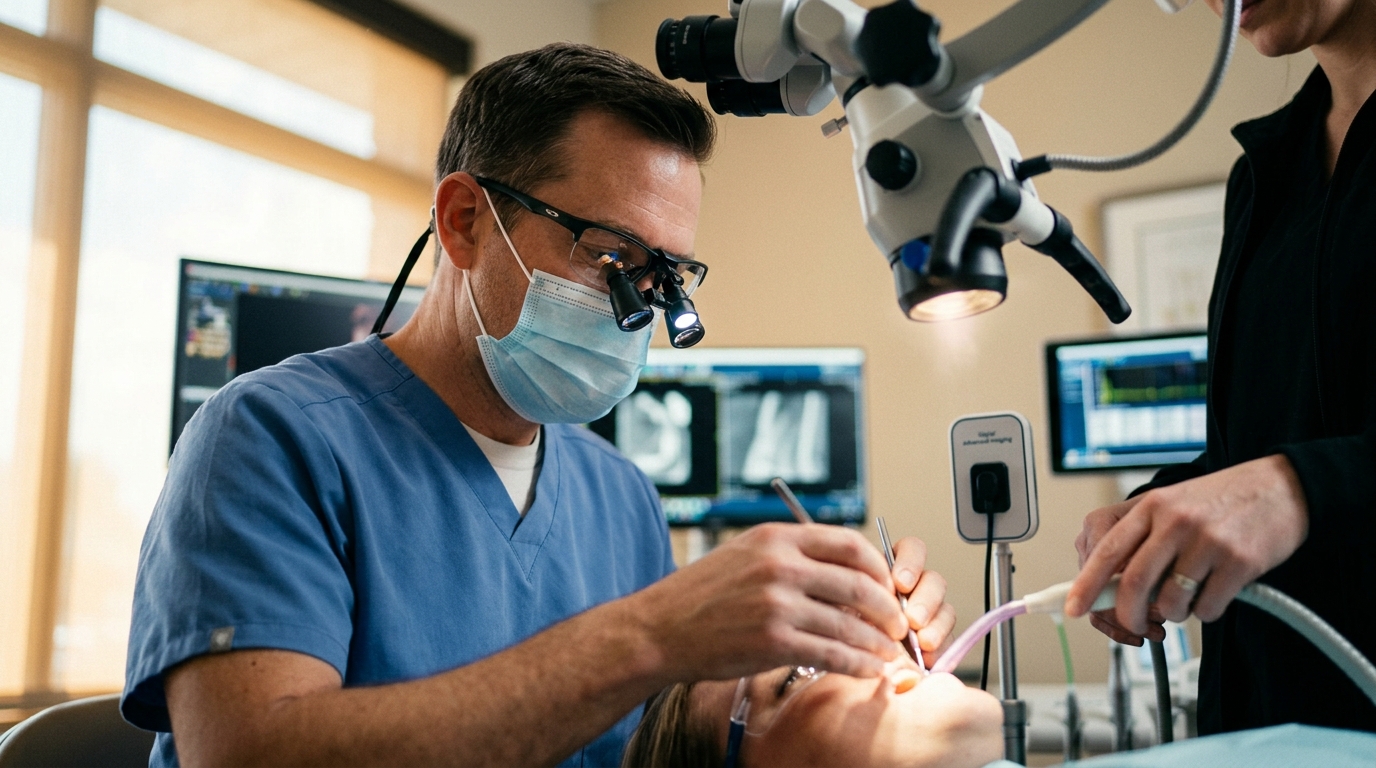
How Technology Enhances Root Canal Outcomes in Richmond, Indiana
Modern endodontic care has shifted dramatically from traditional manual techniques to precision-driven digital workflows. According to recent clinical data, advanced imaging and disinfection technologies can increase root canal success rates by up to 90% in complex cases. This transformation is particularly vital for patients in Richmond, Indiana, who seek long-term dental preservation without invasive extractions. At Richmond Endodontics, Dr. Benjamin Adams leverages these innovations to deliver superior outcomes for Eastern Indiana and Western Ohio residents. (About Our Office Richmond)
The Role of CBCT Imaging in Diagnosis
Accurate diagnosis is the foundation of any successful endodontic procedure. Traditional 2D X-rays often fail to reveal the three-dimensional complexity of root canal systems. PreXion CBCT imaging provides a volumetric view of the tooth, surrounding bone, and critical anatomical structures like the maxillary sinus and inferior alveolar nerve.
This technology allows Dr. Adams to identify hidden canals, fractures, and periapical lesions that are invisible on standard radiographs. By mapping the exact anatomy before treatment begins, the risk of complications is significantly reduced. Patients in Richmond benefit from this precision because it ensures that every millimeter of the root canal system is addressed during therapy.
According to the American Association of Endodontists, the use of cone-beam computed tomography (CBCT) is recommended when conventional 2D imaging is insufficient to diagnose or plan treatment. This standard of care is now accessible locally, ensuring that Richmond patients receive the same diagnostic rigor as those in major metropolitan centers.
Surgical Microscopy for Enhanced Visibility
Endodontic microsurgery represents a leap forward in surgical precision. The Zeiss ProErgo surgical microscope used at Richmond Endodontics provides high-magnification, illuminated views of the surgical field. This level of visibility is critical for identifying minute anatomical details that dictate the success of apicoectomies and retreatments.
During root canal surgery, the goal is to remove infected tissue and seal the root tip. The microscope allows the surgeon to see beyond the naked eye, ensuring that no infected dentinal tubules are left behind. This precision minimizes trauma to surrounding tissues and accelerates healing time for the patient.
Data from peer-reviewed journals indicates that the use of dental operating microscopes improves the predictability of endodontic microsurgery. By enhancing the surgeon's ability to detect cracks and calcified canals, the overall longevity of the treated tooth is extended. This is a significant advantage for patients looking to preserve their natural dentition for decades to come.
GentleWave and EdgePro Laser Disinfection
The most critical factor in root canal success is the complete elimination of bacteria within the root canal system. Traditional methods often struggle to reach complex anatomy, such as lateral canals and isthmuses. GentleWave® and EdgePro® laser disinfection technologies address this challenge by using acoustic energy and laser wavelengths to clean these hard-to-reach areas.
GentleWave technology utilizes multi-frequency acoustic energy to create a cavitation effect that removes biofilm and debris from the entire root canal system. EdgePro uses laser energy to further sterilize the canal walls. Together, these technologies offer a level of disinfection that manual instrumentation cannot achieve.
As one of the few practices in the country offering GentleWave and EdgePro, Richmond Endodontics provides a distinct advantage to patients. Studies suggest that enhanced disinfection protocols can reduce the rate of post-treatment infection. For patients in Eastern Indiana and Western Ohio, this means a higher probability of a single-visit success and a more comfortable recovery period.
Comparing Traditional vs. Advanced Techniques
Understanding the difference between traditional endodontics and modern technology helps patients make informed decisions. The table below outlines the key distinctions in diagnostic and treatment capabilities.
| Feature | Traditional Endodontics | Advanced Care at Richmond Endo |
|---|---|---|
| Imaging | 2D Radiographs | PreXion CBCT 3D Imaging |
| Visualization | Naked Eye | Zeiss ProErgo Microscope |
| Disinfection | Manual Files & Irrigation | GentleWave & EdgePro Laser |
| Success Rate | Standard Clinical Outcomes | Enhanced Predictability & Longevity |
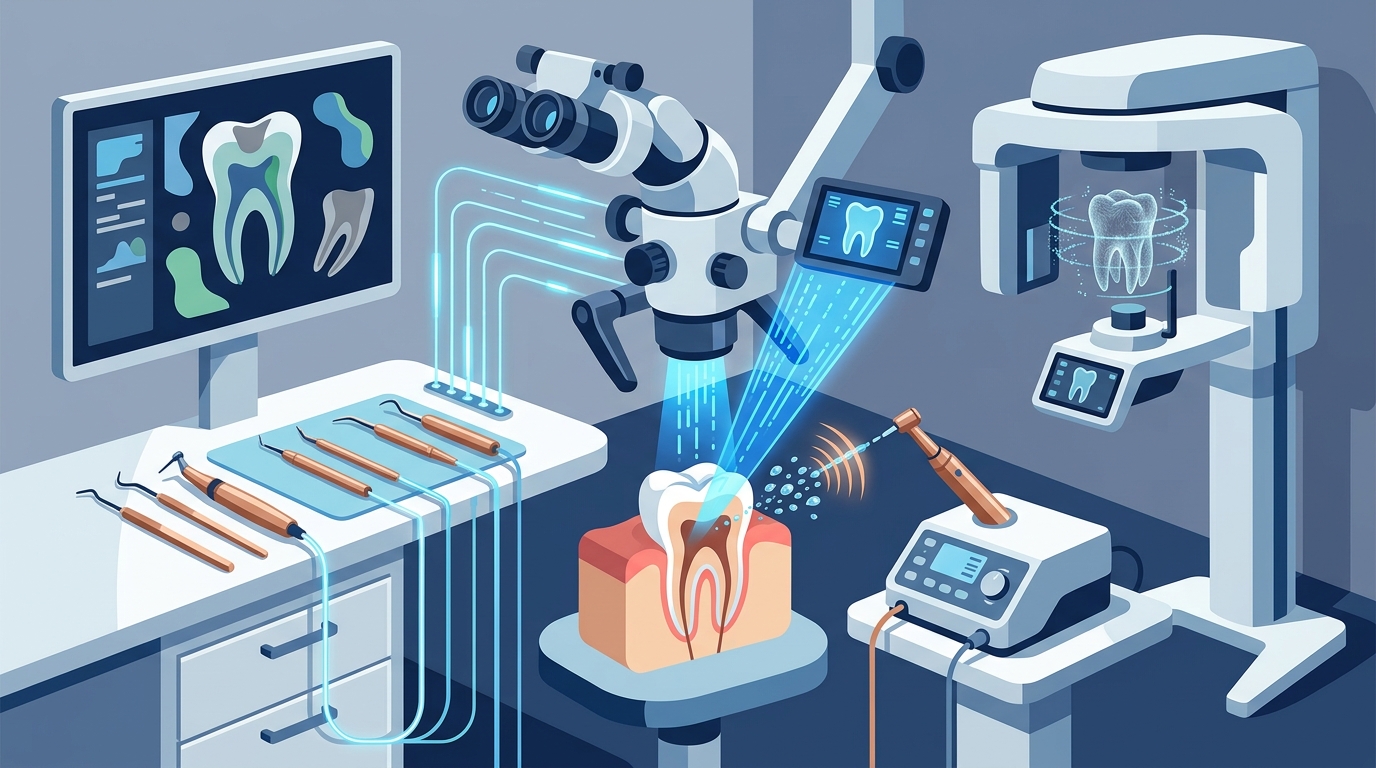
While traditional methods have served dentistry well, the integration of these advanced tools sets a new standard for patient care. The ability to see more, clean better, and diagnose accurately translates directly to better health outcomes. This is why Richmond Endodontics prioritizes technology in every aspect of its practice.
Key Takeaways
- Dr. Benjamin Adams brings over 20 years of expertise in surgical and non-surgical endodontics to the Richmond community.
- PreXion CBCT imaging provides 3D diagnostic clarity that 2D X-rays cannot match, reducing diagnostic errors.
- Zeiss ProErgo microscopes enable precise identification of cracks and canals during complex surgeries.
- GentleWave and EdgePro technologies offer superior disinfection, targeting bacteria in areas traditional tools miss.
- Richmond Endodontics serves patients across Eastern Indiana and Western Ohio with high-tech, compassionate care.
- The practice intentionally sees fewer patients per day to ensure thorough treatment and patient education.
- Advanced technology correlates with higher success rates and faster recovery times for root canal patients.
Frequently Asked Questions
What is GentleWave technology?
GentleWave is a non-invasive disinfection technology that uses multi-frequency acoustic energy to clean the entire root canal system, including complex anatomy that traditional files cannot reach.
Why is CBCT imaging important for root canals?
Cone-beam computed tomography (CBCT) provides a three-dimensional view of the tooth and surrounding bone, allowing for the detection of fractures, hidden canals, and infections that are invisible on standard X-rays.
Does Richmond Endodontics serve areas outside of Richmond?
Yes, the practice proudly provides specialized endodontic care to patients across Eastern Indiana and Western Ohio, ensuring regional access to advanced dental technology.
How does the Zeiss ProErgo microscope improve surgery?
The microscope provides high-magnification, illuminated visualization of the surgical site, allowing the surgeon to identify minute details and perform more precise, less invasive procedures.
What is the success rate of modern root canal treatments?
With the use of advanced disinfection and imaging technologies, modern root canal treatments have success rates exceeding 90%, often preserving the natural tooth for a lifetime.
Is root canal surgery painful?
With the use of local anesthesia and advanced pain management techniques, root canal surgery is typically no more uncomfortable than a routine dental filling. Most patients report minimal post-operative discomfort.
How often should I see an endodontist?
You should see an endodontist if your general dentist identifies a complex issue requiring specialized care, such as a cracked tooth, persistent pain, or a failed previous root canal.
Schedule Your Consultation
Don't let dental anxiety or outdated treatment options dictate your oral health. Experience the difference that advanced technology makes in your care. Richmond Endodontics is dedicated to providing exceptional treatment in a comfortable and compassionate environment. Contact us today to learn more about our services or to schedule an appointment with Dr. Benjamin Adams.
Click here to contact Richmond Endodontics and take the first step toward preserving your natural smile with the latest in endodontic innovation.