
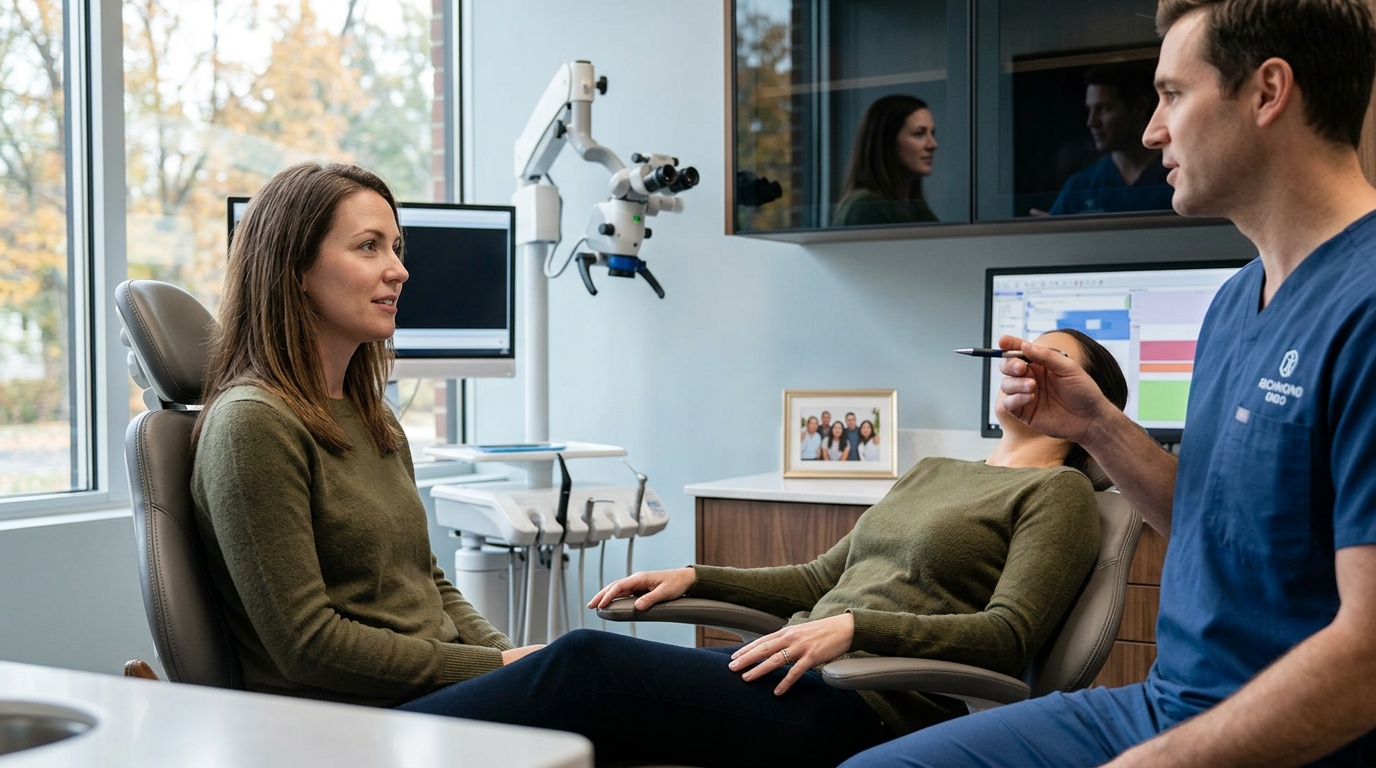
When a previous root canal fails, patients face a critical decision that impacts their long-term oral health. Recent clinical data indicates that approximately 15% of endodontic treatments may require secondary intervention due to complex anatomy or persistent infection. This statistic highlights the importance of understanding your options before committing to a path. At Richmond Endodontics, we specialize in saving teeth through both non-surgical retreatment and microsurgical approaches. Choosing the right method depends on the specific cause of failure, the location of the tooth, and your personal health history. This guide breaks down the benefits of each procedure to help you make an informed choice alongside Dr. Benjamin Adams. (About Our Office Richmond)
Understanding Why Root Canals Fail
Before deciding between retreatment and surgery, it is vital to understand why the initial treatment may have failed. Endodontic failure is rarely random. It usually stems from missed canals, complex root structures, or persistent bacteria that survived the first procedure. According to the American Association of Endodontists, the primary goal of any secondary intervention is to preserve your natural tooth whenever possible. Extraction should always be the last resort. (Endodontic FAQ Richmond Endo)
Dr. Benjamin Adams utilizes advanced imaging, including PreXion CBCT technology, to diagnose the exact source of the problem. This 3D imaging allows us to see beyond the surface and identify hidden fractures or persistent infections that standard X-rays might miss. By pinpointing the cause, we can determine whether a non-surgical approach or a surgical one offers the highest chance of success. (Home Richmond Endo)
Benefits of Non-Surgical Retreatment
Non-surgical retreatment involves re-accessing the tooth to remove the old filling material, clean the canals again, and reseal them. This approach is often the first line of defense because it avoids invasive surgery. The primary benefit is that it preserves the natural structure of the tooth without altering the surrounding gum tissue or bone. (Home Richmond Endo)
One of the most significant advantages of retreatment is the use of modern disinfection technologies. At Richmond Endodontics, we employ GentleWave® and EdgePro® laser disinfection systems. These technologies allow for thorough cleaning of complex canal networks that traditional instruments might miss. This level of precision reduces the risk of reinfection and promotes faster healing.
Additionally, retreatment is generally less expensive and involves a shorter recovery time compared to surgery. Patients often report minimal discomfort after the procedure, allowing them to return to their daily routines quickly. If the failure is due to a missed canal or a leaky crown, retreatment is often the most effective and conservative solution.
Benefits of Endodontic Microsurgery
Endodontic microsurgery, also known as an apicoectomy, is recommended when non-surgical retreatment is not feasible or has already failed. This procedure involves making a small incision in the gum tissue to access the root tip directly. The surgeon removes the infected tissue and seals the end of the root from the outside.
The key benefit of microsurgery is its ability to address issues that retreatment cannot. For example, if a tooth has a large post or crown that cannot be safely removed without fracturing the tooth, surgery becomes the only viable option to save the tooth. Furthermore, if there is a persistent cyst or granuloma at the root tip, surgical removal ensures complete elimination of the pathology.
Dr. Adams uses the Zeiss ProErgo surgical microscope during these procedures. This high-magnification microscope allows for extreme precision, minimizing trauma to surrounding tissues and ensuring accurate placement of the root-end filling. The use of microsurgical techniques significantly increases the success rate of apicoectomies, making it a highly reliable option for complex cases.
Comparison: Retreatment vs. Surgery
Choosing between retreatment and surgery can be challenging. The table below summarizes the key differences to help you understand which option might be best for your specific situation.
| Feature | Non-Surgical Retreatment | Endodontic Microsurgery |
|---|---|---|
| Approach | Through the crown of the tooth | Through the gum tissue to the root tip |
| Invasiveness | Low | Moderate |
| Recovery Time | 1-2 days | 3-7 days |
| Best For | Missed canals, leaky crowns | Blocked canals, persistent cysts |
| Technology Used | GentleWave®, EdgePro® | Zeiss ProErgo Microscope |
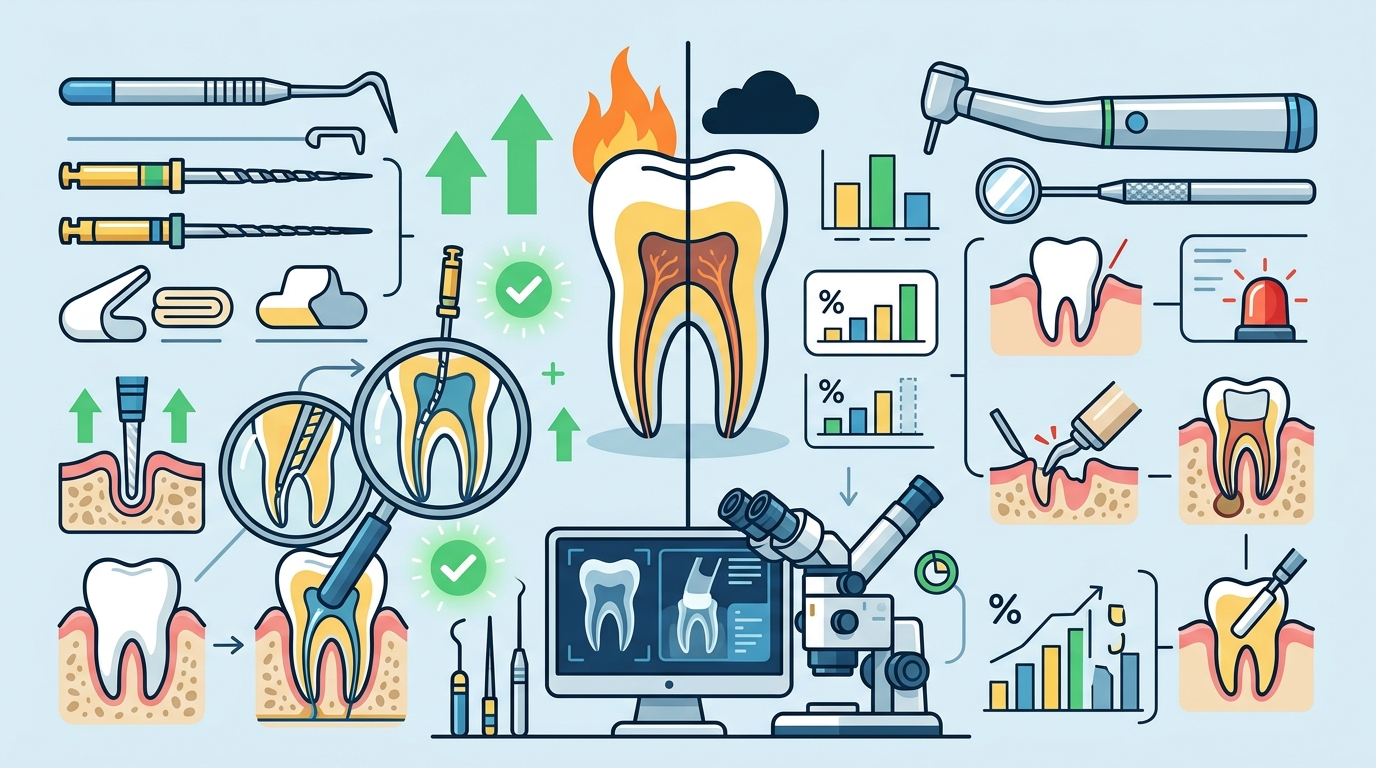
Key Takeaways
- Approximately 15% of root canals may require secondary intervention due to complex anatomy or persistent infection.
- Non-surgical retreatment is often the first choice because it preserves natural tooth structure and avoids surgery.
- Richmond Endodontics uses GentleWave® and EdgePro® laser disinfection to ensure thorough cleaning during retreatment.
- Endodontic microsurgery is ideal for cases with large posts, crowns, or persistent cysts that cannot be reached non-surgically.
- Dr. Benjamin Adams utilizes the Zeiss ProErgo surgical microscope to maximize precision and minimize tissue trauma.
- PreXion CBCT imaging is critical for diagnosing the exact cause of failure before deciding on a treatment path.
- Both procedures have high success rates when performed by a specialist using advanced technology.
Frequently Asked Questions
How do I know if I need retreatment or surgery?
The decision depends on the specific cause of the failure. If the issue is a missed canal or a leaky restoration, retreatment is usually preferred. If there is a blocked canal or a persistent cyst at the root tip, surgery may be necessary. Dr. Adams will use CBCT imaging to determine the best course of action.
Is root canal retreatment painful?
Most patients report that retreatment feels similar to the initial root canal procedure. With modern anesthesia and sedation options, the procedure is virtually painless. Post-operative discomfort is typically mild and manageable with over-the-counter medication.
What is the success rate of endodontic microsurgery?
Endodontic microsurgery has a high success rate, often exceeding 90% when performed by a specialist using a surgical microscope. The precision of the Zeiss ProErgo microscope allows for accurate removal of infected tissue and proper sealing of the root end.
Can I keep my natural tooth with retreatment?
Yes, the primary goal of both retreatment and surgery is to save your natural tooth. Extracting the tooth should always be the last resort. Richmond Endodontics is committed to preserving your natural dentition whenever possible.
How long does recovery take after microsurgery?
Recovery from microsurgery typically takes 3 to 7 days. You may experience some swelling or bruising, which can be managed with ice packs and medication. Most patients return to work the next day.
What technology does Dr. Adams use for retreatment?
Dr. Adams uses GentleWave® and EdgePro® laser disinfection systems. These technologies provide superior cleaning of complex canal networks, reducing the risk of reinfection and improving long-term outcomes.
Why is a CBCT scan necessary?
A standard 2D X-ray may not show all the details of the root structure or surrounding bone. A PreXion CBCT scan provides a 3D view, allowing Dr. Adams to identify hidden fractures, missed canals, or persistent infections that are not visible on regular X-rays.
Schedule Your Consultation
Do not wait for pain to worsen if you suspect your previous root canal has failed. Early intervention is key to saving your tooth. At Richmond Endodontics, we provide compassionate, high-tech care to patients across Eastern Indiana and Western Ohio. Contact us today to schedule a consultation with Dr. Benjamin Adams and discover which option is right for you.
Click here to book your appointment online or call (765) 939-6355 to speak with our team.