
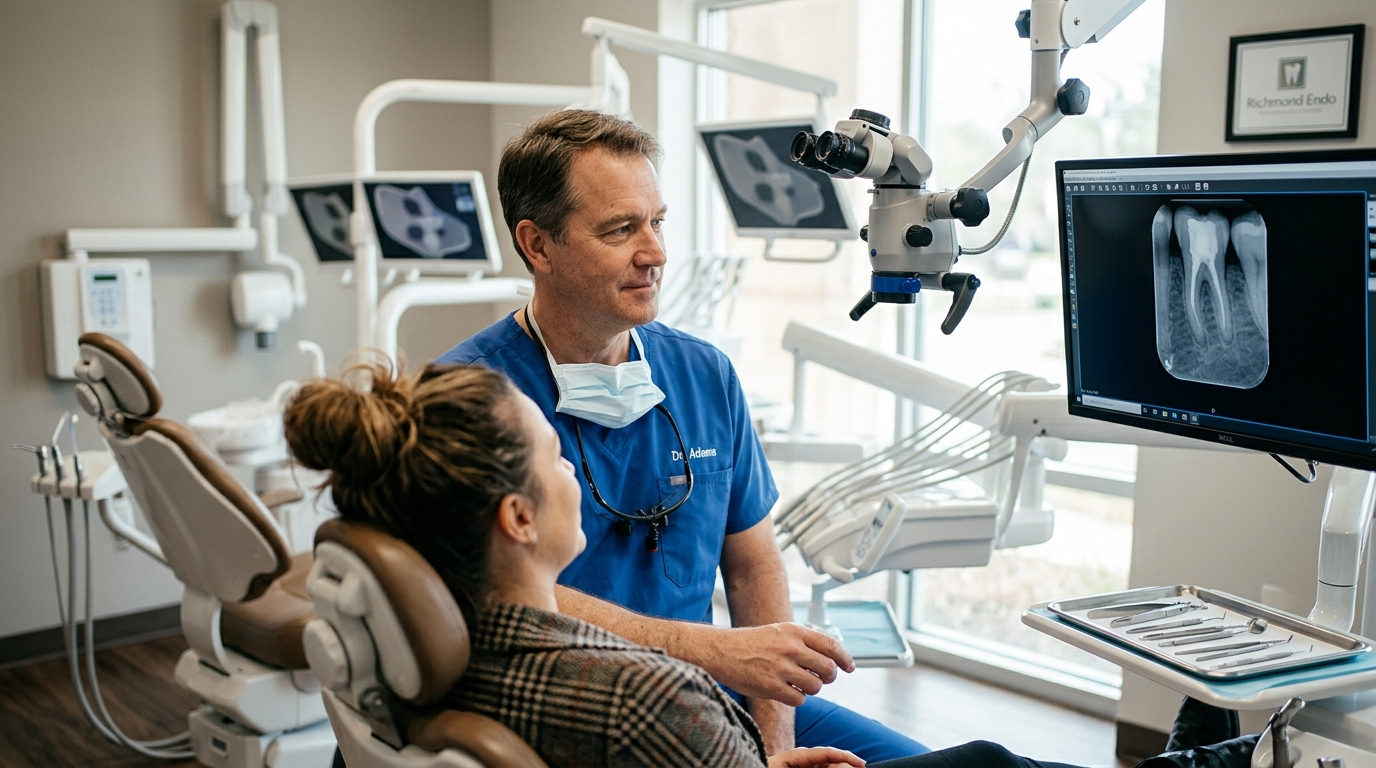
Root canal retreatment is a specialized endodontic procedure designed to save a tooth that has previously undergone root canal therapy but has failed to heal or has become reinfected. According to the American Association of Endodontists, retreatment is often the most effective way to preserve a natural tooth when initial treatment complications arise. This process involves removing the existing crown, filling material, and any cement to access the root canal system for thorough cleaning and sealing. At Richmond Endodontics, we utilize advanced technology to ensure precision during this complex procedure. (About Our Office Richmond)
Signs Your Root Canal Has Failed
Identifying the need for retreatment begins with recognizing specific symptoms that indicate the tooth is no longer healthy. Many patients experience no pain at all, which can be misleading. However, several clear indicators suggest that the initial treatment may have been compromised. (Home Richmond Endo)
Return of Pain or Sensitivity is the most common sign. If you experience throbbing pain, tenderness, or swelling in the area of the previously treated tooth, it suggests that bacteria have re-entered the root canal system. This pain may be constant or occur when chewing or applying pressure to the tooth. (Home Richmond Endo)
Another critical indicator is the appearance of a pimple-like bump on the gums near the affected tooth. This is known as a sinus tract and indicates an abscess or infection at the root tip. According to the National Institute of Dental and Craniofacial Research, untreated dental abscesses can lead to serious systemic health issues if the infection spreads. You might also notice a darkening of the tooth color, which can signal internal tissue breakdown or necrosis.
Additionally, if the crown or filling that was placed after the initial root canal becomes loose, cracked, or falls out, it creates a pathway for bacteria to re-enter. This breach compromises the seal and necessitates immediate professional evaluation. Do not wait for pain to subside; early intervention is key to saving the tooth.
Why Do Root Canals Fail?
Understanding the causes of failure helps patients appreciate the complexity of retreatment. Root canal therapy is highly successful, but no medical procedure is immune to complications. Several factors can lead to the need for a second procedure.
Complex Canal Anatomy is a primary cause. Teeth often have curved, narrow, or extra canals that are difficult to locate and clean during the initial visit. If these areas are missed, bacteria remain and multiply. Dr. Benjamin Adams, with over 20 years of expertise in surgical and non-surgical endodontics, specializes in navigating these complex anatomical challenges.
Another common cause is Delayed Crown Placement. After a root canal, the tooth is brittle and requires a permanent restoration. If this is delayed, the tooth can fracture or allow bacteria to leak in from the temporary filling. According to data from the Journal of Endodontics, timely restoration significantly improves the long-term survival rate of endodontically treated teeth.
Other causes include Cracked Teeth and Saliva Contamination. A crack in the tooth structure can allow bacteria to bypass the seal. Additionally, if the initial procedure was not performed with proper isolation, saliva can contaminate the canal system. Richmond Endodontics serves patients across Eastern Indiana and Western Ohio, addressing these complex cases with high precision.
The Diagnostic Process for Retreatment
Determining whether retreatment is necessary requires a thorough diagnostic evaluation. This process goes beyond a simple visual inspection and involves advanced imaging and clinical tests.
Cone Beam Computed Tomography (CBCT) is a critical tool in modern endodontics. Unlike traditional 2D X-rays, CBCT provides a 3D view of the tooth and surrounding bone. This allows us to detect hidden canals, fractures, and bone loss that are invisible on standard radiographs. At Richmond Endodontics, we utilize PreXion CBCT imaging to ensure accurate diagnosis.
We also perform Periodontal Probing to check for deep pockets around the tooth, which may indicate a vertical root fracture. If a fracture is present, retreatment may not be an option, and extraction might be necessary. We also assess the quality of the existing restoration to see if it can be preserved or needs replacement.
Our team evaluates the Periapical Status by looking for radiolucency (dark areas) around the root tip, which indicates bone loss due to infection. This comprehensive approach ensures that we recommend the most appropriate treatment plan for your specific situation.
Technology Advantages in Retreatment
Retreatment is technically demanding and requires advanced technology to succeed. Richmond Endodontics is one of the few practices in the country offering GentleWave® and EdgePro® laser disinfection, which significantly enhance the cleaning process.
GentleWave® Technology uses multi-frequency acoustic energy to clean complex canal anatomy. This technology is particularly effective in retreatment cases where debris and bacteria are trapped in hard-to-reach areas. It allows for a more thorough disinfection than traditional methods alone.
EdgePro® Laser Disinfection complements this by using laser energy to kill bacteria and remove smear layers. This combination of technologies ensures that the root canal system is sterile before it is sealed again. According to clinical studies, advanced disinfection protocols improve the success rates of endodontic retreatment.
We also use the Zeiss ProErgo Surgical Microscope for enhanced visualization. This microscope provides magnification and illumination that reveal hidden canals and fractures. This level of precision is essential for successful retreatment and is a hallmark of our practice.

What to Expect During Retreatment
The retreatment process is similar to the initial root canal but requires additional steps to remove existing materials. The procedure is typically performed under local anesthesia to ensure comfort.
Access and Removal begins with removing the crown or filling to access the root canal. We then carefully remove the gutta-percha filling material and any cement using specialized instruments. This step requires skill to avoid damaging the tooth structure.
Cleaning and Shaping follows, where we clean the canals using our advanced technology. We may use GentleWave® and EdgePro® to ensure thorough disinfection. The canals are then shaped to receive the new filling material.
Sealing and Restoration concludes the procedure. We fill the canals with a biocompatible material to seal them against future infection. Finally, we place a temporary filling and recommend that you see your general dentist for a new crown or restoration. This final step is crucial for protecting the tooth from fracture.
Key Takeaways
- Root canal retreatment is a viable option to save a tooth that has failed initial therapy.
- Symptoms include pain, swelling, gum bumps, and tooth darkening.
- Causes of failure often include missed canals, delayed restoration, or cracks.
- CBCT imaging is essential for accurate diagnosis of complex cases.
- Richmond Endodontics uses GentleWave® and EdgePro® for superior disinfection.
- Dr. Benjamin Adams has over 20 years of experience in endodontic care.
- Early diagnosis improves the likelihood of saving the natural tooth.
Frequently Asked Questions
How long does root canal retreatment take?
Retreatment typically requires one to two appointments, depending on the complexity of the case and the extent of the infection. Each session may last 60 to 90 minutes.
Is retreatment painful?
With modern anesthesia and sedation options, the procedure is generally comfortable. Post-operative discomfort is usually mild and manageable with over-the-counter pain medication.
Can a root canal be retreated more than once?
While possible, retreatment is usually performed only once. If retreatment fails, apical surgery (apicoectomy) or extraction may be the next steps.
What is the success rate of retreatment?
Success rates for retreatment are high, often comparable to initial root canal therapy, especially when advanced technology like GentleWave® is used.
Do I need a new crown after retreatment?
Yes, a new crown or restoration is almost always necessary to protect the tooth from fracture and restore its function.
How do I know if my tooth is infected?
Signs include persistent pain, sensitivity to pressure, swelling of the gums, and the presence of a pimple on the gum near the tooth.
Is retreatment covered by insurance?
Many dental insurance plans cover retreatment, but coverage varies. It is best to check with your provider and our office for specific details.
Why choose an endodontist for retreatment?
Endodontists are specialists with advanced training in saving teeth. They have access to specialized technology and see these cases daily, leading to higher success rates.
Contact Richmond Endodontics
If you suspect you need root canal retreatment, do not wait. Early intervention can save your natural tooth and prevent further complications. Richmond Endodontics is committed to providing exceptional treatment in a comfortable and compassionate environment. Led by Dr. Benjamin Adams, our team utilizes the latest technology to ensure the best possible outcomes.
We serve patients across Eastern Indiana and Western Ohio with specialized endodontic care. Contact us today to schedule a consultation and learn more about how we can help you. Visit our Contact Us page to get in touch or call our office directly. Trust Richmond Endodontics for your retreatment needs.