
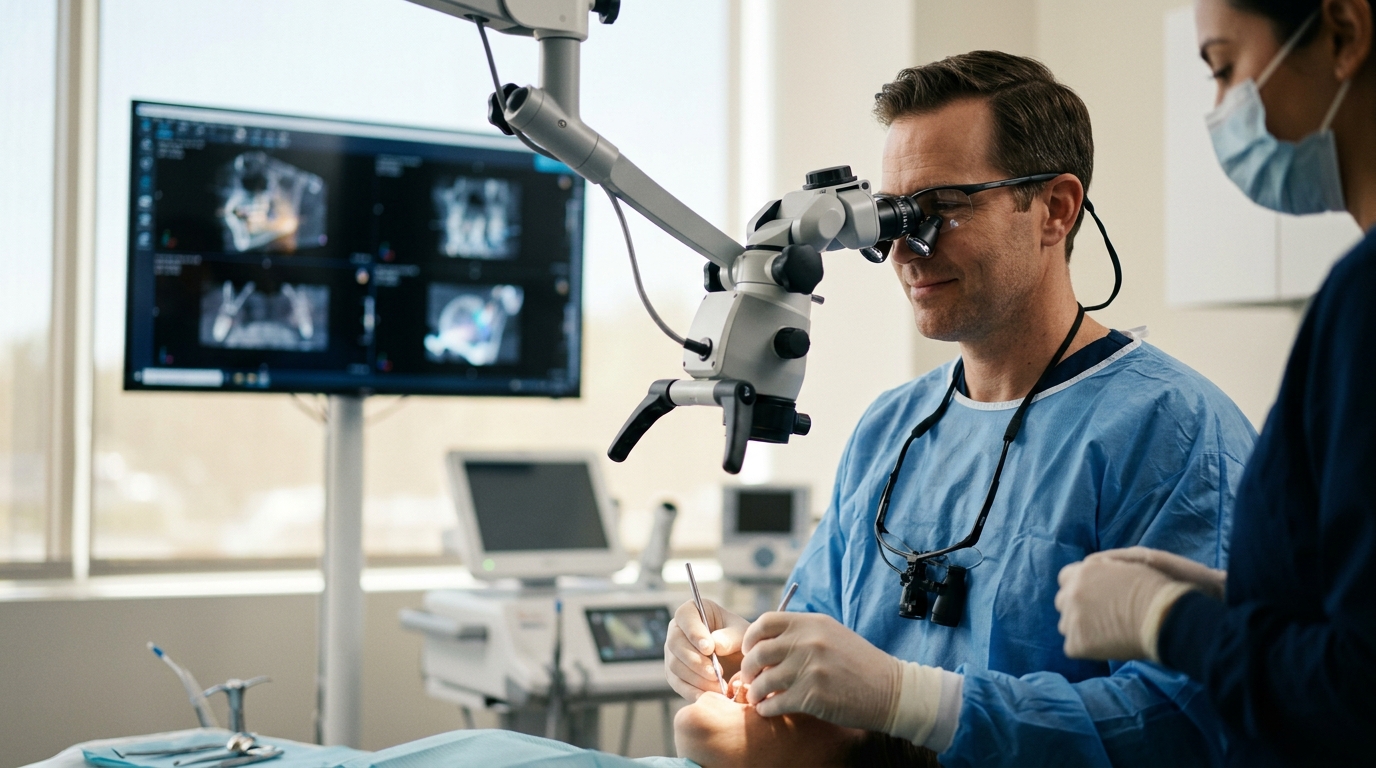
Endodontic retreatment is a complex procedure that demands precision beyond standard root canal therapy. According to the American Association of Endodontists, approximately 2 million retreatment procedures are performed annually in the United States alone. This high volume underscores the critical need for advanced diagnostic and execution tools to ensure successful outcomes. At Richmond Endo, the integration of cutting-edge technology allows specialists to navigate intricate canal systems with unparalleled accuracy. This guide details the specific technological advantages available to patients seeking retreatment services in the Richmond area. (Contact Us)
Diagnostic Precision and Imaging
The foundation of successful retreatment lies in accurate diagnosis. Traditional two-dimensional X-rays often fail to reveal the full complexity of failed root canals. Richmond Endo utilizes advanced three-dimensional imaging to map the anatomical challenges present in each case.
3D Cone Beam Computed Tomography
Imaging is the process of creating a three-dimensional representation of an object or structure. Richmond Endo employs Cone Beam Computed Tomography (CBCT) to provide detailed views of the tooth, surrounding bone, and nerve pathways. This technology allows the endodontist to identify hidden canals, fractures, and areas of infection that are invisible on standard radiographs. The ability to rotate and slice through the image in any plane ensures that no anatomical detail is overlooked during the treatment plan.
According to recent studies in endodontic diagnostics, CBCT imaging significantly increases the detection rate of periapical lesions and missed canals compared to conventional radiography. This level of detail is crucial for planning a retreatment that addresses the root cause of the initial failure. Patients benefit from a treatment plan that is tailored to their specific anatomy, reducing the risk of further complications. (About)
Microscopic Visualization Standards
Retreatment often involves removing old filling materials, such as gutta-percha, and posts. This process requires extreme precision to avoid damaging the tooth structure. The operating microscope is the primary tool used to achieve this level of detail.
The Role of the Dental Operating Microscope
Visualization is the ability to see fine details clearly under magnification. Richmond Endo utilizes high-powered dental operating microscopes that provide up to 25x magnification. This allows the specialist to see the intricate network of dentinal tubules and identify any remaining infection or cracks. The microscope also provides coaxial illumination, which eliminates shadows and enhances contrast. This clarity is essential for locating calcified canals and ensuring that all infected tissue is removed.
Data shows that the use of operating microscopes in endodontics improves the success rate of both primary and retreatment procedures. The enhanced visibility allows for more conservative tooth structure preservation, which is vital for the long-term health of the tooth. Richmond Endo's commitment to microscopic standards ensures that every retreatment is performed with the highest level of clinical accuracy.
Advanced Canal Negotiation Tools
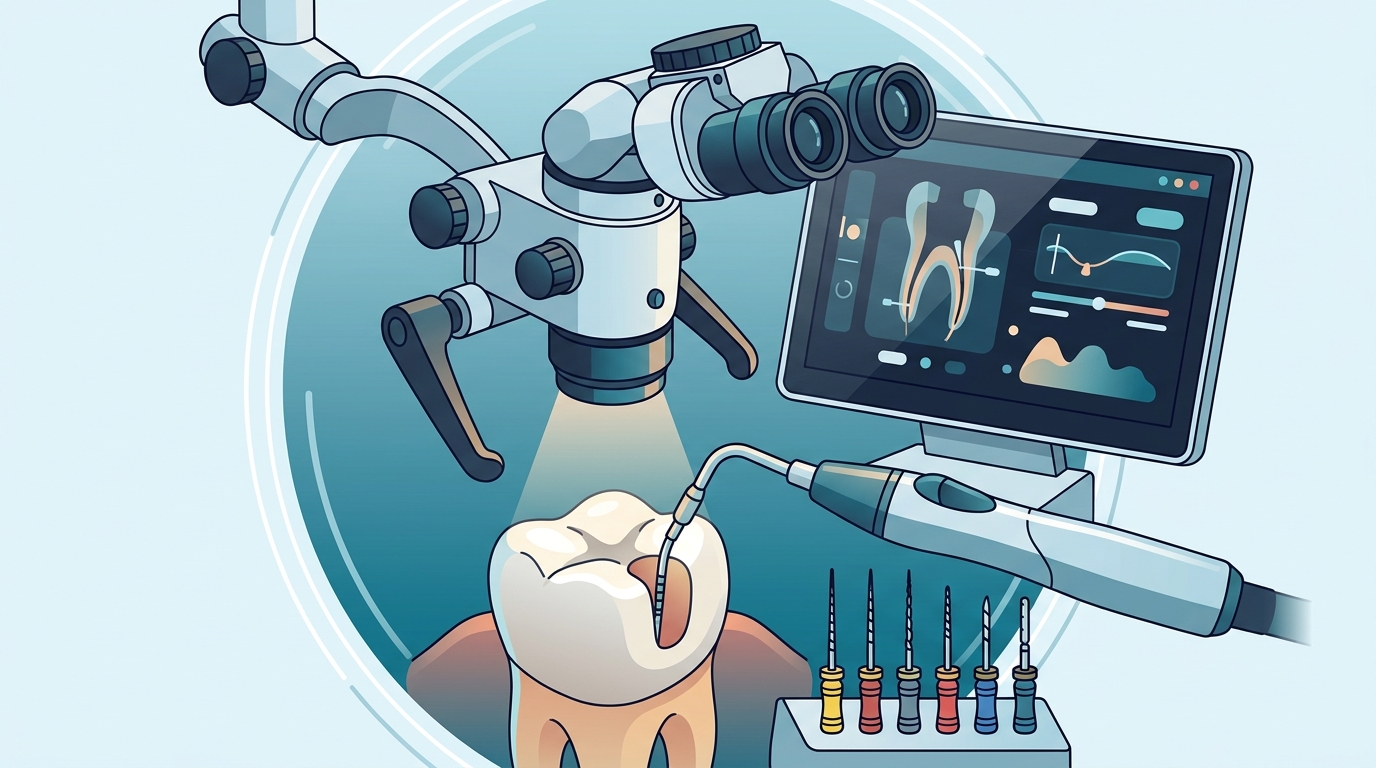
One of the most challenging aspects of retreatment is navigating past obstructions such as broken instruments or dense filling materials. Richmond Endo employs specialized rotary and manual files designed for difficult cases.
Negotiating Complex Anatomy
Negotiation is the process of safely accessing and cleaning the root canal system. The clinic uses nickel-titanium (NiTi) rotary files that offer superior flexibility and resistance to cyclic fatigue. These files can navigate curved and calcified canals without causing ledging or transportation. Additionally, ultrasonic tips are used to vibrate at high frequencies to break up calcifications and remove posts without damaging the root wall.
According to clinical research, ultrasonic activation significantly enhances the removal of post and core materials compared to manual techniques alone. This technology minimizes the risk of root perforation, which is a common complication in retreatment cases. The combination of flexible rotary files and ultrasonic instruments allows Richmond Endo to address even the most complex retreatment scenarios with confidence.
Irrigation Activation Systems
Cleaning the root canal system is not just about mechanical filing. Chemical disinfection is equally important to eliminate bacteria that reside in areas the files cannot reach. Richmond Endo utilizes advanced irrigation activation techniques to ensure thorough disinfection.
Enhanced Disinfection Protocols
Activation is the process of agitating irrigating solutions to improve their cleaning efficacy. The clinic employs systems such as Passive Ultrasonic Irrigation (PUI) or sonic activation devices. These tools create acoustic streaming and microstreaming effects that disrupt the biofilm of bacteria within the dentinal tubules. This ensures that the entire canal system is disinfected, reducing the likelihood of persistent infection.
Recent data indicates that activated irrigation systems reduce bacterial load more effectively than conventional syringe irrigation alone. This is particularly important in retreatment cases where biofilms may be more established. By utilizing these advanced disinfection protocols, Richmond Endo maximizes the chances of long-term success for the treated tooth.
Technology Comparison Overview
Understanding the difference between standard endodontic care and advanced retreatment technology helps patients appreciate the value of specialized care. The table below summarizes the key technological distinctions.
| Feature | Standard Endodontics | Richmond Endo Retreatment |
|---|---|---|
| Imaging | 2D Radiographs | 3D Cone Beam CT |
| Visualization | Headlamps / Loupes | High-Powered Operating Microscope |
| Instrumentation | Manual Files | NiTi Rotary Files & Ultrasonics |
| Disinfection | Syringe Irrigation | Activated Irrigation Systems |
| Success Rate | Variable | High (Evidence-Based Protocols) |
Key Takeaways
- Richmond Endo utilizes Cone Beam Computed Tomography (CBCT) for precise 3D diagnosis of retreatment cases.
- The dental operating microscope provides up to 25x magnification for enhanced visualization of complex anatomy.
- Advanced NiTi rotary files and ultrasonic instruments are used to safely navigate calcified canals and remove obstructions.
- Activated irrigation systems significantly improve disinfection by disrupting bacterial biofilms in dentinal tubules.
- Retreatment success is heavily dependent on the ability to locate and clean all canal structures, which technology facilitates.
- Richmond Endo's protocols are based on current clinical evidence to ensure the highest standard of care.
- Patients in the Richmond area have access to specialized endodontic technology that is not available in general dental practices.
Frequently Asked Questions
What is root canal retreatment?
Retreatment is a procedure performed when a previous root canal treatment has failed or new problems have occurred. It involves removing the existing filling material, cleaning the canal system again, and resealing it.
Why is a microscope necessary for retreatment?
Retreatment cases often involve complex anatomy, broken instruments, or dense filling materials. The microscope provides the magnification and illumination needed to see these details clearly, ensuring a thorough cleaning.
Does Richmond Endo use 3D imaging?
Yes, Richmond Endo utilizes Cone Beam Computed Tomography (CBCT) to provide detailed three-dimensional images of the tooth and surrounding structures for accurate diagnosis and planning.
How long does a retreatment take?
The duration varies depending on the complexity of the case. Some retreatments can be completed in one visit, while others may require two or more appointments. Richmond Endo will provide a specific timeline during your consultation.
Is retreatment as successful as a first-time root canal?
While success rates can vary, retreatment has a high success rate when performed with advanced technology and expertise. Richmond Endo's use of microscopes and activated irrigation enhances the likelihood of a positive outcome.
What technology is used for disinfection?
Richmond Endo uses activated irrigation systems, such as ultrasonic activation, to enhance the cleaning and disinfection of the root canal system beyond what conventional irrigation can achieve.
How do I know if I need retreatment?
Symptoms such as pain, swelling, or the return of previous symptoms may indicate a need for retreatment. Richmond Endo can diagnose the issue through clinical examination and advanced imaging.
Schedule Your Consultation
If you are experiencing pain or have been diagnosed with a failed root canal, do not delay seeking care. Richmond Endo is dedicated to saving your natural teeth using the most advanced technology available. Contact us today to schedule a consultation and learn how our specialized retreatment protocols can help you. Visit https://765endo.com/contact to book your appointment.