
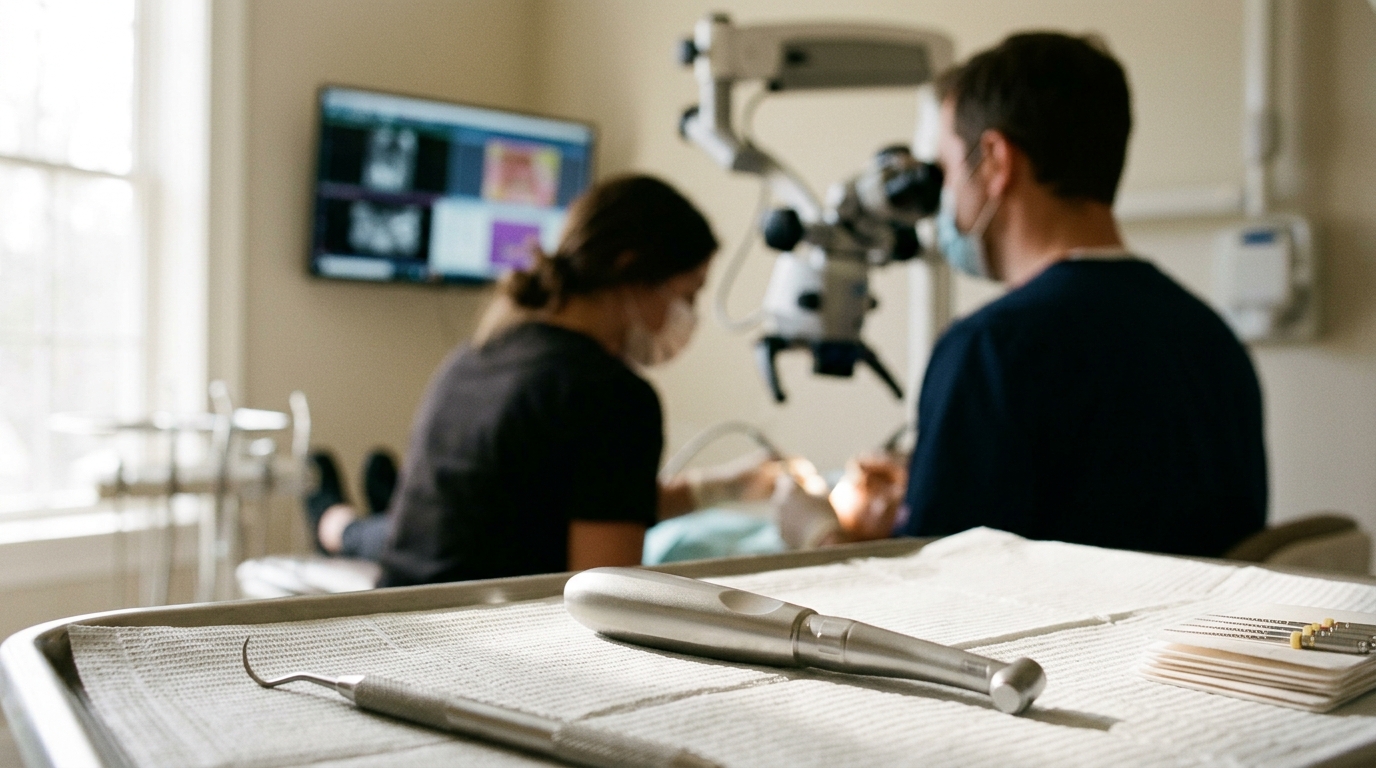
Endodontic retreatment is a specialized procedure designed to save a tooth that has previously undergone root canal therapy but has failed to heal or has become reinfected. According to the American Association of Endodontists, approximately 2 to 10 percent of endodontically treated teeth may fail to heal properly, requiring retreatment to preserve the natural dentition. This statistic highlights the critical need for advanced diagnostic and procedural tools that go beyond standard care. At Richmond Endo, the integration of cutting-edge technology ensures that even the most complex retreatment cases are handled with precision, minimizing discomfort and maximizing the longevity of the restored tooth. (Contact Us)
Diagnostic Precision: CBCT Imaging
The foundation of successful retreatment lies in accurate diagnosis. Traditional two-dimensional X-rays often fail to reveal the three-dimensional complexities of root canal anatomy, such as hidden canals, fractures, or persistent infections in the surrounding bone. Richmond Endo utilizes Cone Beam Computed Tomography (CBCT) to overcome these limitations. This advanced imaging technology provides a detailed 3D view of the tooth, surrounding bone, and nerve pathways.
CBCT imaging allows the endodontist to identify the exact source of failure with unparalleled clarity. Whether it is a missed canal, a fractured instrument, or a complex root anatomy, the 3D perspective eliminates guesswork. This precision is vital for planning the retreatment strategy, ensuring that every aspect of the infection is addressed. The ability to visualize the internal structure of the tooth in three dimensions significantly increases the predictability of the outcome.
For patients considering retreatment, understanding the diagnostic process is key. Richmond Endo provides a thorough evaluation using these advanced tools to determine the best course of action. You can learn more about our diagnostic services by visiting our diagnostic imaging page. This technology is not just an add-on but a standard of care for complex cases, ensuring that no detail is overlooked.
Microscopic Vision: The Operating Microscope
Retreatment often involves removing old filling materials, such as gutta-percha, and searching for additional canals that may have been missed during the initial procedure. This task requires magnification and illumination that the human eye cannot achieve on its own. Richmond Endo employs high-powered dental operating microscopes to enhance visibility during these delicate procedures.
The operating microscope provides up to 20x magnification and coaxial lighting, allowing the endodontist to see fine details that are invisible to the naked eye. This level of vision is crucial for locating calcified canals, removing broken instruments, and ensuring a thorough cleaning of the root canal system. The microscope transforms the retreatment process from a blind operation into a precise surgical procedure.
Using a microscope also reduces the risk of complications. By clearly visualizing the anatomy, the endodontist can avoid damaging surrounding structures and ensure that all infected tissue is removed. This technology is a cornerstone of modern endodontics, and Richmond Endo is committed to using it for every retreatment case. For more information on our clinical standards, please review our technology overview.
Canal Navigation: Ultrasonic Technology
One of the most challenging aspects of retreatment is navigating through old restorative materials and finding previously inaccessible canals. Ultrasonic technology plays a pivotal role in this process. These devices use high-frequency vibrations to break down and remove obstructions with minimal damage to the surrounding tooth structure.
Ultrasonic tips are used to bypass blocked canals, remove fractured instruments, and create a straight-line access to the root canal system. This technology allows for more efficient and less invasive retreatment. The precision of ultrasonic instruments ensures that the endodontist can reach the apex of the root without compromising the integrity of the tooth. This is particularly important in cases where the tooth has been heavily restored or has complex anatomy.
The use of ultrasonic technology also enhances the cleaning and shaping of the canals. By removing debris and bacteria more effectively, the likelihood of successful healing is increased. Richmond Endo integrates these tools into every retreatment protocol to ensure the highest standard of care. To see how these tools are used in practice, you can explore our retreatment services.
Sealing Innovation: Bioceramic Materials
After the root canal system is cleaned and shaped, it must be sealed to prevent re-infection. Traditional sealing materials have been effective, but bioceramic materials represent a significant advancement in endodontic science. These materials are biocompatible, bioactive, and provide an excellent seal against bacterial leakage.
Bioceramic sealers are used in conjunction with gutta-percha or other obturation techniques to create a hermetic seal. They bond to the dentin walls of the root canal, providing additional stability and protection. This bonding capability is crucial for long-term success, as it prevents microleakage and reduces the risk of future infection. The bioactive nature of these materials also promotes healing in the surrounding bone.
Richmond Endo utilizes the latest bioceramic materials to ensure the best possible outcome for retreatment patients. These materials are safe, effective, and supported by extensive clinical research. By using advanced sealing techniques, we enhance the durability of the retreatment and the longevity of the tooth. Learn more about our materials and techniques on our materials and techniques page.
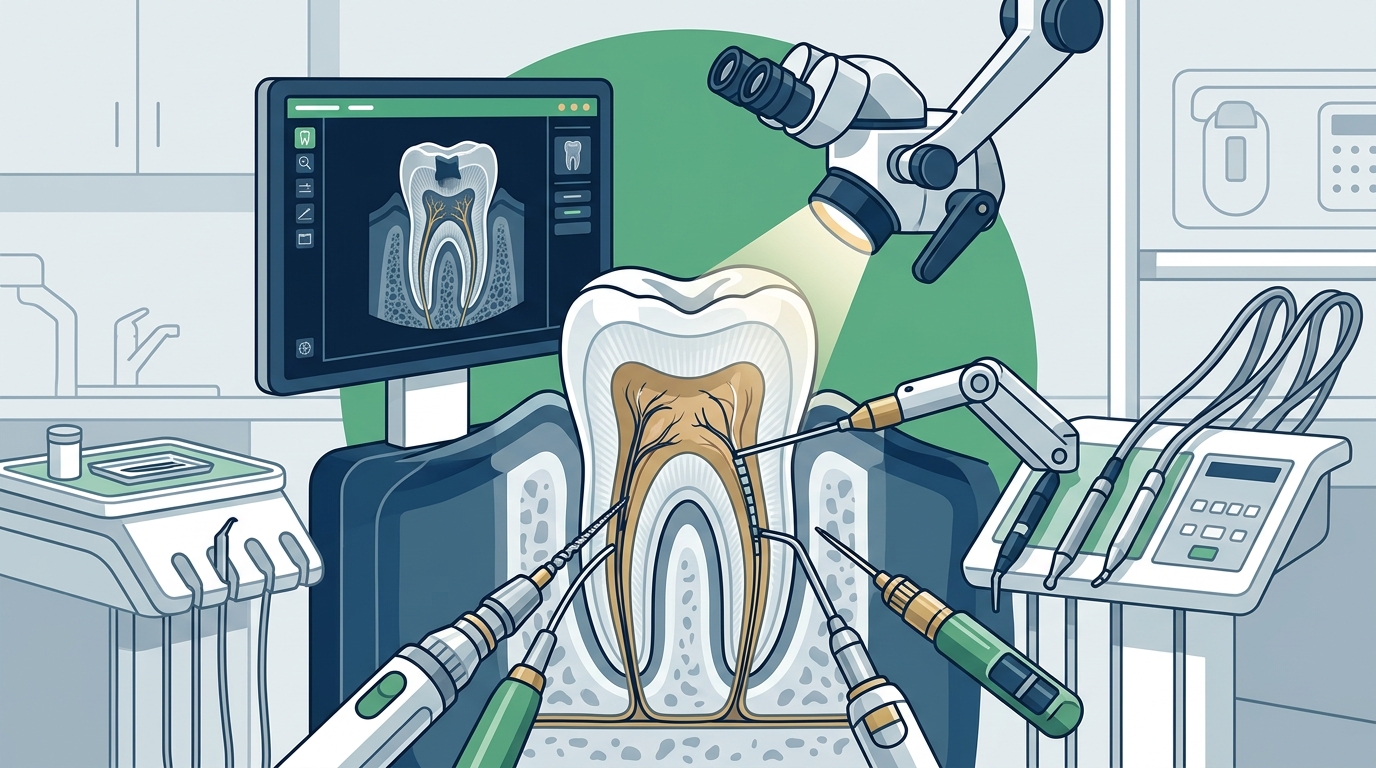
Technology Comparison Overview
Understanding the differences between traditional and advanced retreatment technologies can help patients make informed decisions. The table below summarizes the key technologies used at Richmond Endo and their benefits.
| Technology | Primary Function | Benefit for Retreatment |
|---|---|---|
| Cone Beam CT (CBCT) | 3D Diagnostic Imaging | Reveals hidden anatomy and pathology not visible on 2D X-rays. |
| Dental Operating Microscope | High-Magnification Visualization | Enhances visibility for locating canals and removing obstructions. |
| Ultrasonic Instruments | Minimally Invasive Access | Allows precise removal of broken instruments and calcified canals. |
| Bioceramic Sealers | Advanced Obturation | Provides a bioactive, hermetic seal that promotes healing. |
Key Takeaways
- Richmond Endo uses Cone Beam Computed Tomography (CBCT) for 3D diagnostic precision in complex retreatment cases.
- The dental operating microscope provides essential magnification for locating missed canals and removing obstructions.
- Ultrasonic technology enables minimally invasive access to blocked or calcified root canals.
- Bioceramic sealers offer superior bioactive sealing properties compared to traditional materials.
- Advanced technology increases the predictability and longevity of root canal retreatment.
- Richmond Endo is located in Richmond, Virginia, serving the local community with specialized endodontic care.
- Retreatment is often a viable alternative to extraction, preserving the natural tooth structure.
Frequently Asked Questions
What is root canal retreatment?
Root canal retreatment is a procedure to save a tooth that has previously undergone root canal therapy but has failed to heal or has become reinfected. It involves removing the old filling material, cleaning the canals again, and resealing the tooth.
Why do I need retreatment instead of a new root canal?
Retreatment is necessary when the initial root canal treatment has failed due to reasons such as missed canals, complex anatomy, or new infection. It addresses the specific causes of failure to preserve the tooth.
How does CBCT imaging help in retreatment?
CBCT imaging provides a 3D view of the tooth and surrounding bone, allowing the endodontist to identify hidden canals, fractures, and infections that are not visible on traditional 2D X-rays.
Is the retreatment procedure painful?
With the use of local anesthesia and advanced techniques, retreatment is typically no more uncomfortable than the initial root canal procedure. Most patients report minimal discomfort during and after the procedure.
How long does root canal retreatment take?
The duration of retreatment varies depending on the complexity of the case. It may take one or more visits. Richmond Endo will provide a detailed treatment plan and timeline during your consultation.
What are bioceramic sealers?
Bioceramic sealers are advanced materials used to fill and seal the root canal system. They are biocompatible, bioactive, and provide a superior seal that promotes healing and prevents re-infection.
Can I see the technology used at Richmond Endo?
Yes, we encourage patients to ask questions about our technology and procedures. You can also visit our technology page to learn more about the tools we use.
How do I schedule a consultation?
You can schedule a consultation by calling our office or using our online booking system. Our team will guide you through the process and answer any questions you may have.
Schedule Your Consultation
If you are experiencing pain or have been diagnosed with a failed root canal, do not delay seeking care. Richmond Endo is equipped with the latest technology to provide effective and comfortable retreatment. Our team of experienced endodontists is dedicated to saving your natural teeth and restoring your oral health. Contact us today to schedule your consultation and take the first step toward a pain-free smile. Visit our contact page to get in touch or call our office directly.