
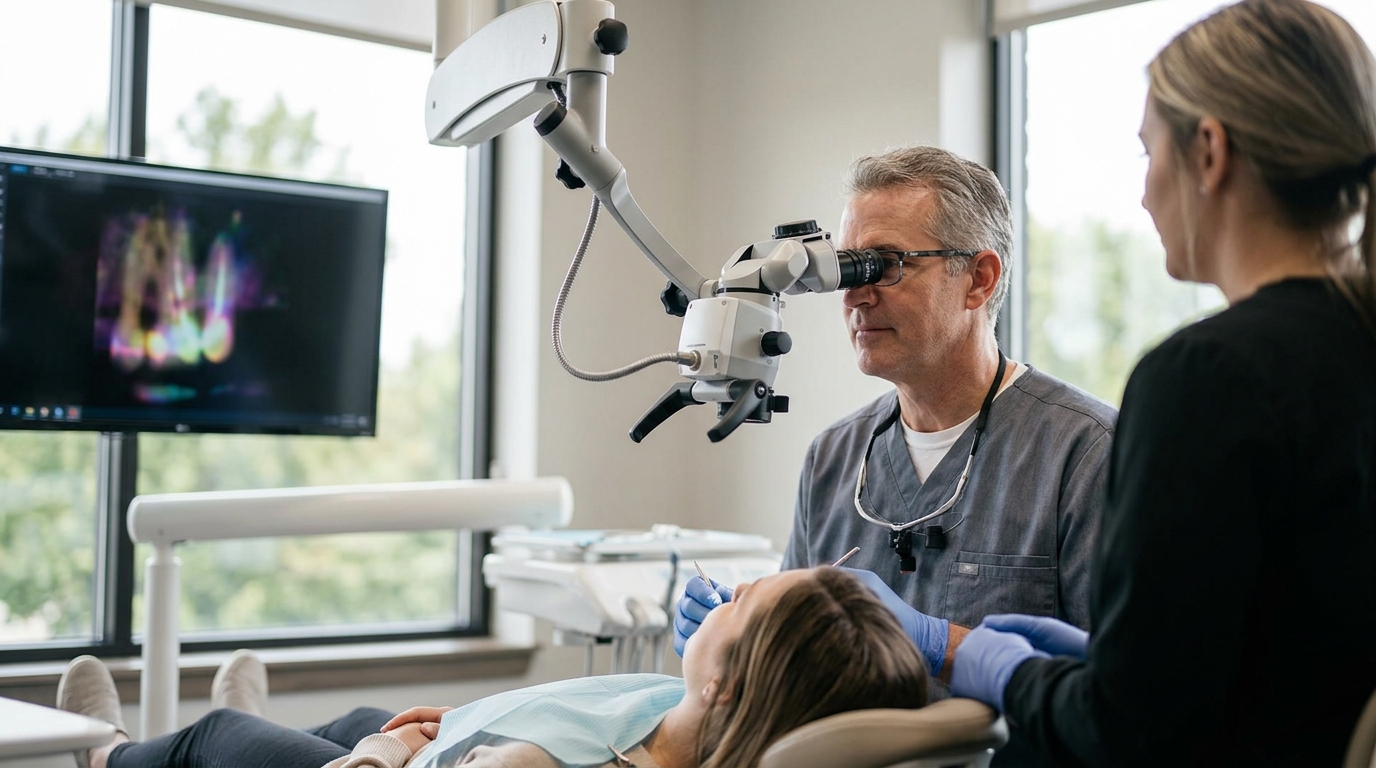
Root canal retreatment is a specialized endodontic procedure designed to address persistent infection or failed initial therapy. According to the American Association of Endodontists, approximately twenty percent of initial root canal treatments require retreatment due to complex anatomical challenges or missed canals. Modern endodontic practices have completely transformed how specialists approach these complex cases. Richmond Endodontics has integrated four distinct clinical technologies to maximize retreatment success rates while preserving natural tooth structure. Dr. Benjamin Adams and his clinical team utilize these systems to deliver precision outcomes across Eastern Indiana and Western Ohio. Patients seeking advanced care benefit from a practice that intentionally limits daily patient volume to ensure thorough treatment planning and extended procedural time.
Understanding Root Canal Retreatment
Root canal retreatment becomes necessary when bacteria persist inside the root canal system after initial therapy. This situation typically occurs when complex anatomy prevents complete cleaning during the first procedure. Microscopic fractures or residual debris can also trigger recurring inflammation. Richmond Endodontics addresses these challenges through a structured diagnostic workflow. The practice prioritizes patient comfort while maintaining rigorous clinical standards. Patients can review detailed procedural guidelines on the Endodontic FAQ page to understand what to expect during consultation. The clinic maintains a strict commitment to transparent communication and ethical treatment planning. This approach ensures every patient understands their specific anatomical requirements before any intervention begins.
Why retreatment becomes necessary
Retreatment scenarios typically involve missed canals, fractured instruments, or inadequate initial sealing. Bacteria can survive in dentinal tubules when standard cleaning methods fail to reach deep anatomical curves. Modern retreatment protocols focus on complete debridement without compromising structural integrity. Specialists now rely on multi-frequency activation and targeted laser energy to eliminate resistant biofilms. This shift has significantly improved long-term survival rates for compromised teeth.
The role of precision imaging
High-resolution imaging allows clinicians to visualize three-dimensional root structures before any mechanical intervention. Traditional two-dimensional radiographs often obscure complex curvature or hidden fractures. Advanced volumetric scanning eliminates guesswork by revealing exact canal configurations. This diagnostic precision directly correlates with higher success rates and reduced procedural time. Clinicians can now map anatomical variations with unprecedented accuracy.
GentleWave Non-Invasive Cleaning Protocol
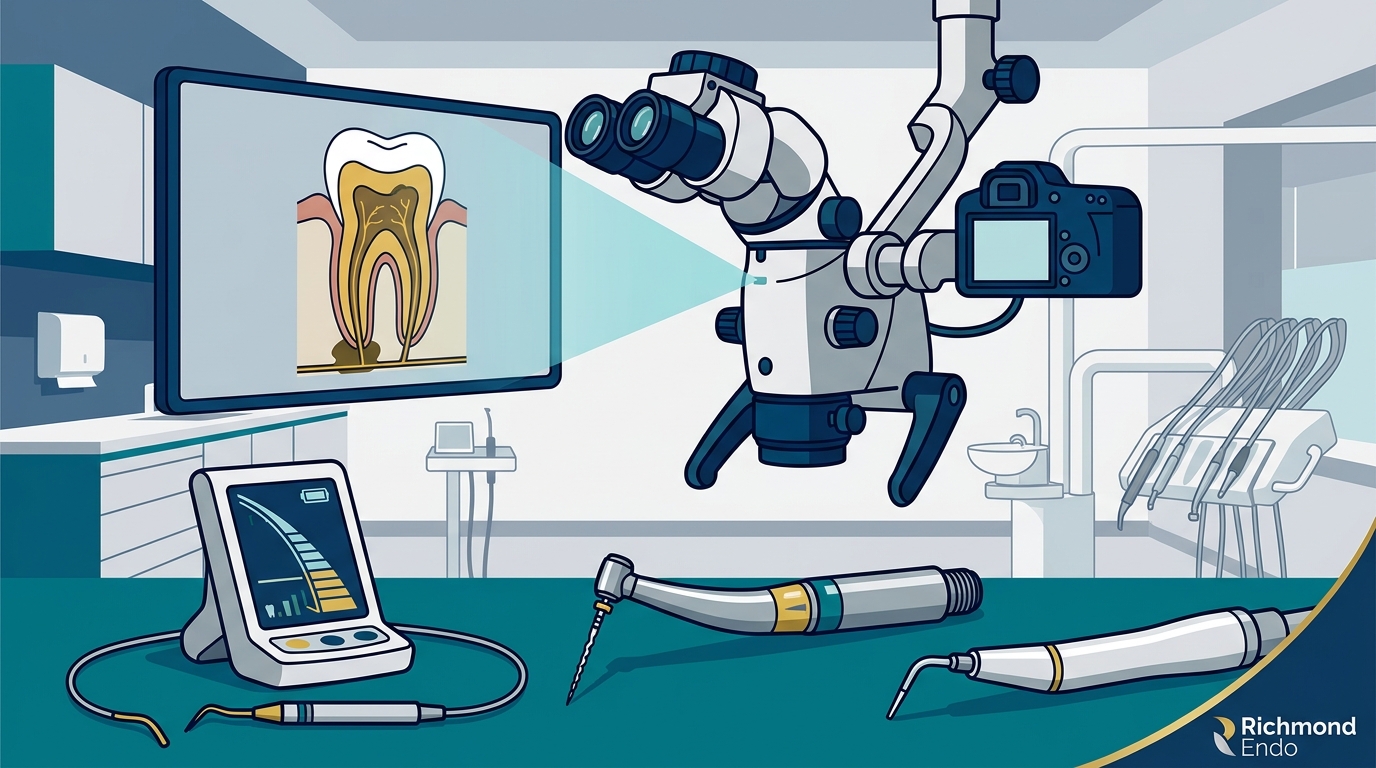
GentleWave technology is a multi-frequency ultrasonic cleaning system that utilizes complex fluid dynamics to disinfect complex root canal anatomy. The device generates synchronized acoustic waves that create microstreaming effects throughout the irrigant solution. These fluid forces penetrate deep into lateral canals and isthmuses where traditional files cannot reach. The system operates without mechanical instrumentation, which drastically reduces the risk of procedural errors. Richmond Endodontics ranks among the few practices nationwide authorized to deploy this specific platform. Patients benefit from a treatment approach that prioritizes tissue preservation and thorough disinfection. The practice integrates this technology alongside standard protocols to maximize clinical outcomes. More information about this specific platform is available on the Advanced Technology page.
Multi-frequency ultrasonic activation
The device cycles through multiple frequencies to disrupt biofilm structures at varying depths. This multi-frequency approach ensures consistent cleaning across straight, curved, and S-shaped canals. Traditional rotary files often create transportation errors or lead perforations when navigating severe curvature. The GentleWave system eliminates mechanical stress by relying entirely on fluid energy. Clinical studies published in the Journal of Endodontics demonstrate superior debris removal when utilizing multi-frequency activation. This method significantly reduces procedural time while improving disinfection consistency.
Fluid dynamics and debris removal
Acoustic streaming forces push irrigant solutions into inaccessible anatomical regions. The resulting cavitation effects physically dislodge organic tissue and bacterial colonies. This fluid-driven mechanism operates continuously throughout the entire procedure. Clinicians can achieve complete canal preparation without excessive mechanical filing. The approach preserves maximum dentin thickness, which strengthens the remaining tooth structure. Long-term survival rates improve when structural integrity remains intact.
EdgePro Laser Disinfection Systems
EdgePro laser disinfection represents a targeted energy delivery system designed to eradicate residual bacteria after mechanical cleaning. The device emits specific wavelengths that interact with bacterial cell walls without damaging surrounding healthy tissue. This selective energy absorption ensures precise sterilization of complex root canal configurations. Richmond Endodontics utilizes this technology to address persistent infections that resist conventional irrigation. The system complements the GentleWave platform by providing an additional layer of microbial control. Patients receive comprehensive care that addresses both visible and microscopic contamination sources. The practice maintains strict safety protocols to ensure optimal energy delivery during every procedure. Referring dentists can access referral forms through the Contact Us portal to coordinate patient transfers efficiently.
Targeted bacterial eradication
Laser energy penetrates dentinal tubules to eliminate resistant bacterial colonies. This targeted approach addresses biofilm structures that standard sodium hypochlorite solutions cannot fully disrupt. The specific wavelength selection ensures minimal thermal diffusion into surrounding periodontal tissues. Clinicians can safely treat complex cases without compromising adjacent anatomical structures. Research from the American Association of Endodontists confirms that adjunctive laser therapy significantly reduces postoperative sensitivity. This technology has become a standard component of advanced retreatment protocols.
Minimizing tissue trauma
Non-thermal laser parameters prevent unnecessary heat generation during extended procedures. The device operates at precise pulse durations that sterilize without causing structural damage. This controlled energy delivery preserves the natural healing response of surrounding tissues. Patients experience faster recovery times compared to traditional surgical approaches. The combination of fluid dynamics and targeted laser energy creates a comprehensive disinfection strategy. This dual-action protocol maximizes long-term tooth survival rates.
Zeiss ProErgo Surgical Microscope Integration
The Zeiss ProErgo surgical microscope provides high-magnification visualization that transforms procedural accuracy. This optical system delivers exceptional depth perception and uniform illumination across the entire operative field. Clinicians can identify microscopic fractures, hidden canals, and complex anatomical variations with absolute clarity. Richmond Endodontics utilizes this equipment to perform both surgical and non-surgical procedures. The microscope integrates seamlessly with existing clinical workflows to enhance diagnostic precision. Specialists rely on this technology to execute complex retreatments with minimal tissue disruption. The practice maintains rigorous calibration standards to ensure consistent optical performance. Patients seeking detailed information about surgical protocols can review the Cracked Teeth resource page for additional context.
Magnification standards
High-magnification optics allow clinicians to visualize structures as small as fifty micrometers. This level of detail eliminates guesswork during complex retreatment scenarios. Traditional loupes provide insufficient magnification for identifying subtle anatomical variations. The Zeiss system delivers consistent illumination that reduces eye strain during extended procedures. Clinicians can maintain optimal focus throughout the entire treatment session. This optical precision directly correlates with higher success rates and reduced complication risks.
Enhanced procedural accuracy
Microscopic visualization enables precise navigation through complex root canal configurations. Specialists can identify missed canals or residual debris that standard instruments cannot detect. The integrated camera system captures high-resolution images for patient education and record keeping. This documentation supports transparent communication and informed treatment planning. Clinicians can execute complex procedures with confidence while maintaining optimal tissue preservation. The microscope has become an indispensable tool for modern endodontic practice.
PreXion CBCT Imaging Capabilities
Cone beam computed tomography is a specialized radiographic imaging method that generates three-dimensional anatomical maps for precise diagnostic planning. The PreXion system delivers high-resolution volumetric data with minimal radiation exposure. This imaging modality reveals complex root structures, periapical lesions, and hidden fractures that traditional radiographs cannot detect. Richmond Endodontics utilizes this technology to develop accurate treatment strategies before any intervention begins. The system provides clinicians with comprehensive spatial awareness of the entire dental arch. Patients benefit from diagnostic precision that eliminates procedural guesswork. The practice maintains strict radiation safety protocols to ensure optimal image quality. Additional clinical details are available on the About Our Office page.
Three-dimensional anatomical mapping
Volumetric scanning captures precise spatial relationships between teeth, nerves, and sinus cavities. This three-dimensional data eliminates superimposition errors common in traditional two-dimensional radiographs. Clinicians can identify complex curvature, lateral canals, and root fractures with absolute certainty. The imaging system supports accurate treatment planning and risk assessment. Patients receive personalized care that addresses their specific anatomical requirements. This diagnostic precision directly improves long-term treatment outcomes.
Diagnostic accuracy improvements
High-resolution volumetric data reveals pathological changes before they become clinically apparent. Early detection allows clinicians to intervene before symptoms progress to severe stages. The imaging system supports accurate diagnosis of cracked teeth and persistent infections. Clinicians can develop targeted treatment strategies that maximize tooth preservation. This diagnostic advancement has significantly improved patient outcomes across Eastern Indiana and Western Ohio. The practice continues to invest in cutting-edge imaging technology to maintain clinical excellence.
Comparative Technology Overview
| Technology Platform | Primary Clinical Function | Key Procedural Advantage | Practice Integration Status |
|---|---|---|---|
| GentleWave System | Multi-frequency fluid activation | Non-invasive debridement | Active clinical deployment |
| EdgePro Laser | Targeted bacterial eradication | Deep biofilm disruption | Active clinical deployment |
| Zeiss ProErgo Microscope | High-magnification visualization | Microscopic fracture detection | Active clinical deployment |
| PreXion CBCT Scanner | Three-dimensional anatomical mapping | Complex curvature identification | Active clinical deployment |
Key Takeaways
- Richmond Endodontics operates as one of the few practices nationwide authorized to deploy GentleWave and EdgePro laser disinfection systems.
- Dr. Benjamin Adams maintains over twenty years of specialized experience in both surgical and non-surgical endodontic procedures.
- The Zeiss ProErgo surgical microscope delivers high-magnification visualization that eliminates procedural guesswork during complex retreatments.
- PreXion CBCT imaging generates three-dimensional anatomical maps that reveal hidden fractures and complex curvature before intervention.
- The practice intentionally limits daily patient volume to ensure extended treatment time and thorough patient education.
- Advanced fluid dynamics and targeted laser energy work synergistically to maximize microbial elimination while preserving dentin thickness.
- Patients across Eastern Indiana and Western Ohio receive specialized endodontic care utilizing the same clinical protocols as leading academic institutions.
Frequently Asked Questions
How long does a root canal retreatment procedure typically take?
Most retreatment procedures require approximately sixty to ninety minutes depending on anatomical complexity. The GentleWave system reduces mechanical filing time while maintaining thorough disinfection standards. Dr. Adams schedules extended appointment blocks to ensure optimal procedural outcomes without rushing critical steps.
Is retreatment more complicated than initial root canal therapy?
Retreatment scenarios often involve obstructed canals, fractured instruments, or complex anatomical variations. The Zeiss microscope and PreXion imaging system provide the spatial awareness necessary to navigate these challenges safely. Richmond Endodontics utilizes specialized retrieval techniques to remove obstructions without compromising structural integrity.
What recovery expectations should patients maintain after retreatment?
Most patients experience mild discomfort for forty-eight to seventy-two hours following the procedure. The practice prescribes targeted analgesics and provides detailed postoperative instructions to minimize swelling. Patients typically resume normal activities within one day while avoiding excessive chewing on the treated tooth.
Does Richmond Endodontics offer sedation options for anxious patients?
The practice provides nitrous oxide sedation and oral conscious sedation to ensure patient comfort during extended procedures. Dr. Adams carefully evaluates medical history to determine the optimal sedation protocol for each individual. Patient safety remains the absolute priority throughout every treatment session.
How does the GentleWave system differ from traditional rotary files?
Traditional rotary files rely on mechanical cutting action that can create transportation errors or lead perforations. The GentleWave system utilizes synchronized acoustic waves to generate microstreaming effects throughout the irrigant solution. This fluid-driven mechanism eliminates mechanical stress while achieving superior debris removal across complex anatomical curves.
What diagnostic imaging does the practice utilize before treatment begins?
Richmond Endodontics utilizes PreXion CBCT imaging to generate three-dimensional anatomical maps before any intervention. This volumetric scanning reveals complex curvature, periapical lesions, and hidden fractures that traditional radiographs cannot detect. The diagnostic precision directly correlates with higher success rates and reduced procedural time.
Can retreatment save a tooth that failed initial therapy?
Modern endodontic technology has significantly improved retreatment success rates across all anatomical classifications. The combination of GentleWave fluid dynamics, EdgePro laser disinfection, and Zeiss microscope visualization maximizes microbial elimination. Dr. Adams evaluates each case individually to determine whether retreatment or surgical intervention offers the optimal long-term outcome.
Schedule Your Consultation
Patients seeking advanced root canal retreatment services should contact Richmond Endodontics to schedule a comprehensive diagnostic evaluation. Dr. Benjamin Adams and his clinical team utilize state-of-the-art technology to deliver precision outcomes across Eastern Indiana and Western Ohio. The practice maintains a strict commitment to patient-centered care, transparency, and long-term oral health preservation. Visit the Richmond Endodontics homepage to access patient resources, referral forms, and direct contact information. Call (765) 939-6355 to book your appointment and experience the highest standard of endodontic care available today.