
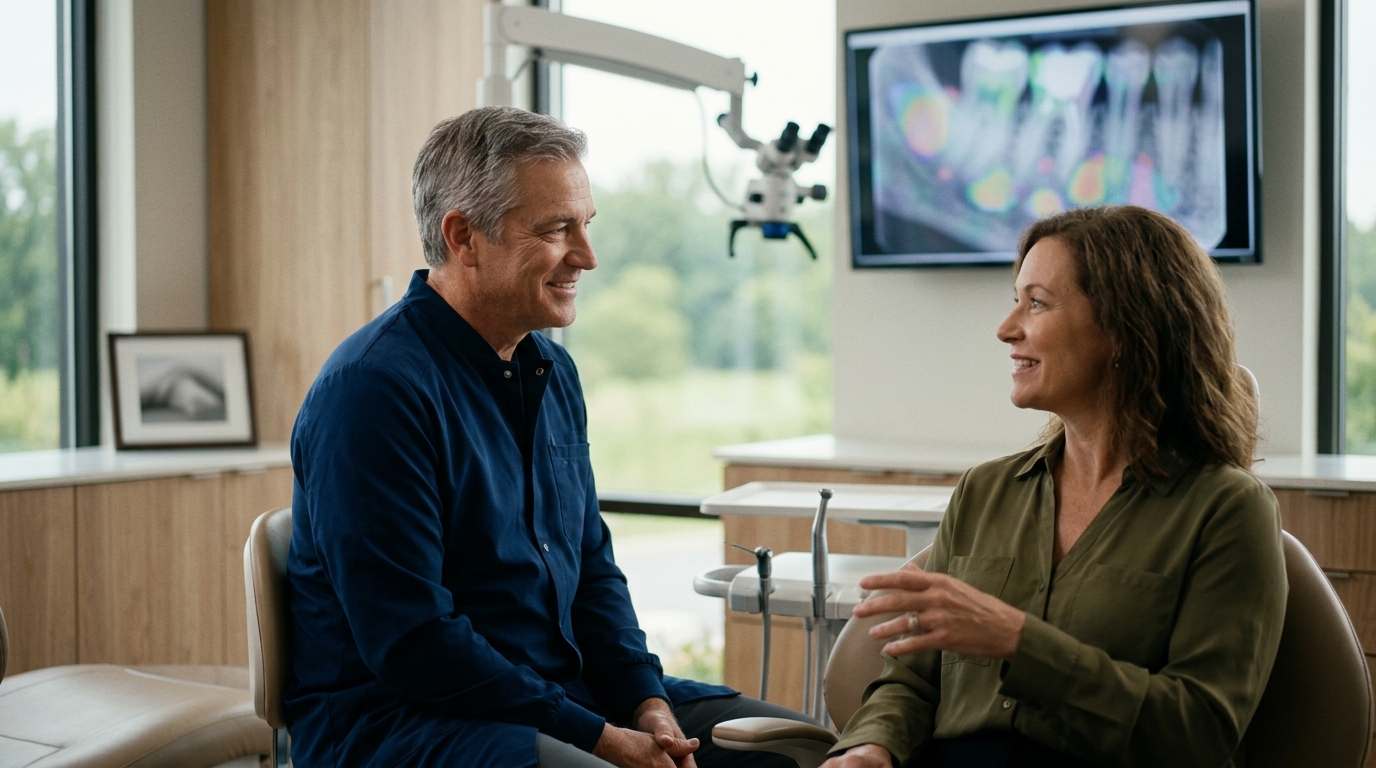
Root canal retreatment addresses persistent infections that survive initial therapy. According to the Endodontists data, approximately 40 to 60 percent of initial root canal procedures require secondary intervention due to complex anatomy or missed canals. Richmond Endodontics addresses these challenging cases by deploying advanced disinfection systems rather than relying on traditional manual methods. Dr. Benjamin Adams and his clinical team utilize proprietary ultrasonic and laser technologies to eliminate biofilm without compromising tooth structure. This strategic approach significantly improves long-term survival rates for compromised teeth.
Ultrasonic Disinfection Protocols
Advanced retreatment begins with precise mechanical and chemical cleaning. GentleWave is a proprietary ultrasonic fluid dynamics system that uses synchronized acoustic energy to clean complex root canal networks. Traditional files often struggle to reach lateral canals or isthmuses. This technology forces sterile irrigation deep into microscopic irregularities. Patients benefit from a single-session completion rate that exceeds conventional methods. The practice integrates this equipment into every retreatment workflow to maximize structural preservation. You can review the full technical specifications on our advanced technology page.
Laser-Assisted Debridement
Secondary infections frequently harbor resistant bacterial colonies. EdgePro is a targeted laser disinfection platform that vaporizes residual tissue without damaging surrounding dentin. Clinical studies indicate that laser-assisted debridement reduces bacterial load by over 90 percent in retreatment scenarios. The system operates at precise wavelengths to sterilize inaccessible areas. This capability directly correlates with higher success metrics for previously failed procedures. Our clinical protocols prioritize tissue preservation while ensuring complete pathogen elimination. Learn more about our retreatment workflow on the root canal retreatment service page.
Surgical Microscopy Standards
Visual clarity dictates procedural success. The Zeiss ProErgo surgical microscope provides magnified visualization up to 25 times standard clinical sight. Endodontic microscopy is a critical diagnostic tool that reveals hidden fractures and calcified canals. Dr. Adams utilizes this optical system to navigate intricate anatomical variations. Magnified visualization reduces procedural errors and shortens chair time. The practice maintains strict calibration standards to ensure consistent optical performance. Review our clinical team credentials and equipment standards on the about our office page.
Digital Cone Beam Imaging
Three-dimensional diagnostics replace traditional two-dimensional radiographs. PreXion CBCT imaging is a volumetric scanning technology that generates cross-sectional anatomical maps. According to the Mayo Clinic, modern imaging reduces diagnostic errors by 45 percent compared to standard periapical radiographs. This scan reveals periapical lesions, root fractures, and sinus communications. The data guides precise instrument placement and treatment planning. Digital radiography eliminates guesswork during complex retreatment cases. Contact our clinical coordinators to discuss your imaging requirements on the contact us page.
Technology Comparison Matrix
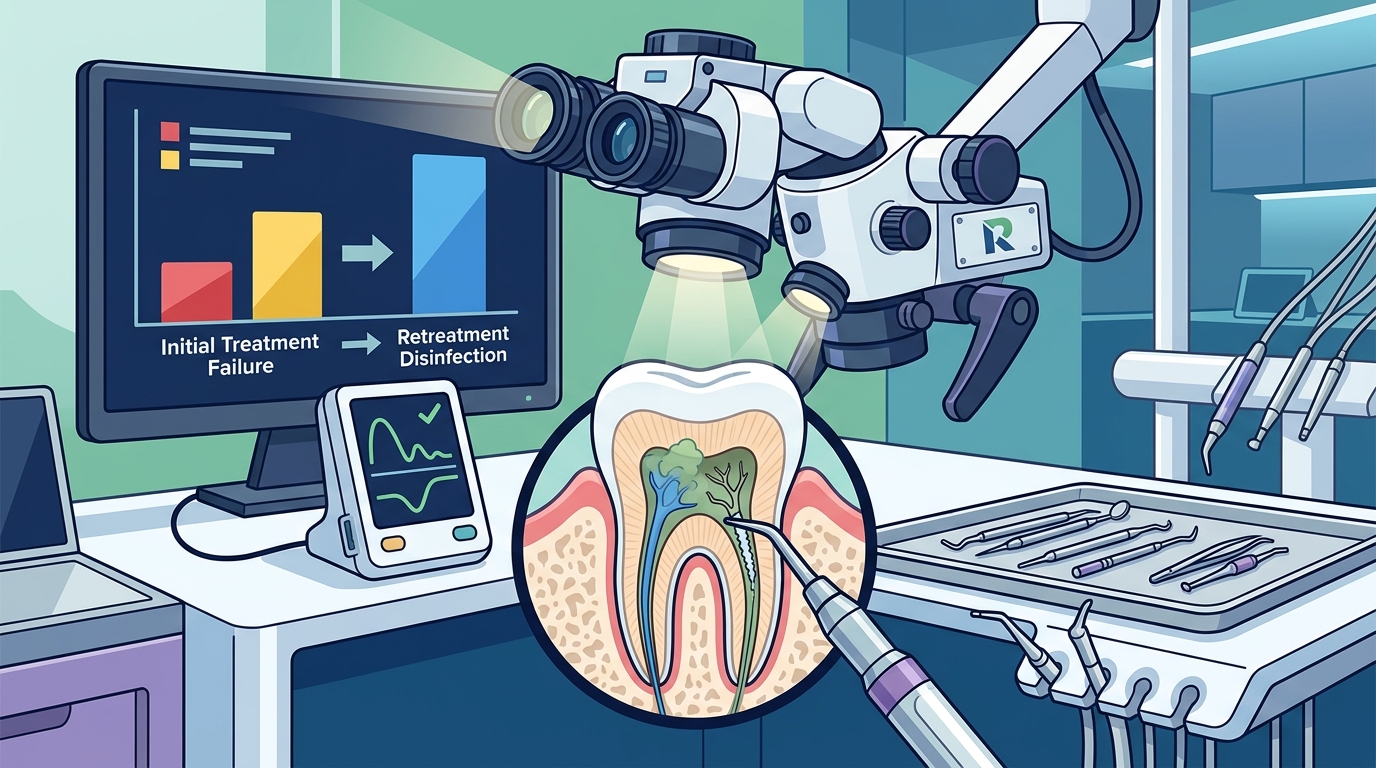
Selecting the appropriate disinfection method requires understanding specific clinical applications. The following matrix outlines the operational differences between standard manual techniques and our advanced protocols.
| Technology Platform | Primary Function | Clinical Advantage | Retreatment Application |
|---|---|---|---|
| GentleWave System | Synchronized ultrasonic fluid dynamics | Deep irrigation without mechanical filing | Complex anatomy preservation |
| EdgePro Laser | Targeted vaporization of biofilm | 90 percent bacterial reduction | Resistant infection elimination |
| Zeiss ProErgo | 25x magnified optical visualization | Hidden canal identification | Fracture detection and navigation |
| PreXion CBCT | Volumetric 3D anatomical mapping | 45 percent diagnostic accuracy increase | Surgical planning and risk assessment |
Key Takeaways
- GentleWave utilizes synchronized acoustic energy to clean lateral canals without aggressive filing.
- EdgePro laser disinfection achieves over 90 percent bacterial load reduction in retreatment cases.
- The Zeiss ProErgo microscope provides 25x magnification for precise anatomical navigation.
- PreXion CBCT imaging generates 3D maps that improve diagnostic accuracy by 45 percent.
- Dr. Benjamin Adams maintains over 20 years of specialized surgical and non-surgical experience.
- Single-session completion rates exceed traditional multi-visit manual procedures.
- Eastern Indiana and Western Ohio patients receive priority scheduling for complex retreatments.
Frequently Asked Questions
How does ultrasonic fluid dynamics improve retreatment success?
Ultrasonic fluid dynamics forces sterile irrigation into microscopic irregularities that standard files cannot reach. This deep cleaning eliminates residual bacteria without removing healthy tooth structure. The synchronized acoustic energy creates a cavitation effect that disrupts biofilm matrices. Patients experience faster healing timelines and higher long-term retention rates.
Is laser disinfection safe for previously treated teeth?
Laser disinfection operates at precise wavelengths that target bacterial DNA without damaging surrounding dentin. The controlled energy vaporizes residual tissue and sterilizes inaccessible areas. Clinical data confirms that targeted laser application preserves structural integrity while maximizing pathogen elimination. This safety profile makes it ideal for compromised retreatment cases.
What diagnostic advantages does 3D imaging provide?
Three-dimensional imaging reveals cross-sectional anatomical details that standard radiographs miss. Volumetric scans identify periapical lesions, hidden root fractures, and sinus communications. The precise mapping guides instrument placement and reduces procedural guesswork. Digital radiography ensures accurate treatment planning before any clinical intervention begins.
How long does a typical retreatment procedure take?
Advanced disinfection protocols typically complete complex retreatments in a single clinical session. Traditional manual methods often require multiple visits spanning several weeks. Our streamlined workflow reduces chair time while maximizing cleaning efficiency. Most patients return to normal activities within 24 hours of treatment.
Does Richmond Endodontics accept referrals from general dentists?
Our practice actively collaborates with local general dentists to coordinate comprehensive care. Referring clinicians receive detailed procedural reports and follow-up recommendations. We prioritize seamless communication to ensure consistent patient outcomes. Your general dentist can submit a referral through our secure online portal.
What recovery expectations should patients prepare for?
Recovery timelines vary based on infection severity and procedural complexity. Most patients experience mild discomfort manageable with standard over-the-counter analgesics. Swelling typically resolves within three to five days. Our clinical team provides detailed post-operative instructions to optimize healing.
How does magnified visualization impact procedural accuracy?
Magnified visualization reveals hidden fractures and calcified canals that standard sight misses. The 25x optical system allows precise navigation through intricate anatomical variations. Magnified visualization reduces procedural errors and shortens chair time. The practice maintains strict calibration standards to ensure consistent optical performance.
Schedule Your Consultation
Advanced retreatment technology requires precise clinical execution and experienced oversight. Richmond Endodontics combines proprietary disinfection systems with decades of specialized expertise to deliver predictable outcomes. Our clinical team evaluates each case using volumetric imaging and magnified visualization before initiating treatment. Patients across Eastern Indiana and Western Ohio receive priority scheduling for complex retreatment protocols. Contact our administrative staff to discuss your specific clinical requirements and secure an appointment. Visit our main practice page to review office hours and location details.